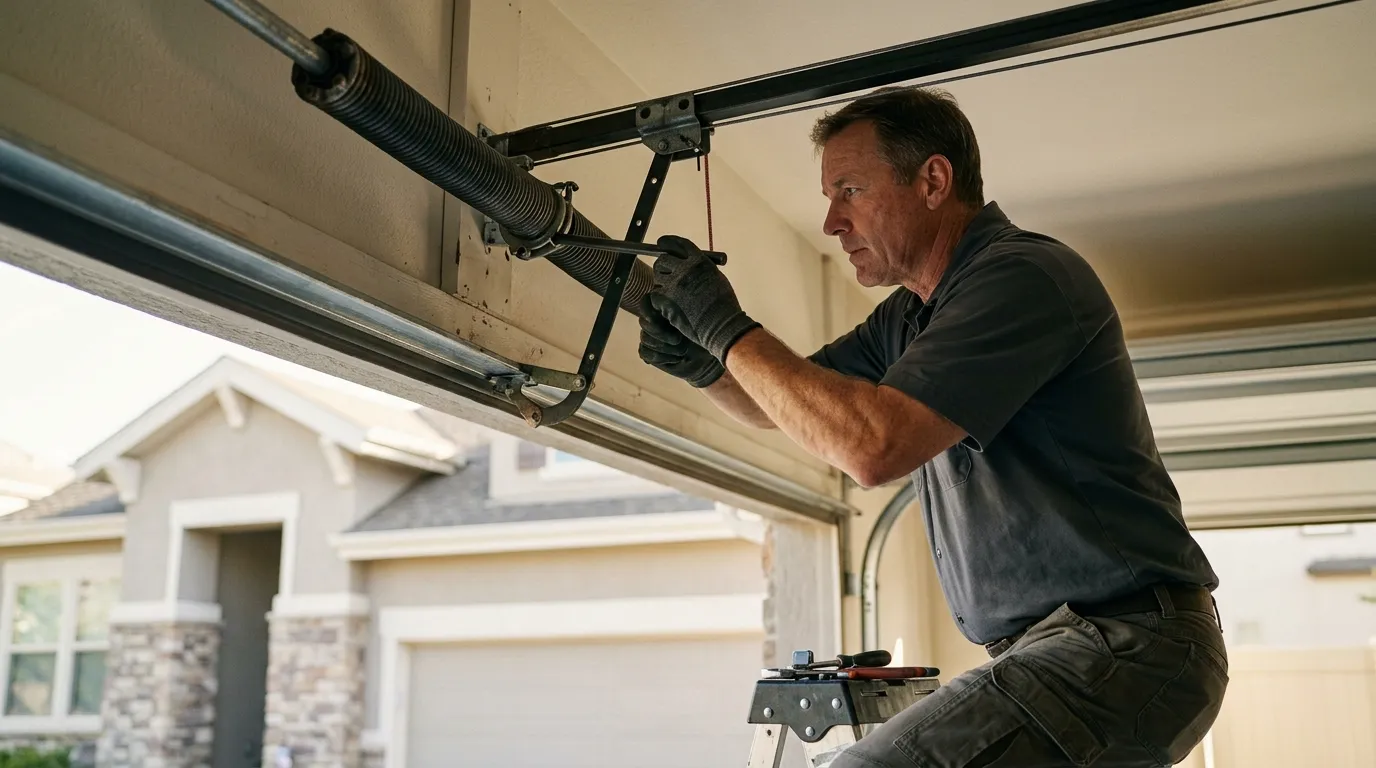
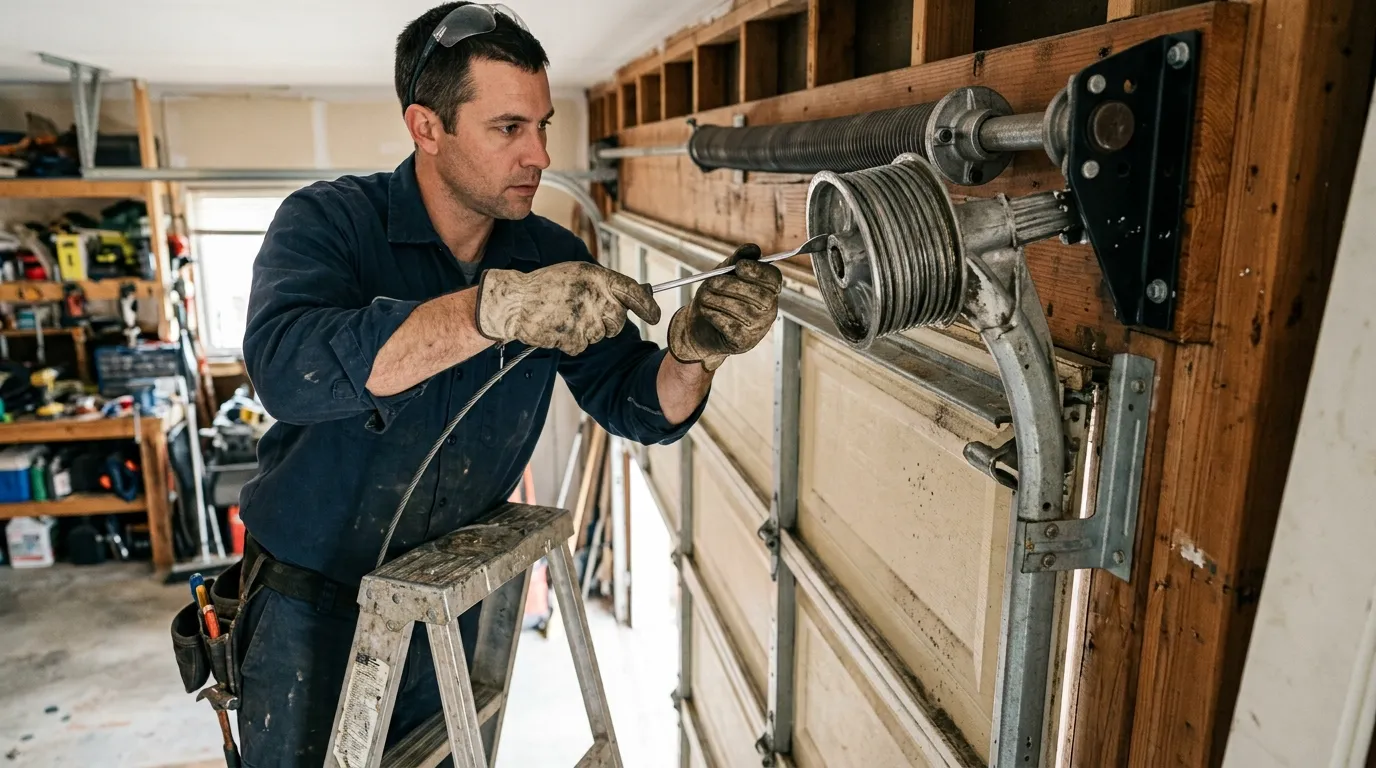
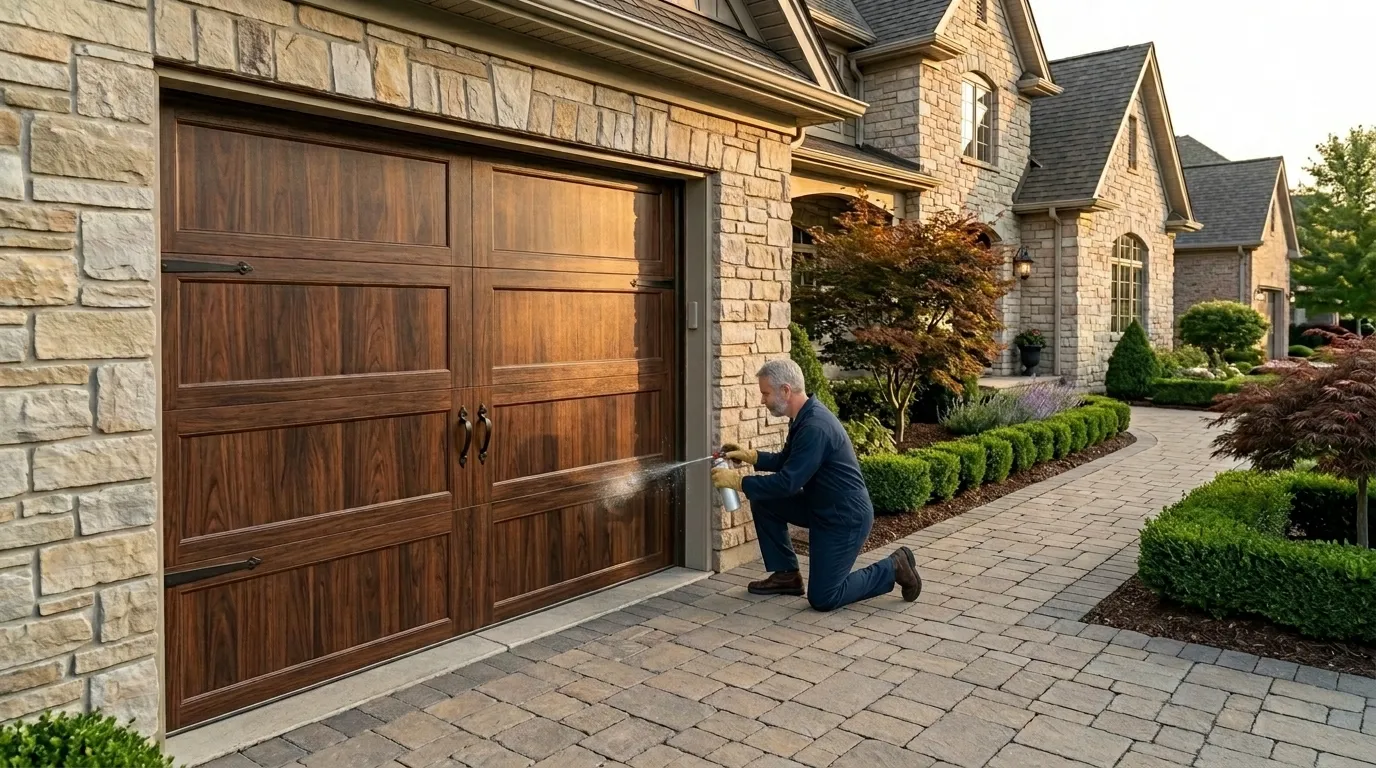
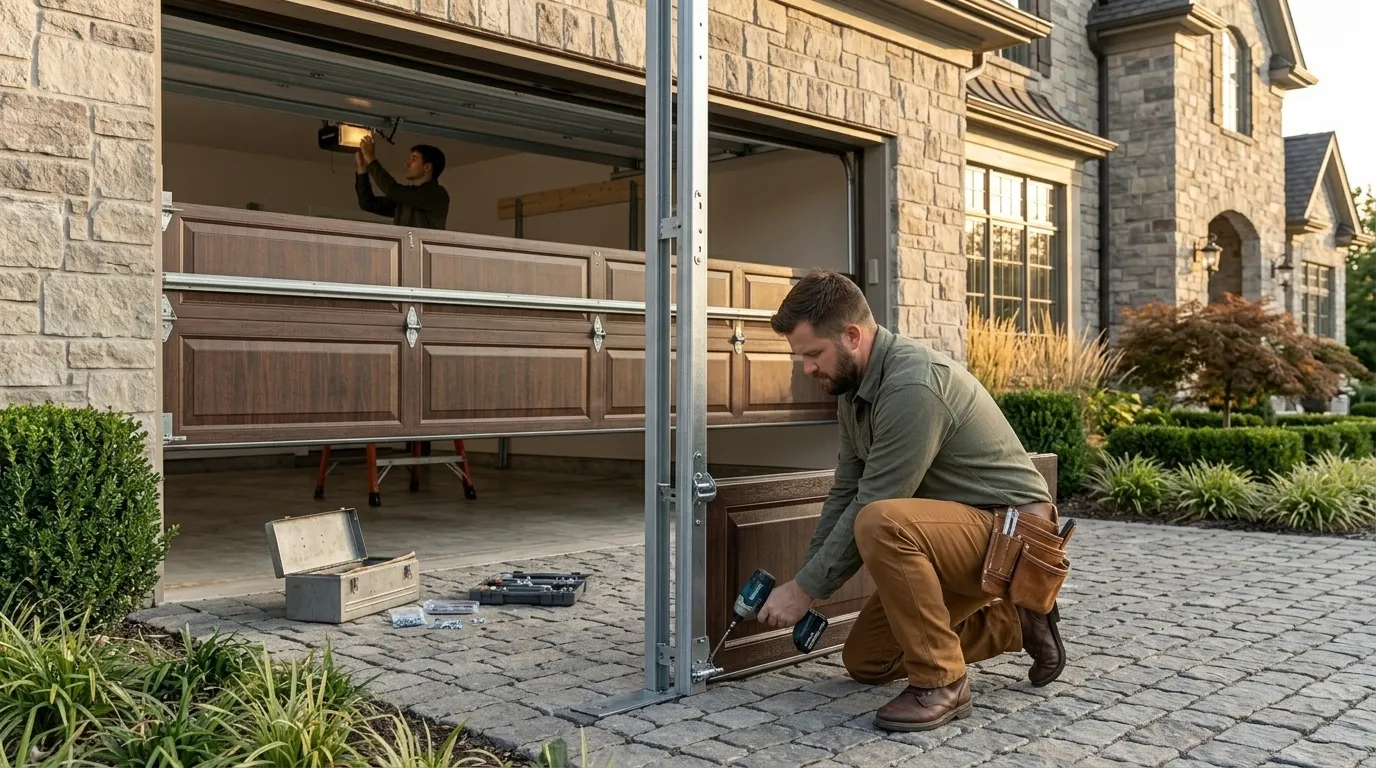
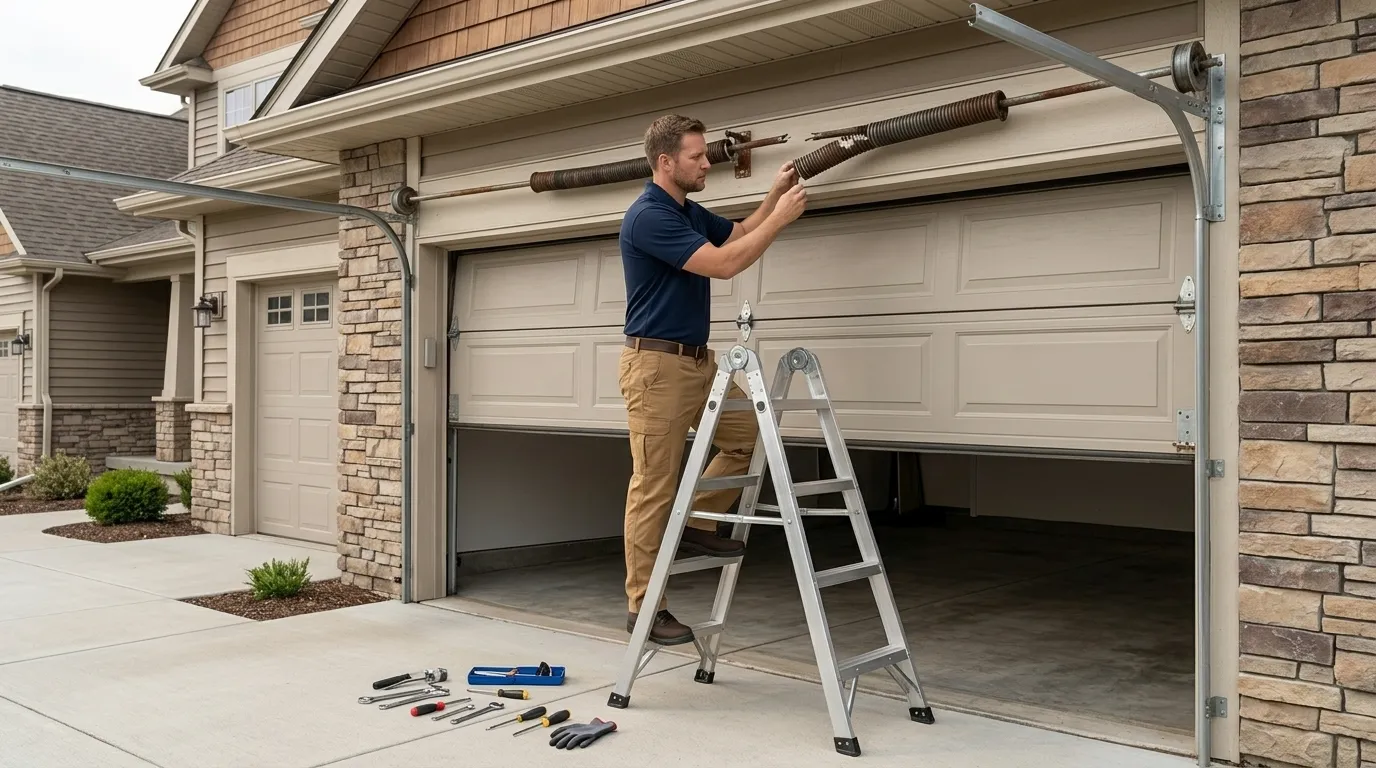
Most houses across this service area went up between 1964 and 2021, with the typical build year sitting around 1987. That means a huge share of the doors we look at are running original tracks, brackets, and rollers that are thirty to forty years into a service life nobody designed to last that long. Across the 39 named communities we cover, the stock leans heavily toward 1980s and 90s construction, so the hardware pattern repeats house after house: galvanized steel track hung on builder-grade brackets, steel rollers that have worn their channel wider than spec, and lag bolts that have backed out a quarter turn at a time for two decades.
Orlando sits in a mild temperate band, so this isn't a freeze-thaw problem the way it would be in a colder climate - you're not dealing with ice locking a roller in place overnight. What you're dealing with instead is straightforward mechanical wear: brackets loosen, track drifts out of plumb a sixteenth of an inch at a time, and one day the roller finally walks off the rail, usually on a door that's been binding for weeks without anyone noticing. Humidity plays a role too, working corrosion into fasteners and roller stems faster than a dry climate would.
The age of the housing stock, not any single storm or cold snap, is the real driver here.
Booking a Visit
We cover this service across the greater Orlando area, from houses a couple miles out to communities on the far edge of our range. A door off track is not a job to leave sitting - every open-and-close cycle after it happens grinds the roller stem further and can bend the track section it's caught on, turning a realignment into a replacement. When you call, tell us whether the door still moves at all, whether the opener is still trying to run it, and which side it's hanging off - that tells us what's in the truck before we're on site.
We don't do phone-quote pricing on this one, because a door off track from one popped roller is a different job than a door off track because the whole vertical track section is bent or the cable came off the drum at the same time. What we can tell you upfront is that we look at the door in person before committing to a fix, and if the safer, cheaper move is a partial hardware swap rather than a full track replacement, that's what we'll recommend. You can reach us through the site to get on the schedule.
How It Shows Up
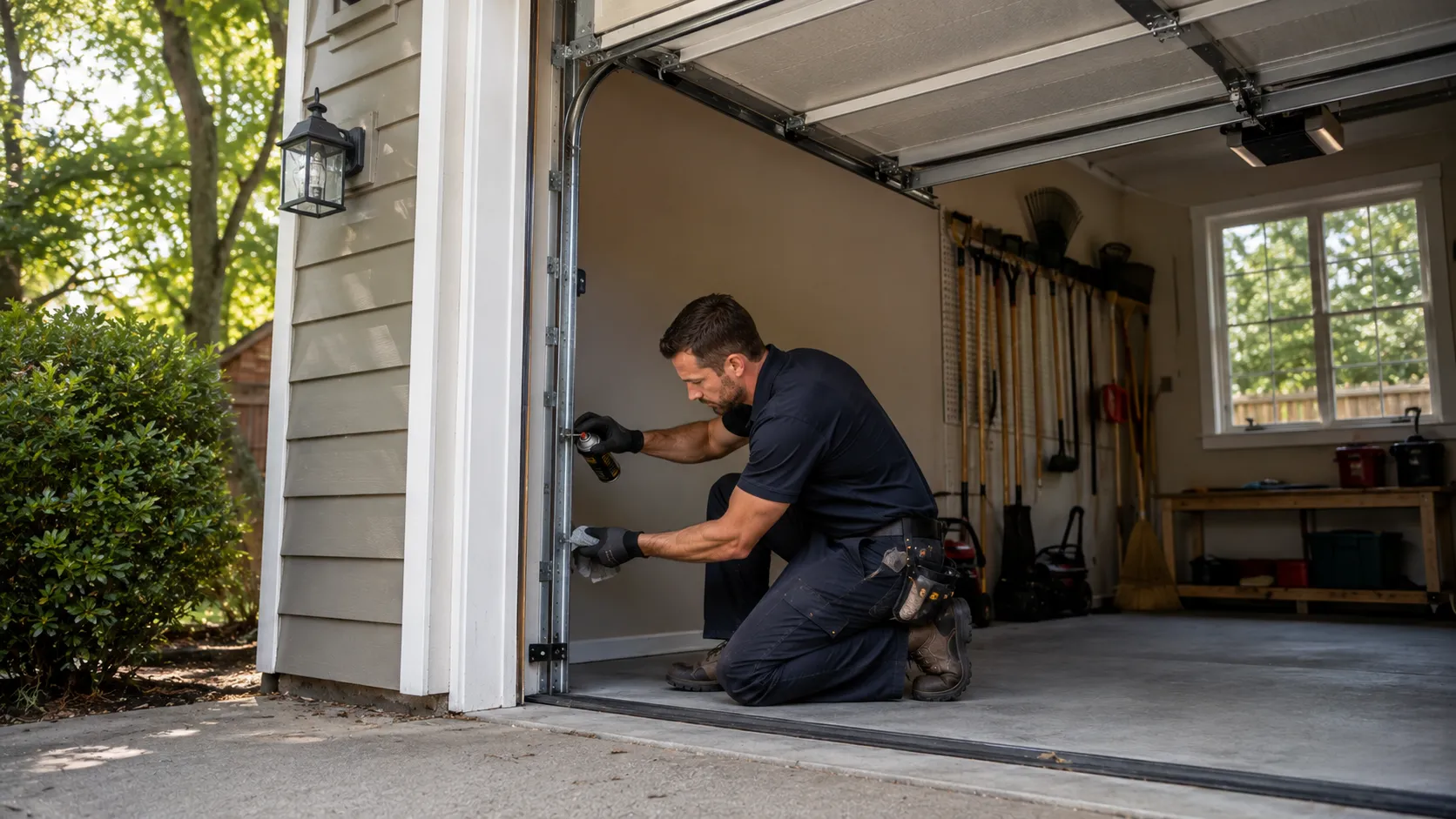
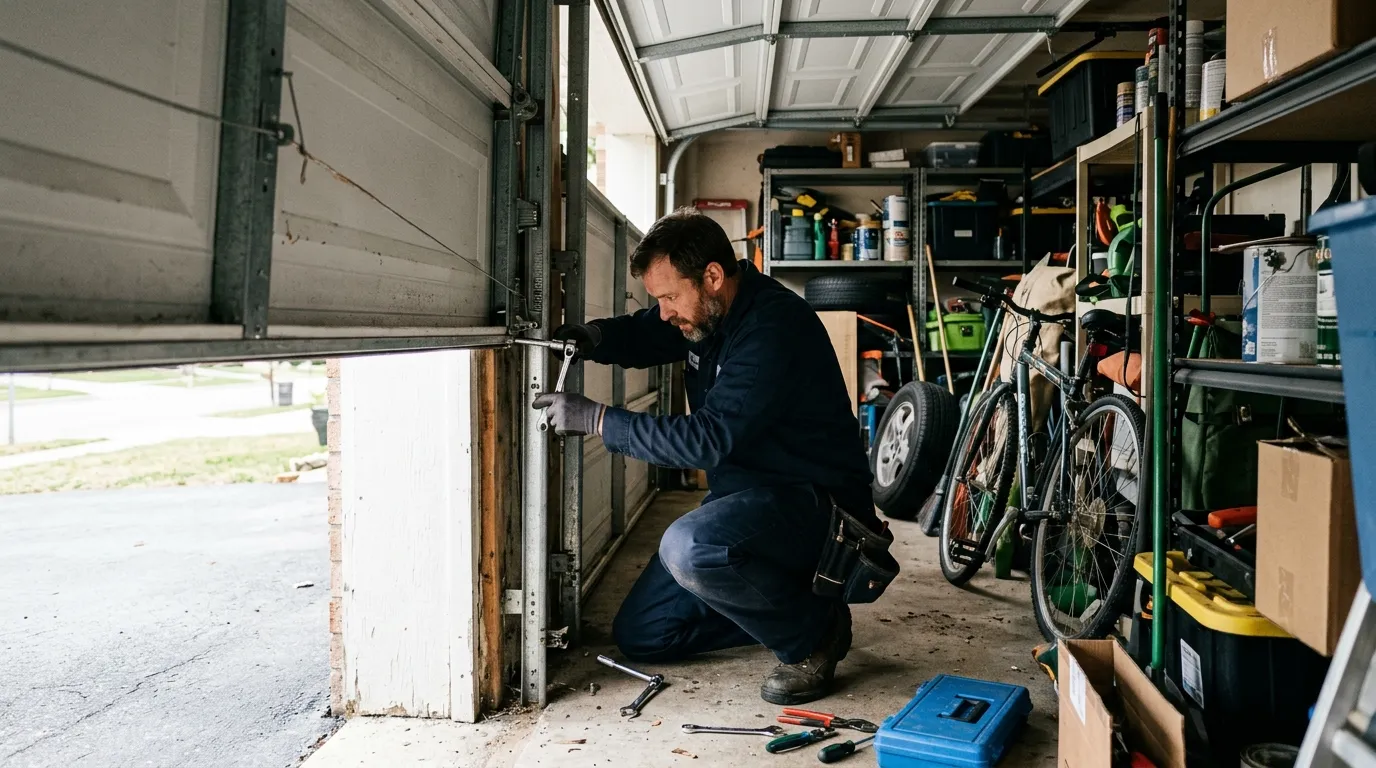
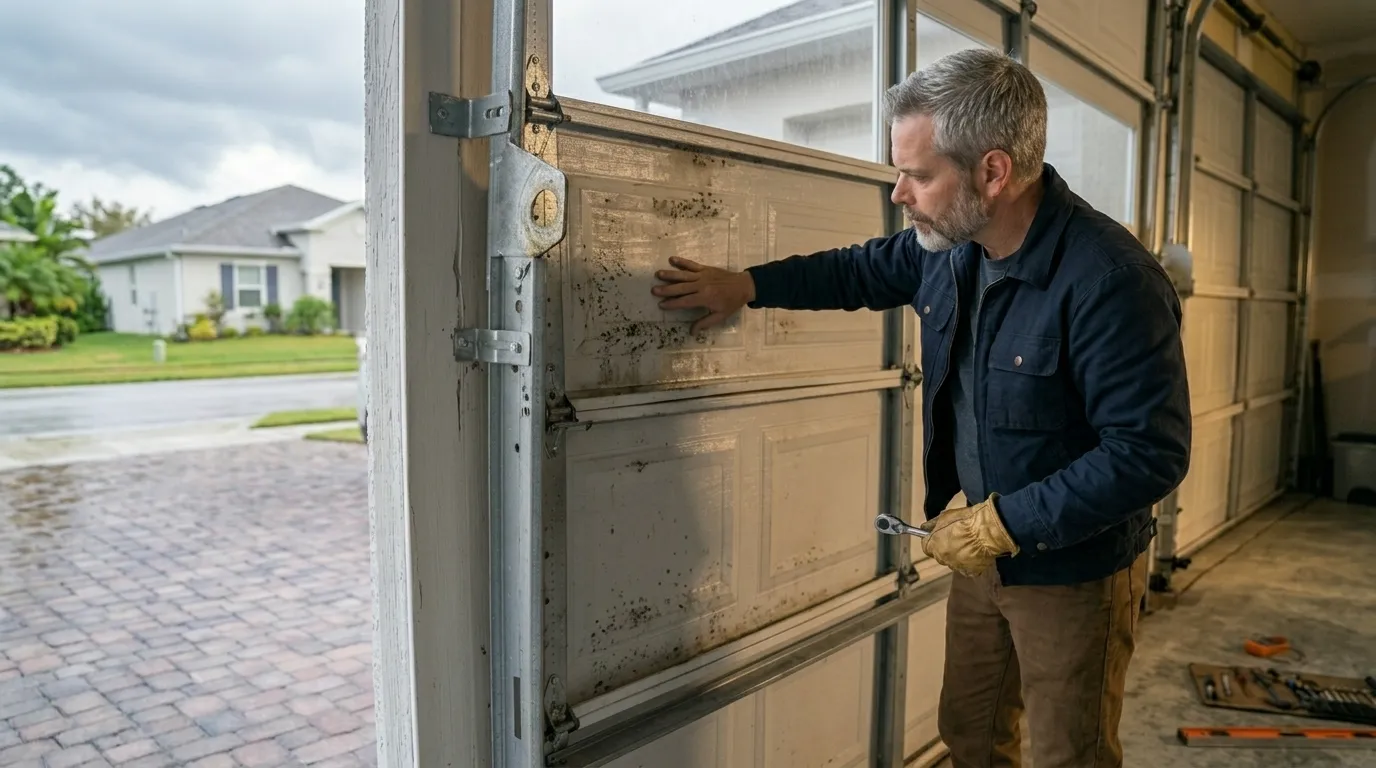
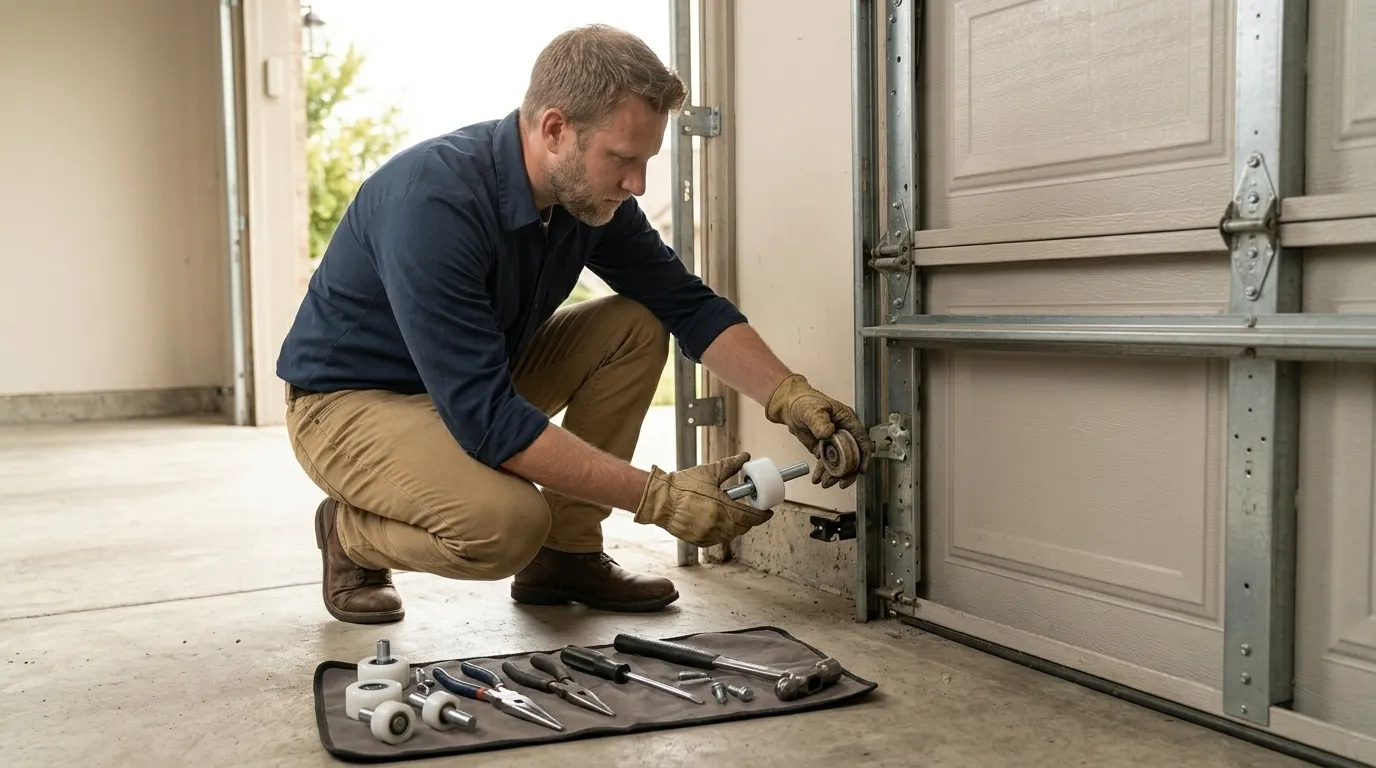
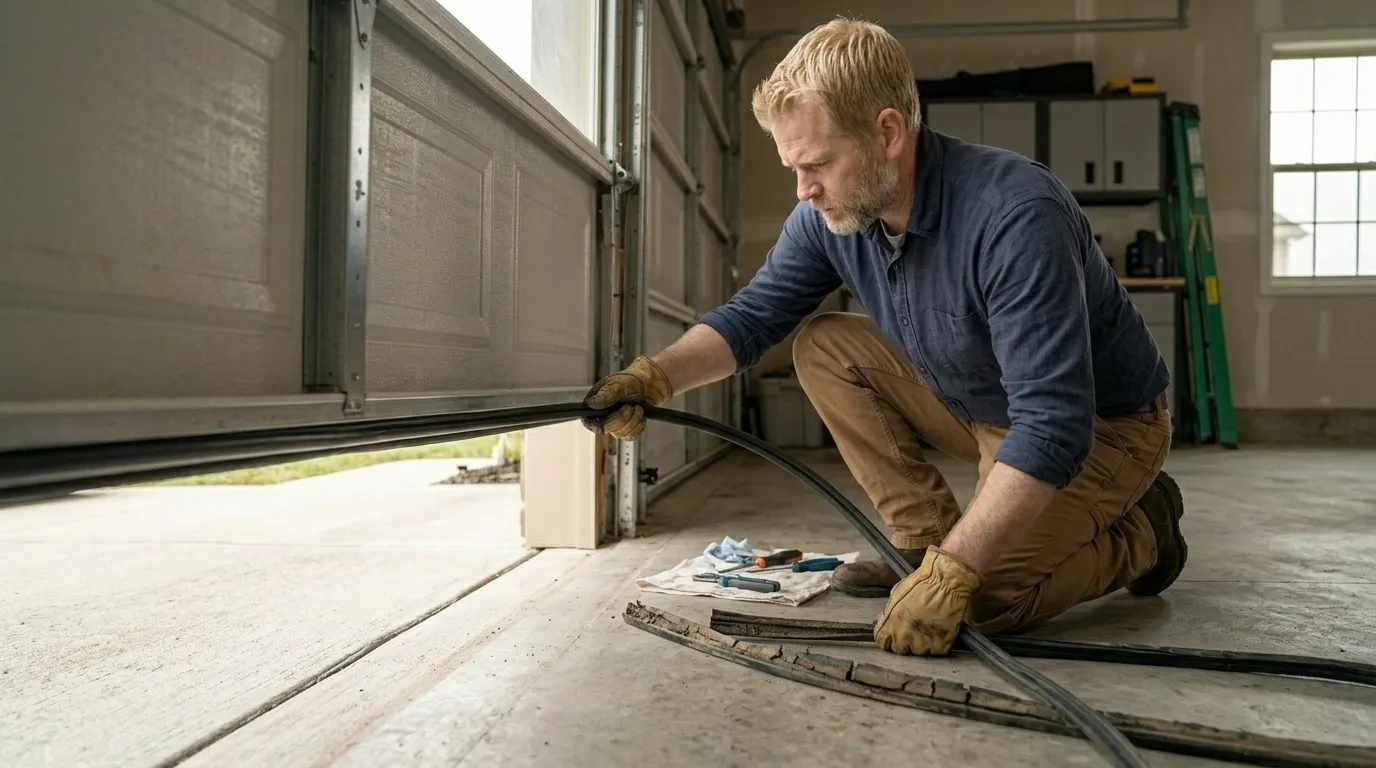
The door usually gives warning before it fully derails. Look for a visible gap between the roller and the track on one side, a door that closes crooked instead of flush, or a grinding and popping sound partway through the cycle as a roller catches the edge of the rail instead of riding inside it. Sometimes the opener will run and stall, straining against a door that's binding rather than sliding.
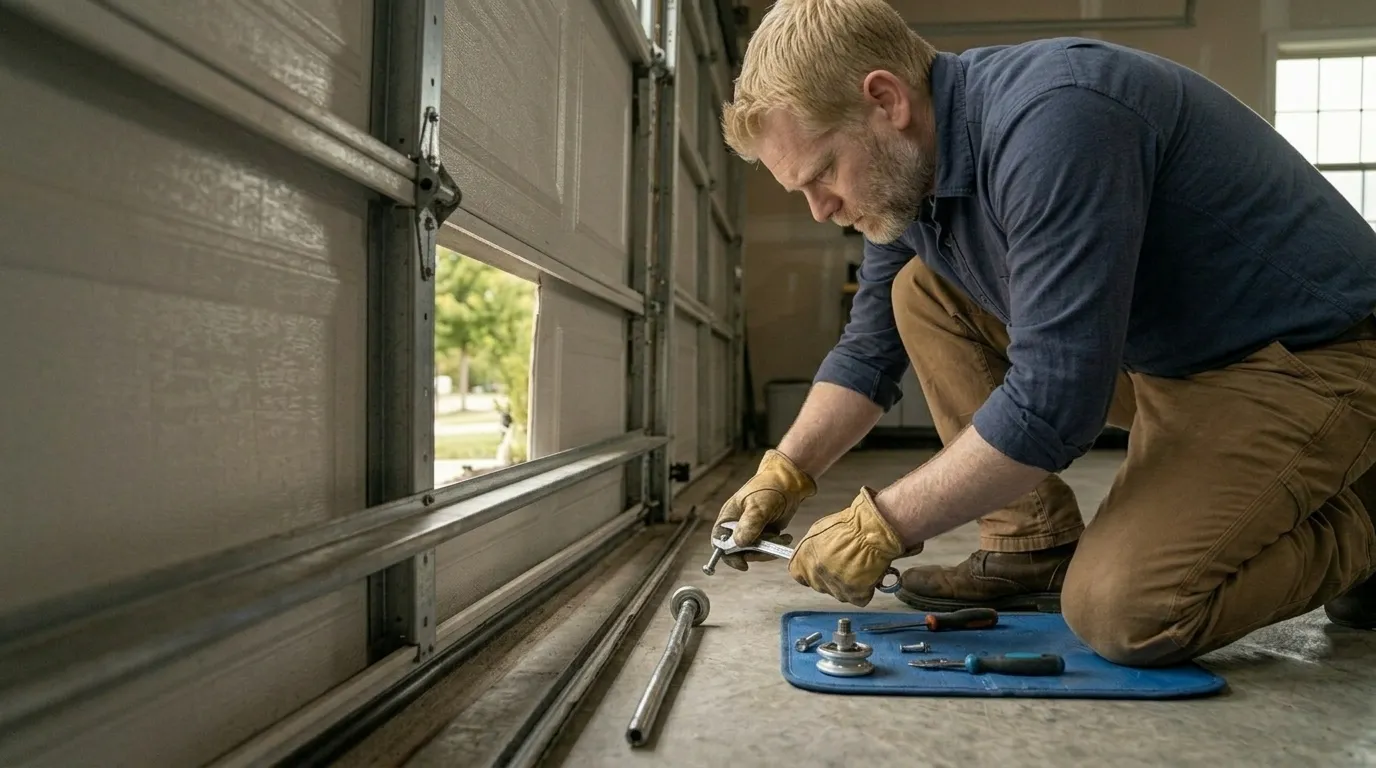
On older tracks - the kind common in the 1980s and 90s builds that make up most of this area's housing - you'll often see the vertical track section pulled slightly away from the frame, the bracket screws backed halfway out, before the roller ever fully jumps. If a panel has visible denting or the track is bent into a curve rather than sitting straight, that's usually the difference between a bracket-and-roller fix and a section that has to come out.
The Cost of This Job
We don't post flat pricing for this one because the range is wide and driven entirely by what's actually wrong. A door that's simply worked its rollers loose from aging brackets is a tightening-and-realignment job. A door where the track itself is bent - which happens if someone's tried to force it closed while it was off the rail - usually means replacing that section outright, since a bent track doesn't reliably hold alignment once you've straightened it.
Honest limitation: if the track is bent in more than one place, or the door is old enough that the track profile isn't sold anymore, we'll tell you replacement is the better call rather than patching a track that'll drift again in a year. That's not the answer everyone wants to hear, but a repair that fails again in six months costs more than doing it right once. We'll always look at the door first and give you the actual number for what's in front of us, not a guess over the phone.
How it works
From “it’s stuck” to “it’s fixed”
1
Tell us what’s wrong
Describe the symptom - won’t open, loud bang, opener runs but the door won’t move.
2
On-site diagnosis
A technician tests the door under power and by hand and finds what actually failed.
3
Clear, up-front plan
You get the fix that’s needed and what drives the cost - before any work starts.
4
Repaired & tested
The repair is done, the door is set true and tested, and the work area left clean.
Serving Orlando, FL - tell us what your door’s doing and we’ll take it from there.
Can I close a garage door that's off track myself?
No. Forcing a door closed once a roller has left the track can bend the rail or snap a cable under load, turning a repair into a full replacement. Leave the door where it is, disconnect the opener if it's still trying to run, and get it looked at before anyone touches it again.
Is a door off track always a track problem?
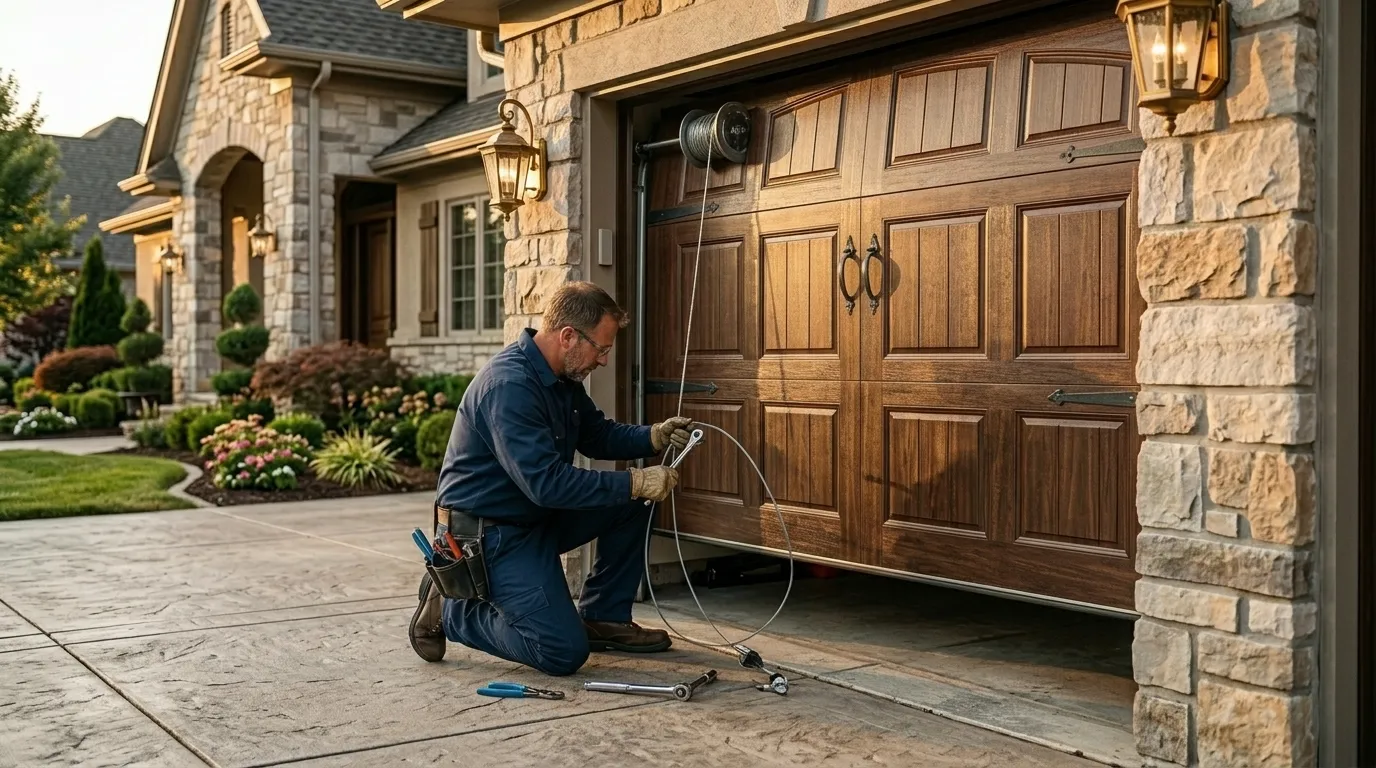
Not always. Sometimes a cable slipping off the drum or a broken spring lets one side of the door drop unevenly, which pulls the roller off the rail even though the track itself is fine. That's why we check the whole system, not just the section that looks bent.
Why does this happen so often in older Orlando neighborhoods?
A lot of the housing stock here dates back to the 1980s and 90s, so the original track brackets and rollers are decades past their expected life. Fasteners back out, rollers wear their channel wider, and eventually a roller walks off the rail during a normal open-close cycle.