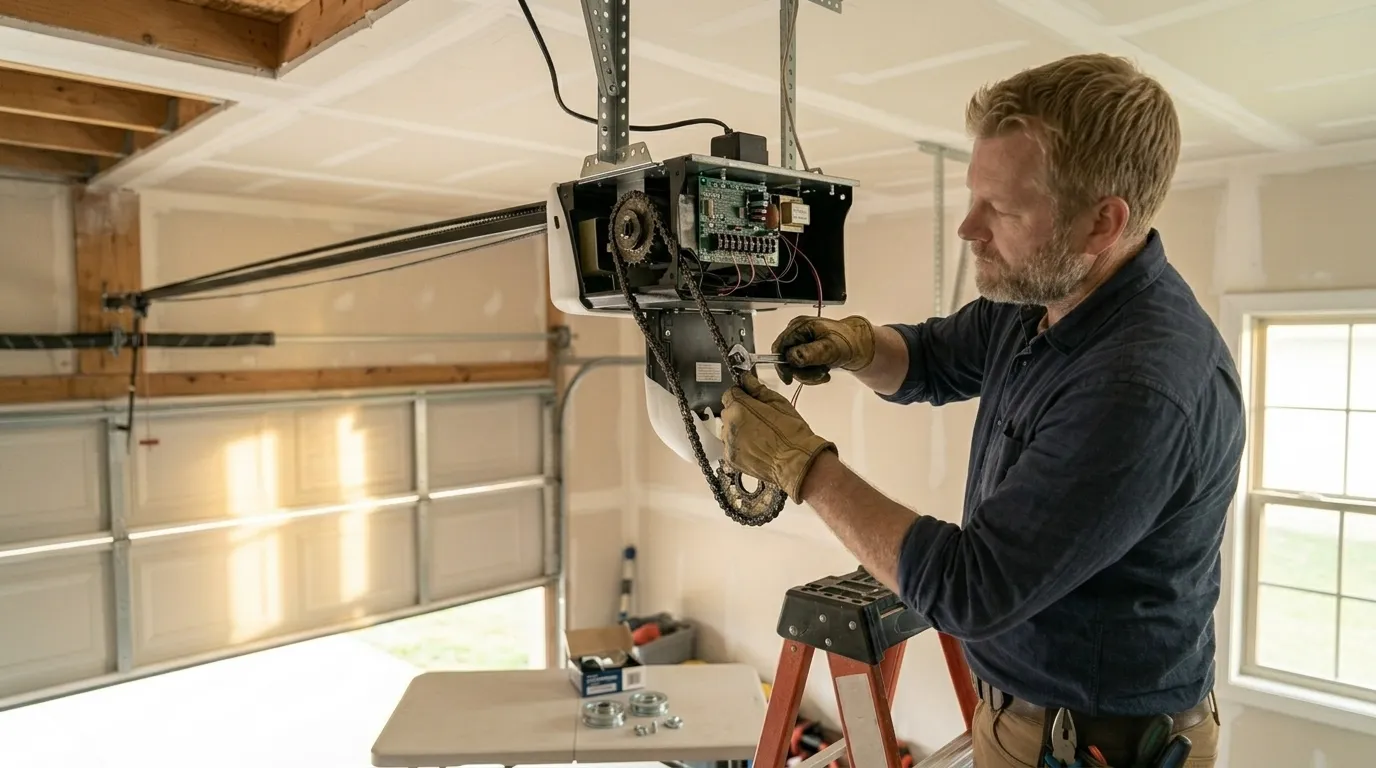
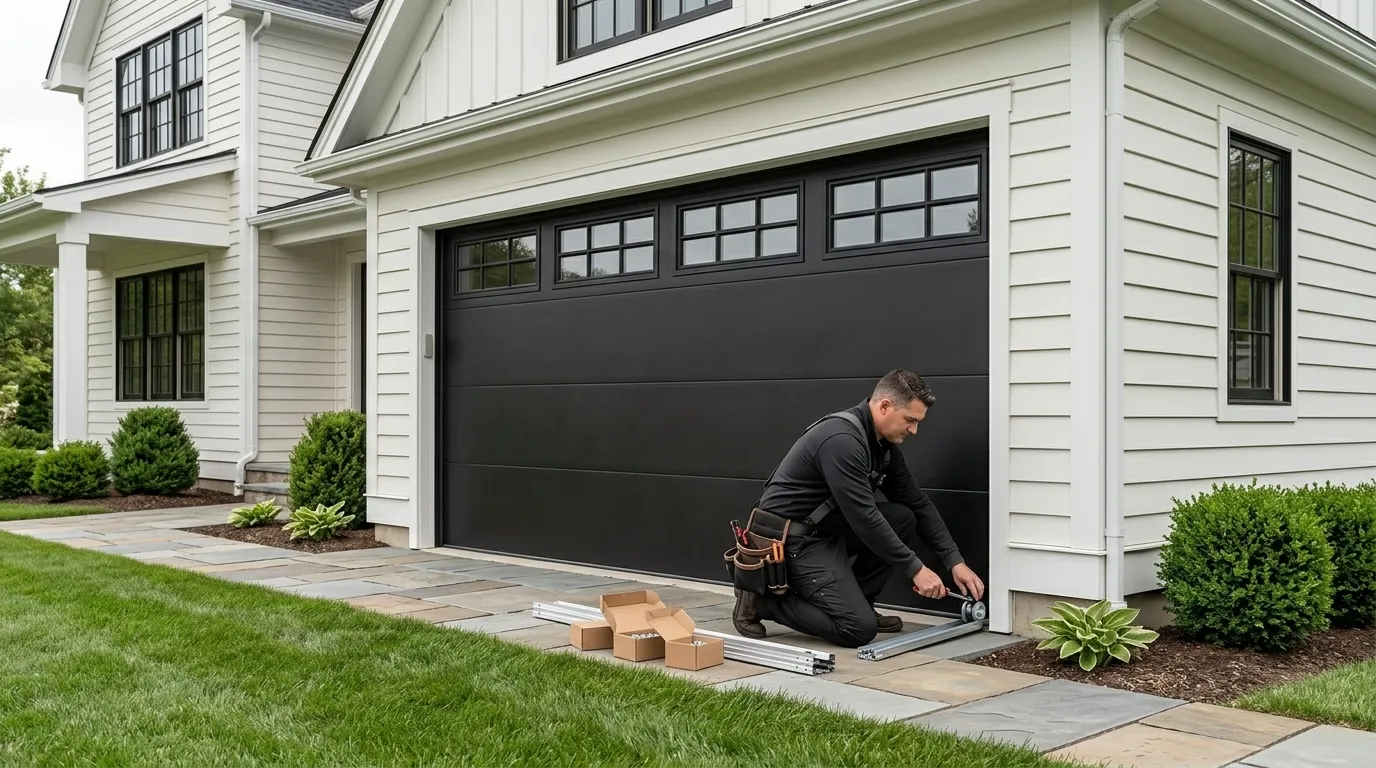
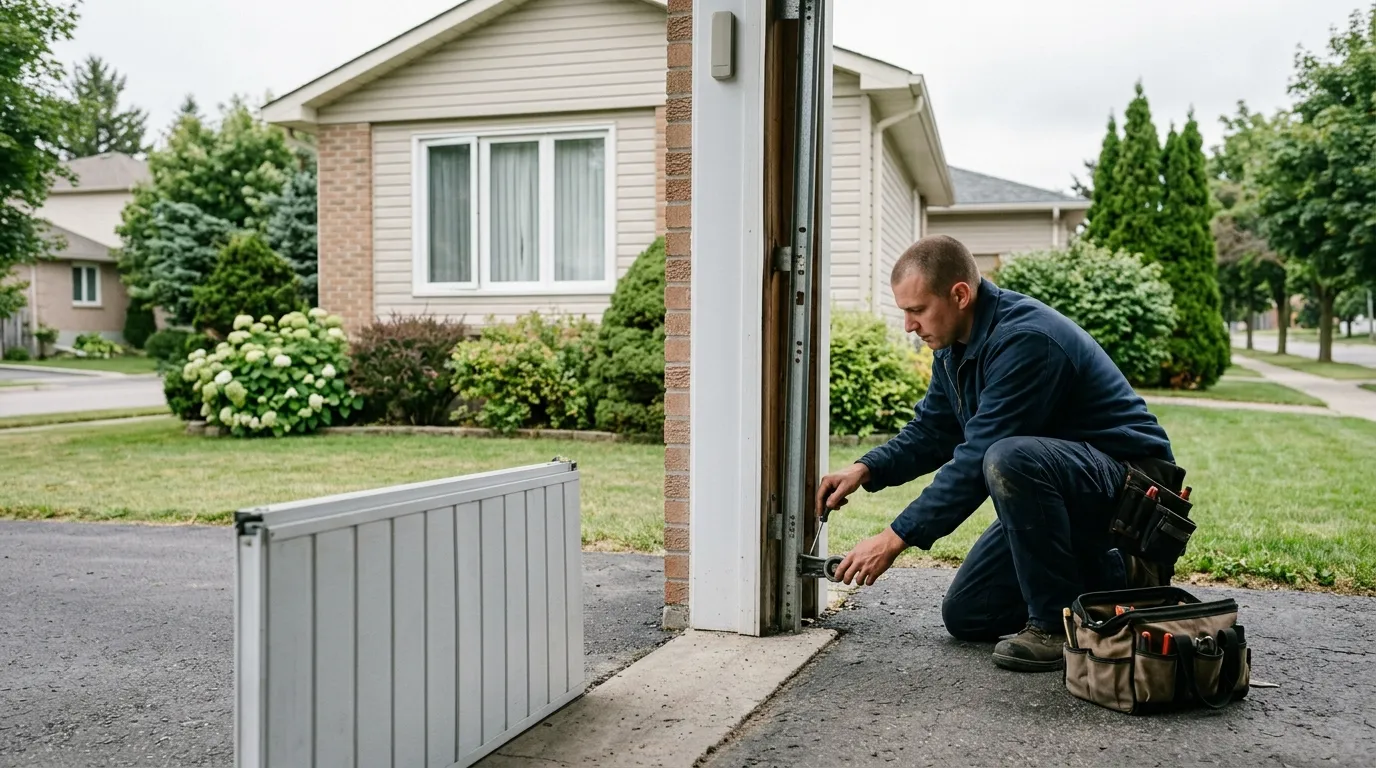
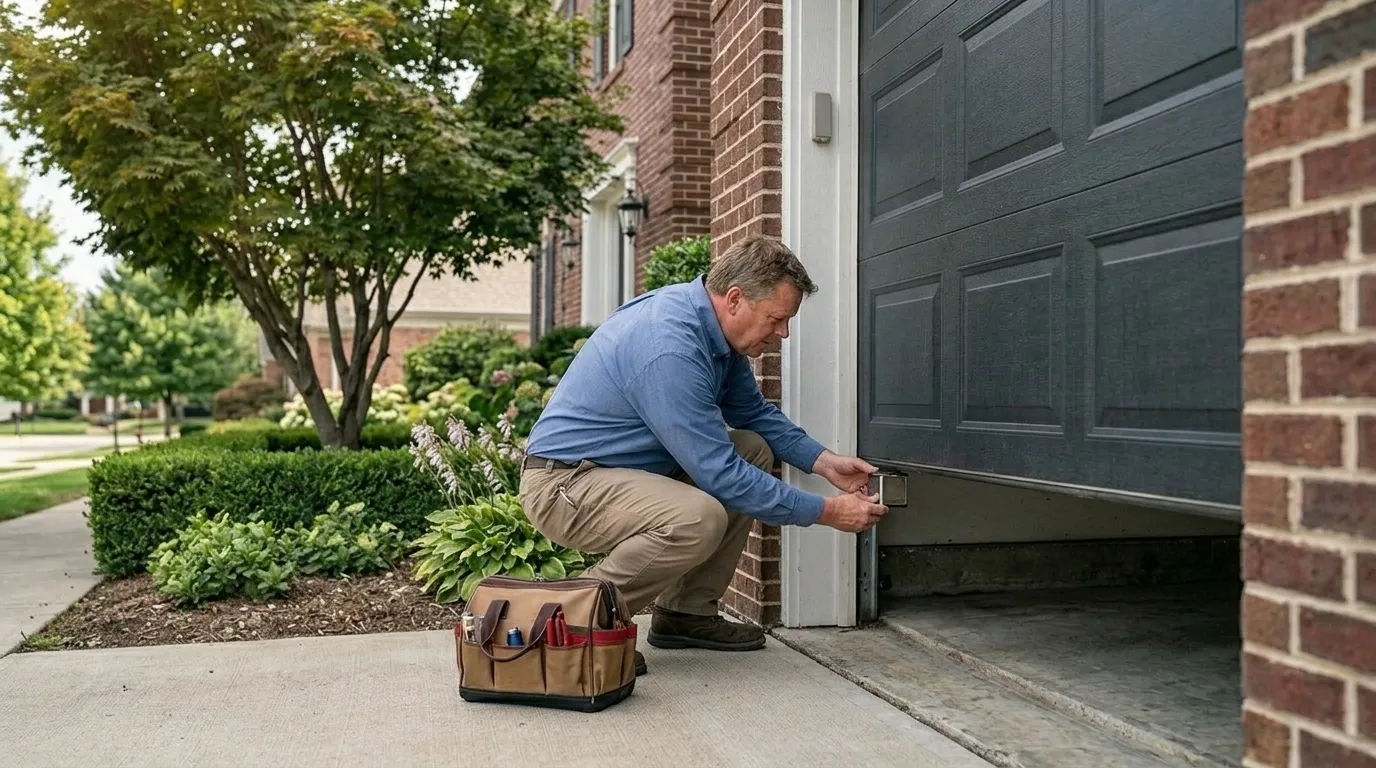
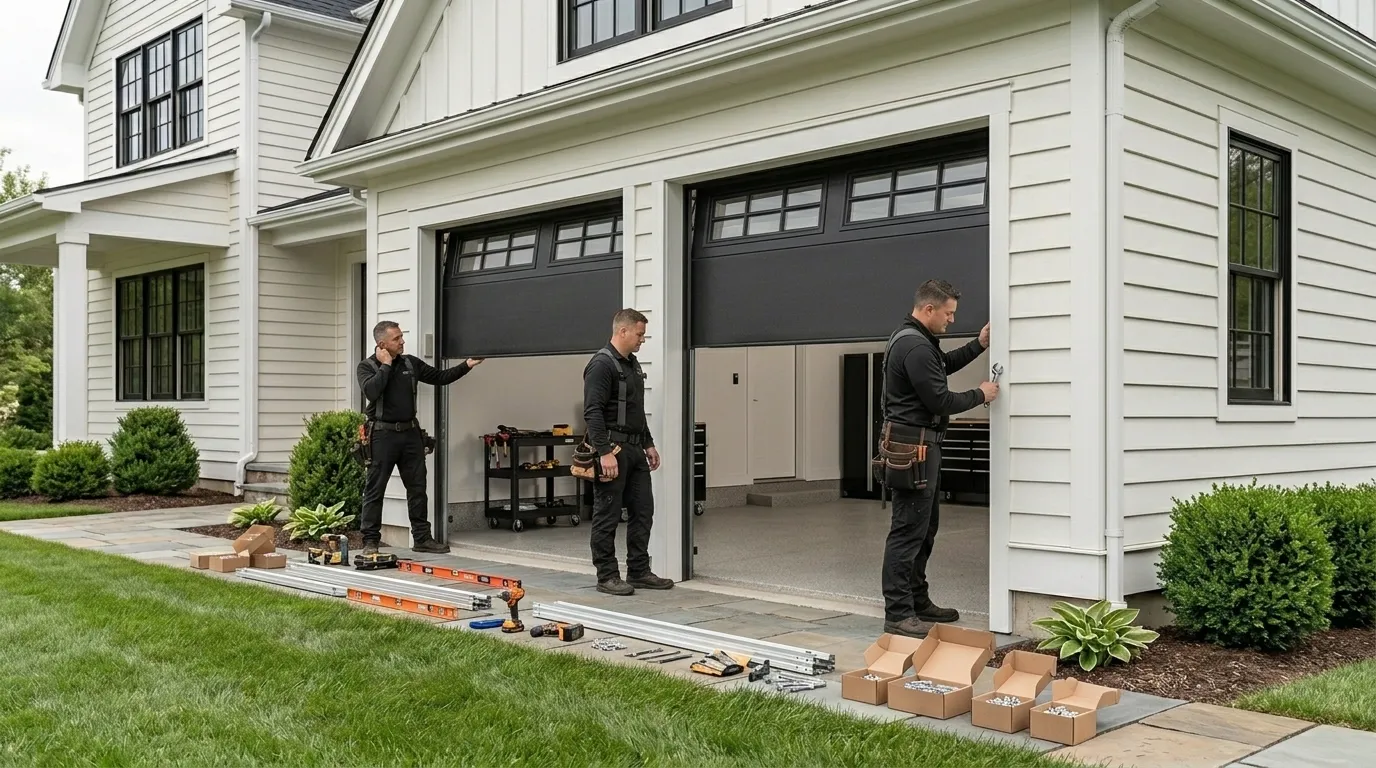
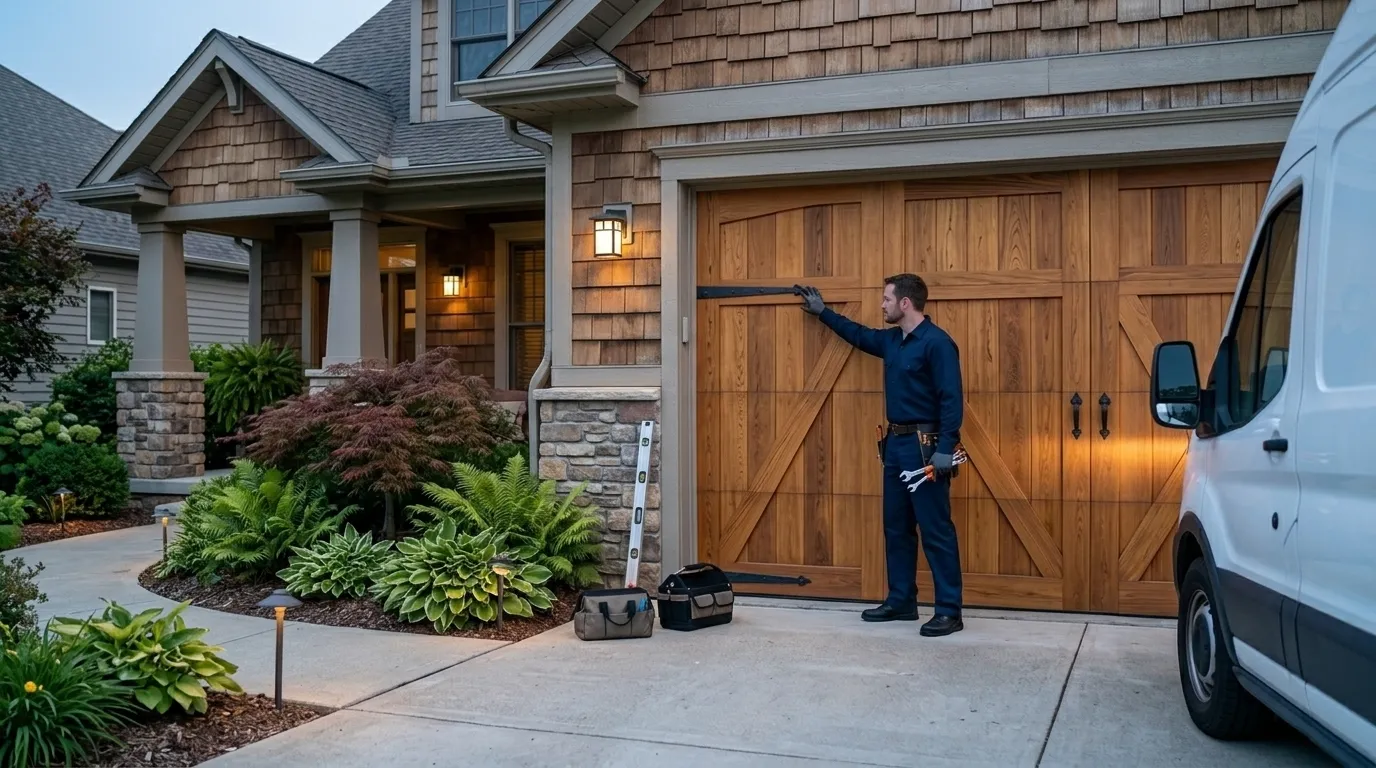
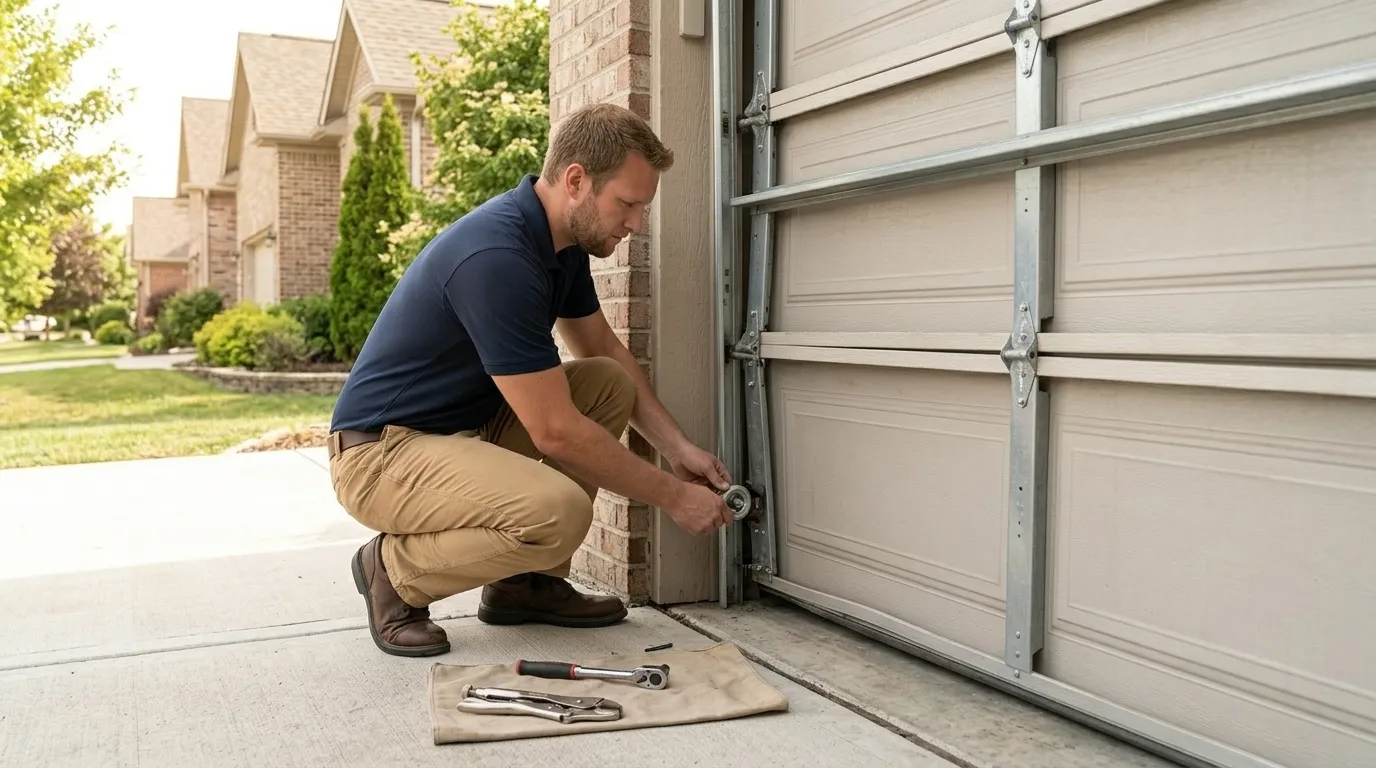
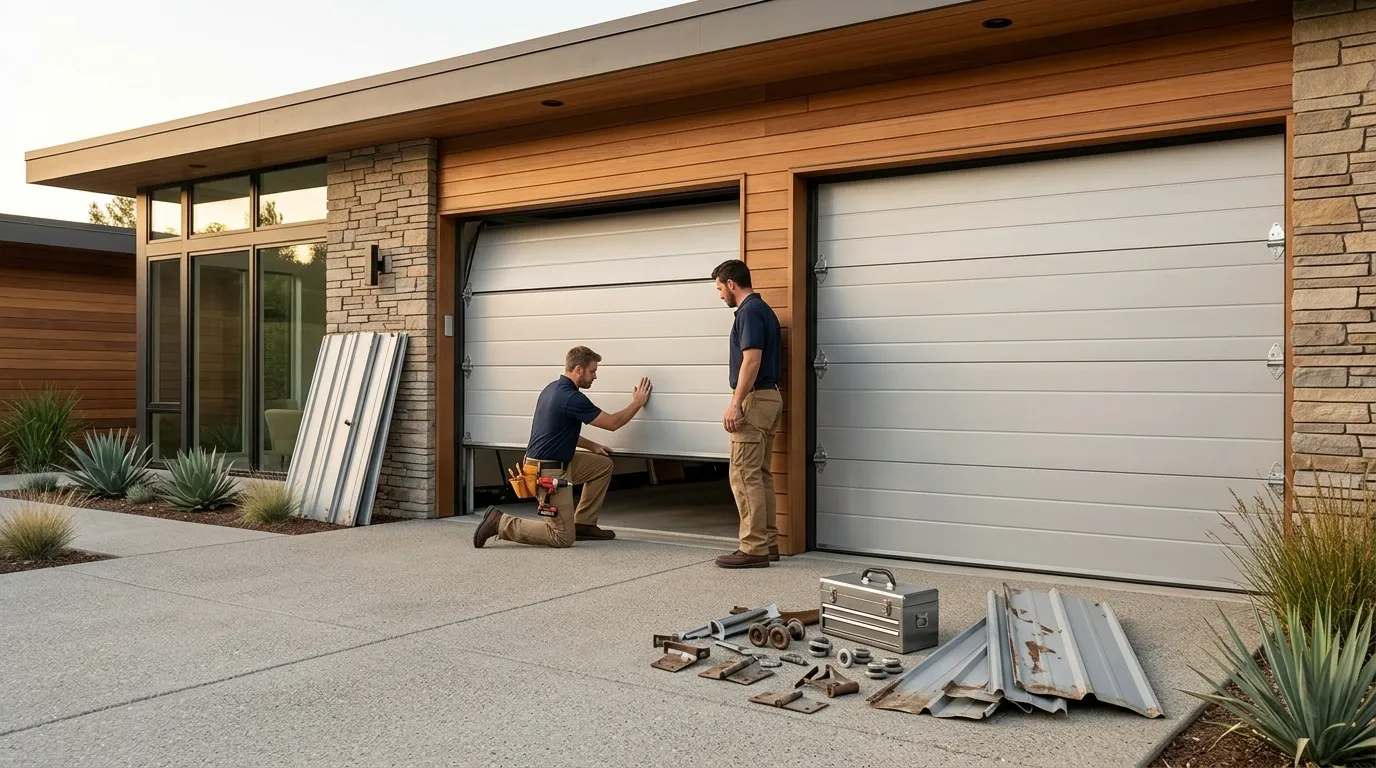
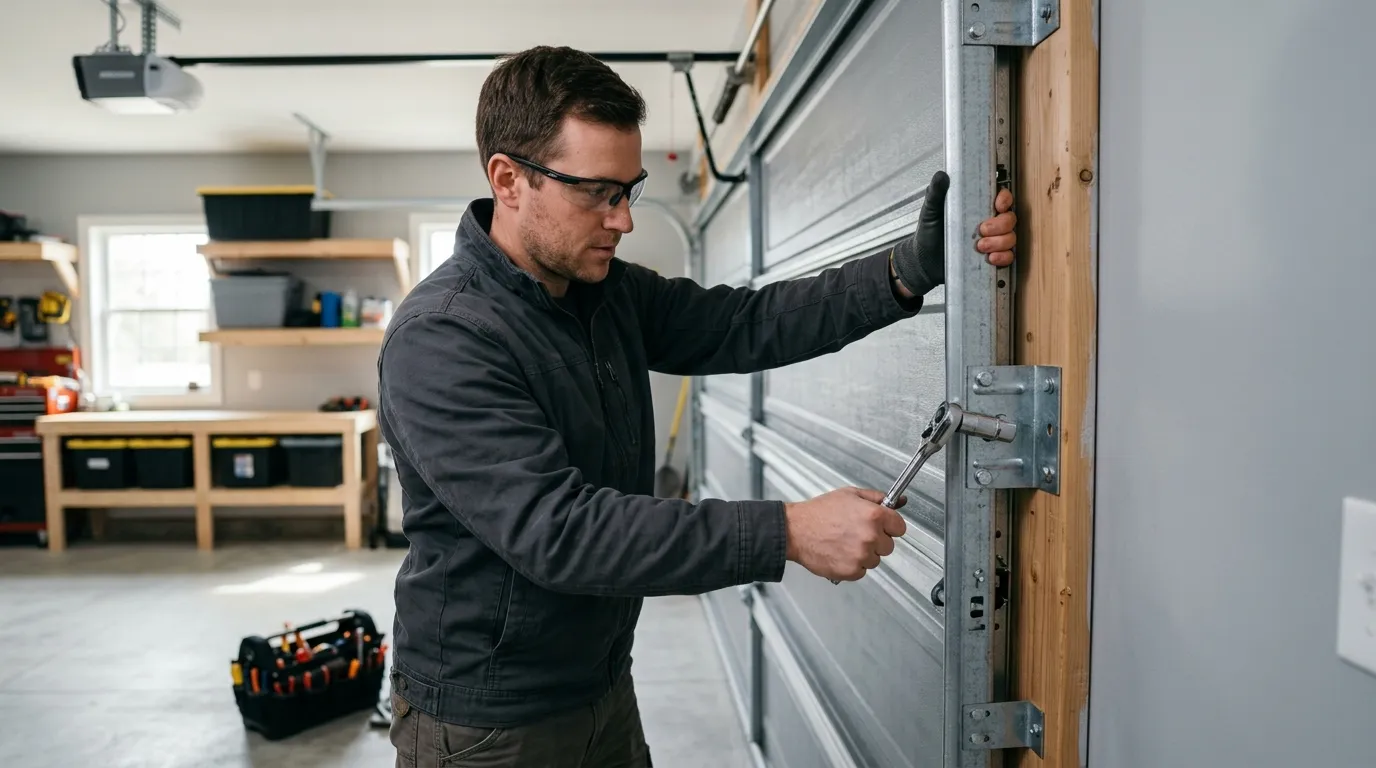
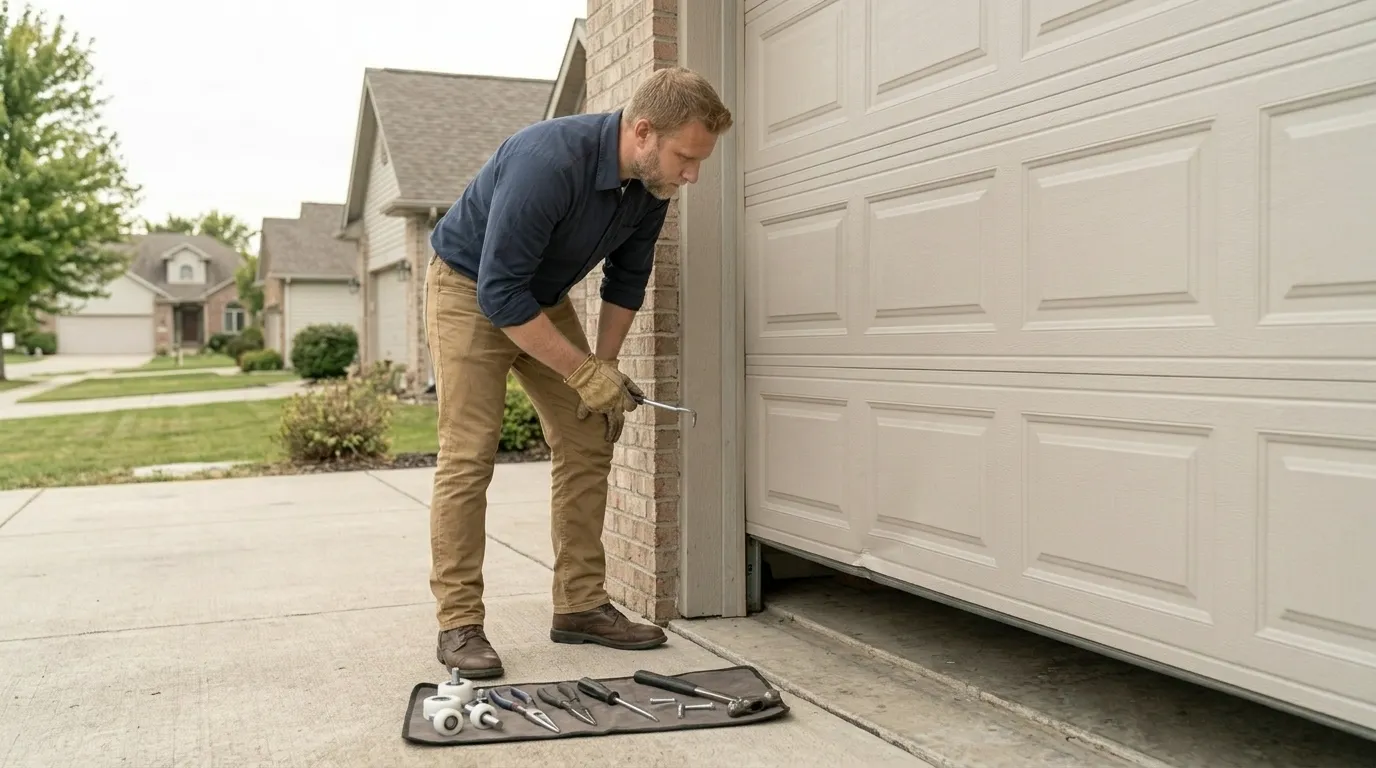
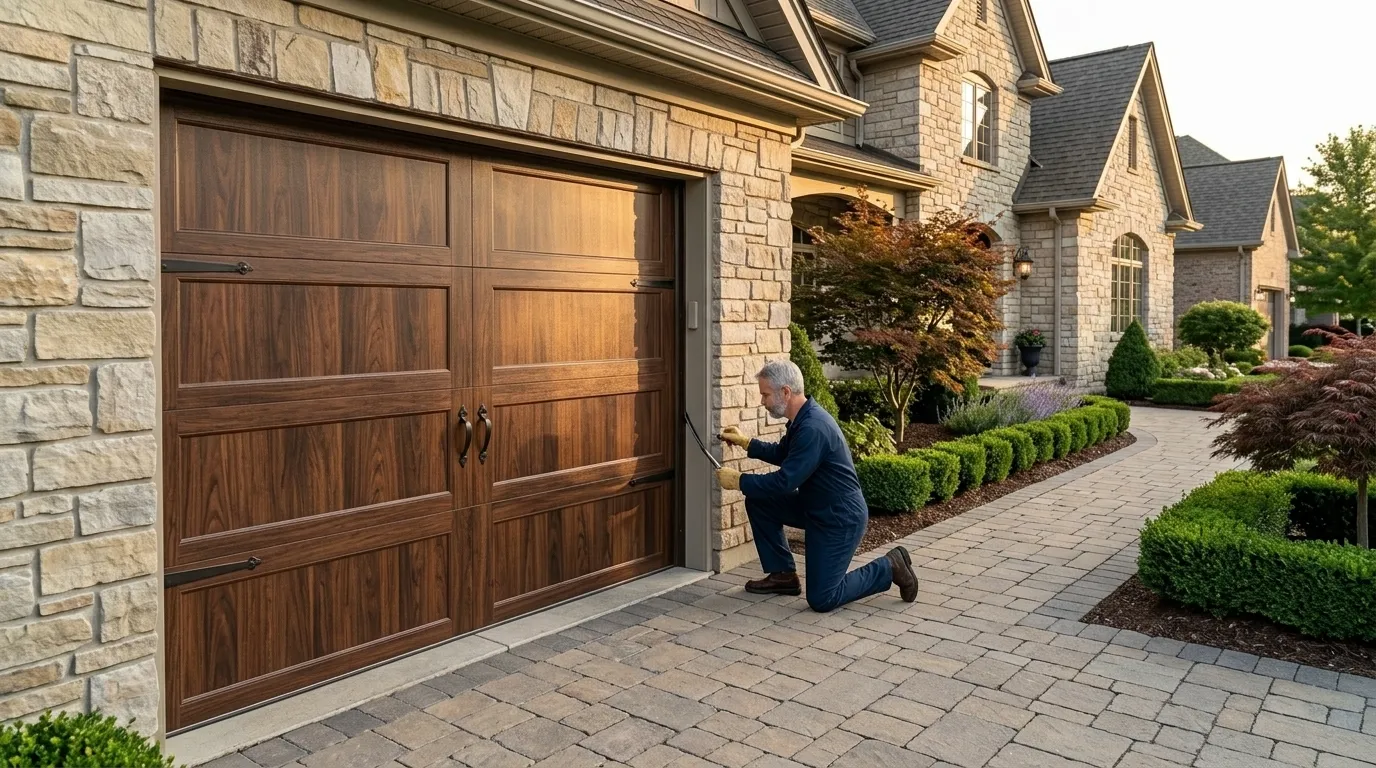
Broken torsion or extension spring on your Orlando garage door? We explain why this fails so often in homes built from the 1960s through today and what a proper fix costs.
Springs don't care about the calendar, they care about cycles - how many times a door has gone up and down. Housing in this service area runs from 1964 through 2021, with the median build year sitting at 1987, and most of the stock across the 39 named communities we work in dates to the 1980s and 90s. That means a huge share of the garage doors out there are pushing 30 to 40 years of daily openings on the original torsion or extension springs, or on a replacement spring nobody logged the install date for.
Orlando's climate helps in one way and hurts in another. It's a mild temperate band, so you're not dealing with the freeze-thaw metal fatigue that cracks springs up north. But mild doesn't mean gentle - humidity and heat still work on the coating and the coil over decades, and a spring that's already near its cycle limit will let go without much warning either way. The failure here is almost always fatigue from age and use, not a cold snap. That's why a spring that seemed fine last month can snap on a normal Tuesday with no storm, no cold front, nothing dramatic - just years of use catching up at once.
Booking a Visit
We run jobs across the full service area, from the immediate neighborhoods out to communities eight to eighteen miles off - places like Belle Isle, Conway, Winter Park among the 39 named areas we cover. If your address falls somewhere in that range, we can usually get a truck out without a long window.
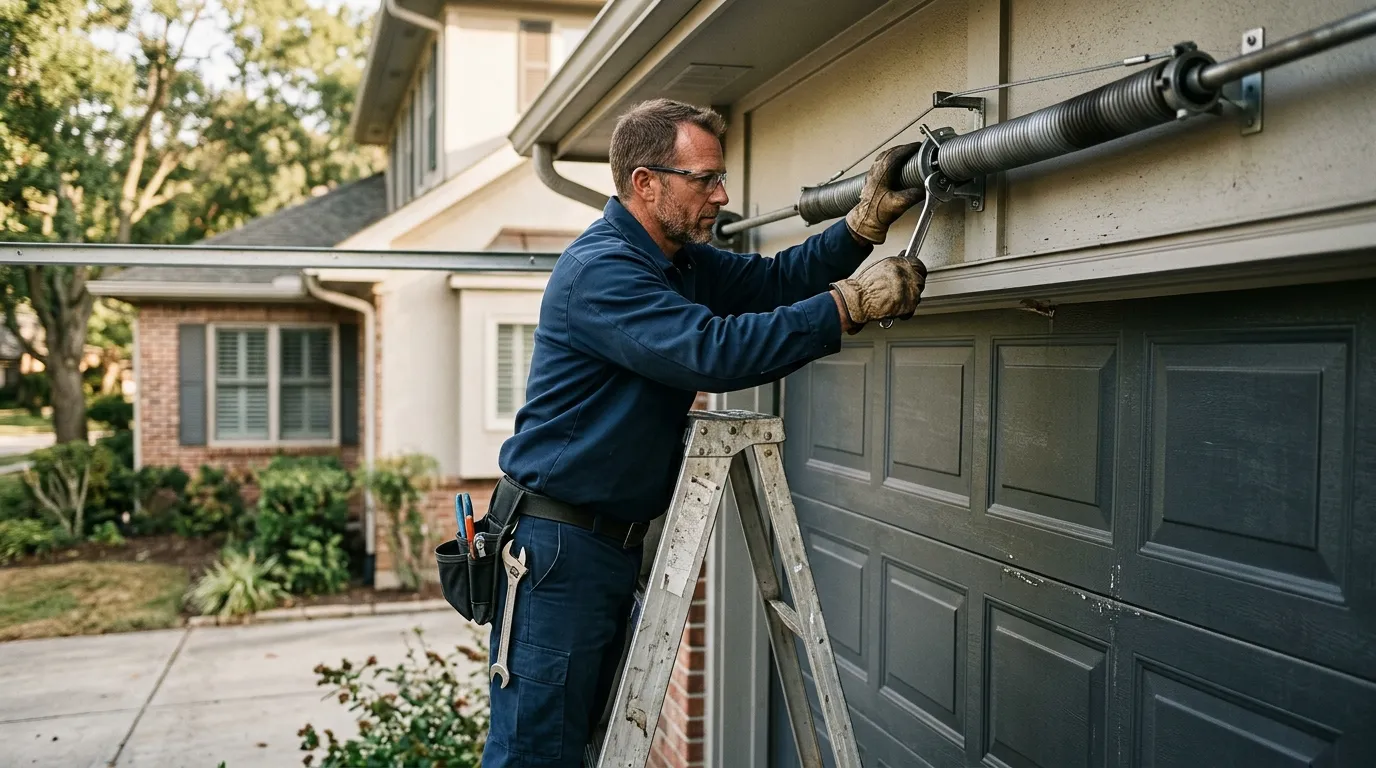
When you call, tell us what the door is doing right now: won't budge, opener straining and stopping, or a visible gap in a coiled spring above the door. That detail changes what we bring on the truck - torsion bar hardware is different from extension spring brackets, and showing up with the wrong parts means a second trip nobody wants.
We book by phone, and we'd rather ask two extra questions up front than guess wrong on-site. If the door is a two-car door with two torsion springs, we plan for both, since replacing one and leaving the other at end-of-life just guarantees a second call in a few months.
How It Shows Up
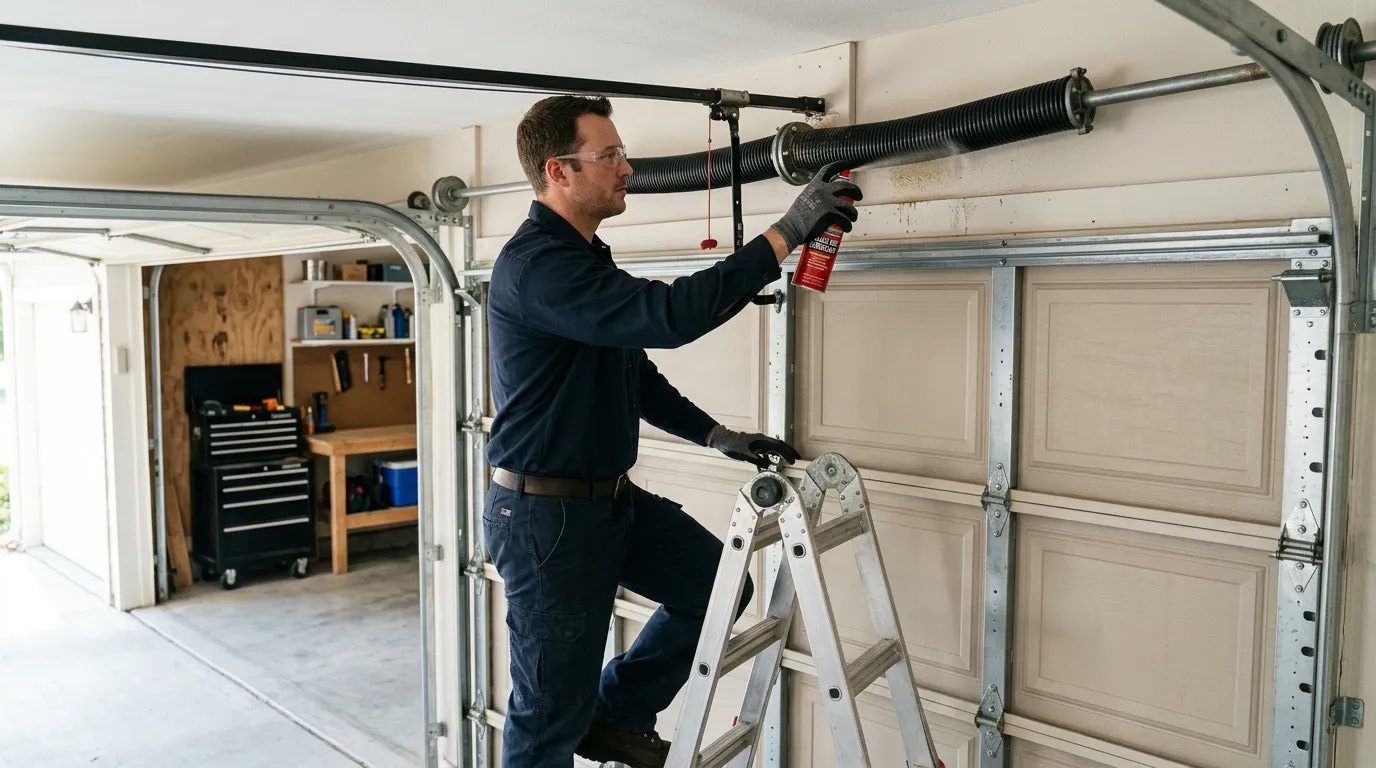
A torsion spring that's about to fail rarely gives you nothing at all. Most owners notice the door getting heavier to lift by hand, or the opener motor working harder and taking longer on each cycle. Some hear a loud bang from the garage - that's the spring letting go, usually when the door is closed and under full tension.
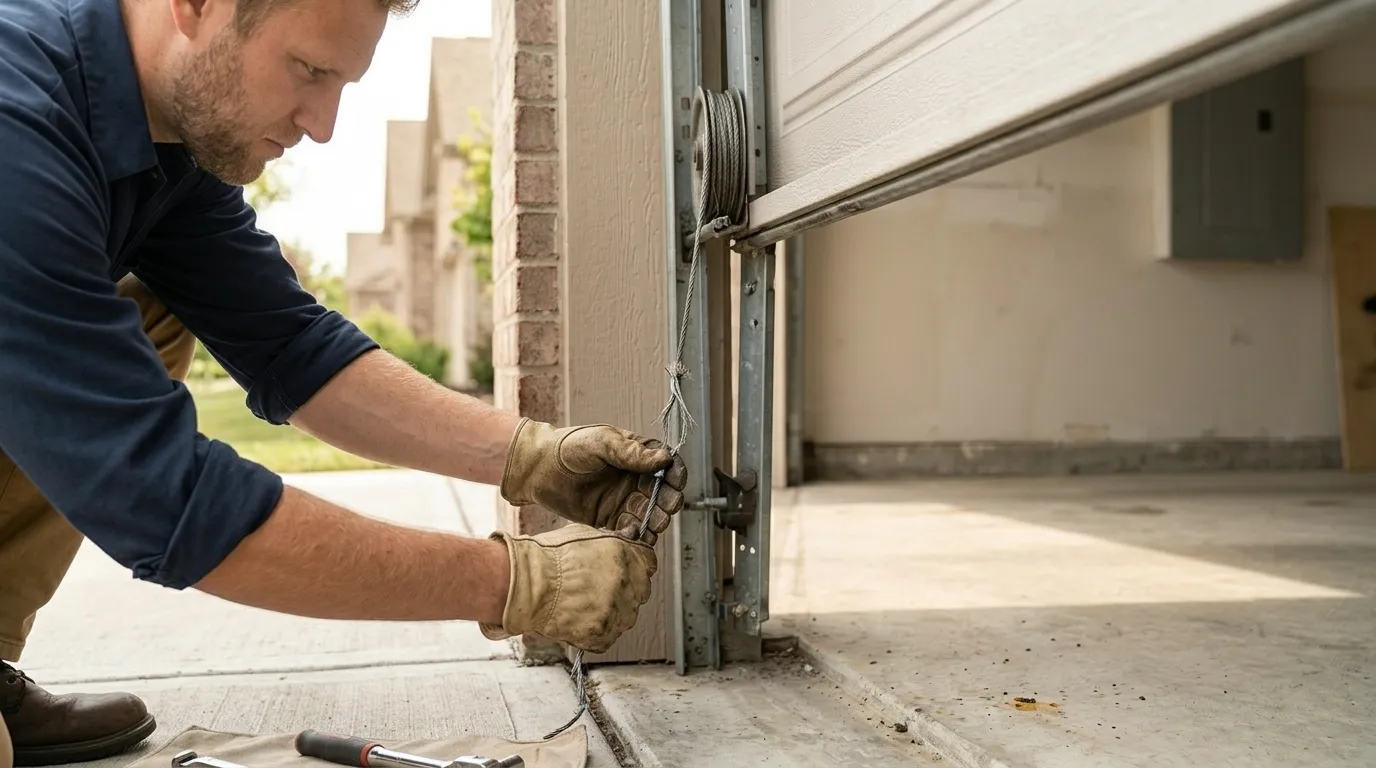
Once it's gone, the door either won't lift at all, or it lifts a few inches and stalls because the opener isn't built to carry the full weight of the door alone. Cables can look intact even after a spring failure, so a door that seems to move freely but crooked, or that drops fast on the way down, points to a cable or spring issue rather than the opener itself.
On older stock from the 1980s and 90s, we also see mismatched springs - a previous repair that replaced one spring but not its pair, which throws the door off balance and speeds up wear on the side that's still original.
The Cost of This Job
We're not going to quote a number here that isn't grounded - every door is different, and the honest range depends on whether you need one spring or two, torsion or extension, and whether the drums or cables are worn enough to need swapping at the same time. What we can tell you is that replacing both springs on a double door, even when only one has broken, tends to cost less over the life of the door than patching one side twice.
One limitation worth saying plainly: if your opener or track hardware is also near the end of its life, spring repair alone won't fix a door that's failing in more than one place. We'll tell you straight if the spring is the smaller problem and something else needs attention first, rather than replacing springs on a door that's going to need track work in a few months anyway.
How it works
From “it’s stuck” to “it’s fixed”
1
Tell us what’s wrong
Describe the symptom - won’t open, loud bang, opener runs but the door won’t move.
2
On-site diagnosis
A technician tests the door under power and by hand and finds what actually failed.
3
Clear, up-front plan
You get the fix that’s needed and what drives the cost - before any work starts.
4
Repaired & tested
The repair is done, the door is set true and tested, and the work area left clean.
Serving Orlando, FL - tell us what your door’s doing and we’ll take it from there.
How do I know if it's the spring and not the opener?
If the door won't lift by hand, or the opener motor strains and stalls partway up, that's almost always a spring issue rather than an opener problem. Openers aren't built to lift a garage door's full weight on their own - that's the spring's job. A working opener paired with a dead spring will still fail to open the door.
Is it safe to open the door manually after a spring breaks?
You can, carefully, but a door without working springs is heavy and unbalanced, and it can drop fast once you release it. We'd rather you leave it closed and call than risk lifting it by hand, especially on a double door where both springs may be near failure.
Why did my spring break with no cold weather or storm?
In this climate, spring failure is almost always about use, not weather. A spring rated for a certain number of open-close cycles will fail once it hits that count, regardless of temperature. Houses built in the 1980s and 90s across this area are now old enough that a lot of original springs are simply at the end of their rated life.
Should I replace one spring or both on a double door?
If your door has two torsion springs and one broke, the other is usually close behind in wear, since they're installed and cycled together. Replacing just one saves money now but often means a second service call within months when the second one goes.