How Long You Are Without the Door
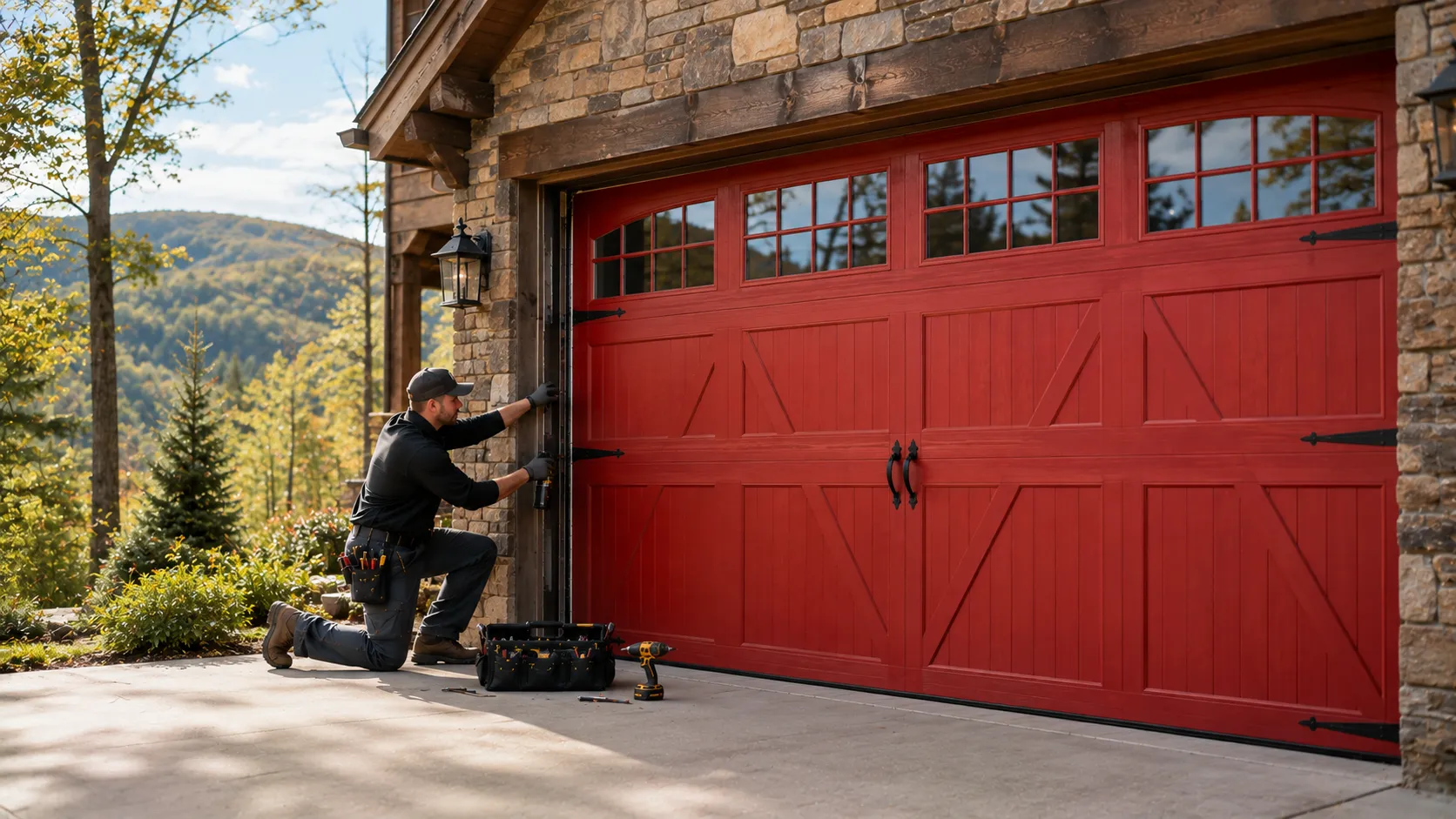
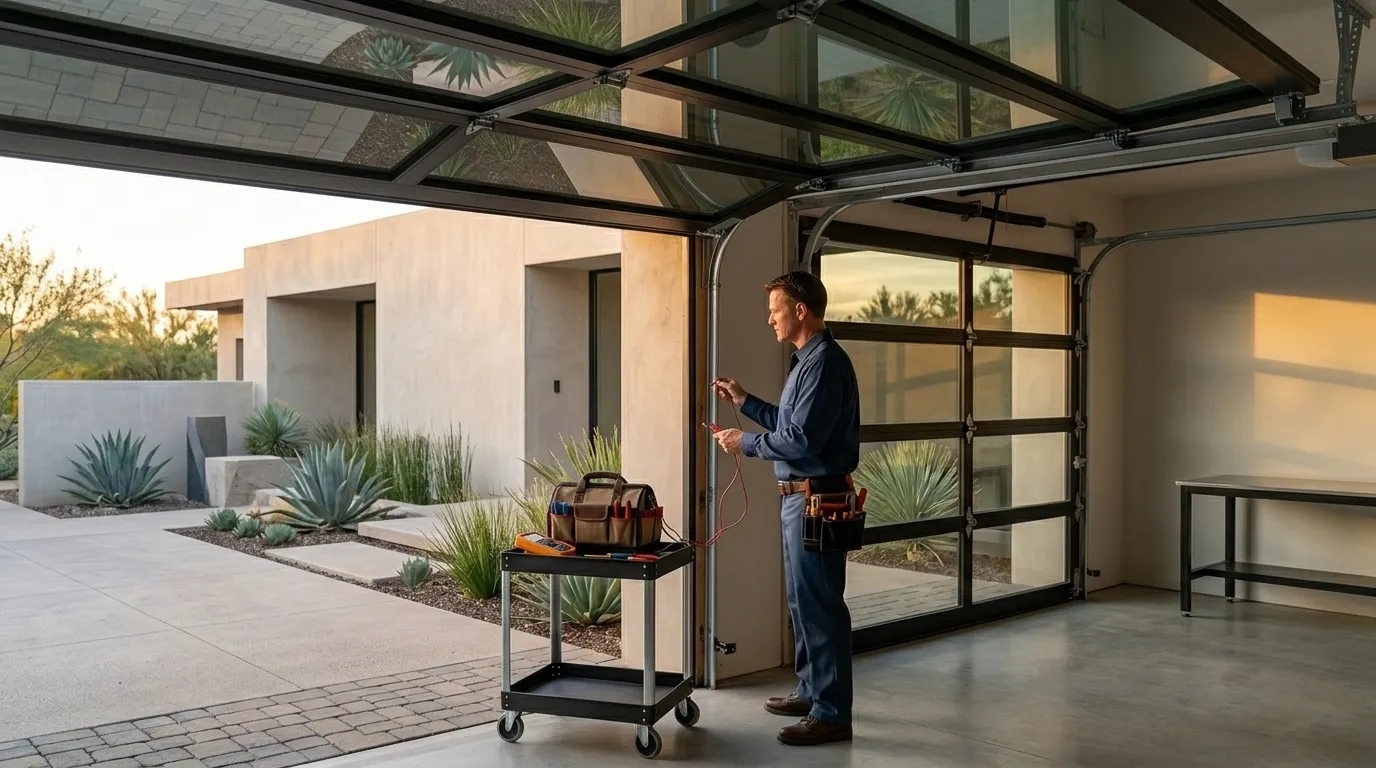
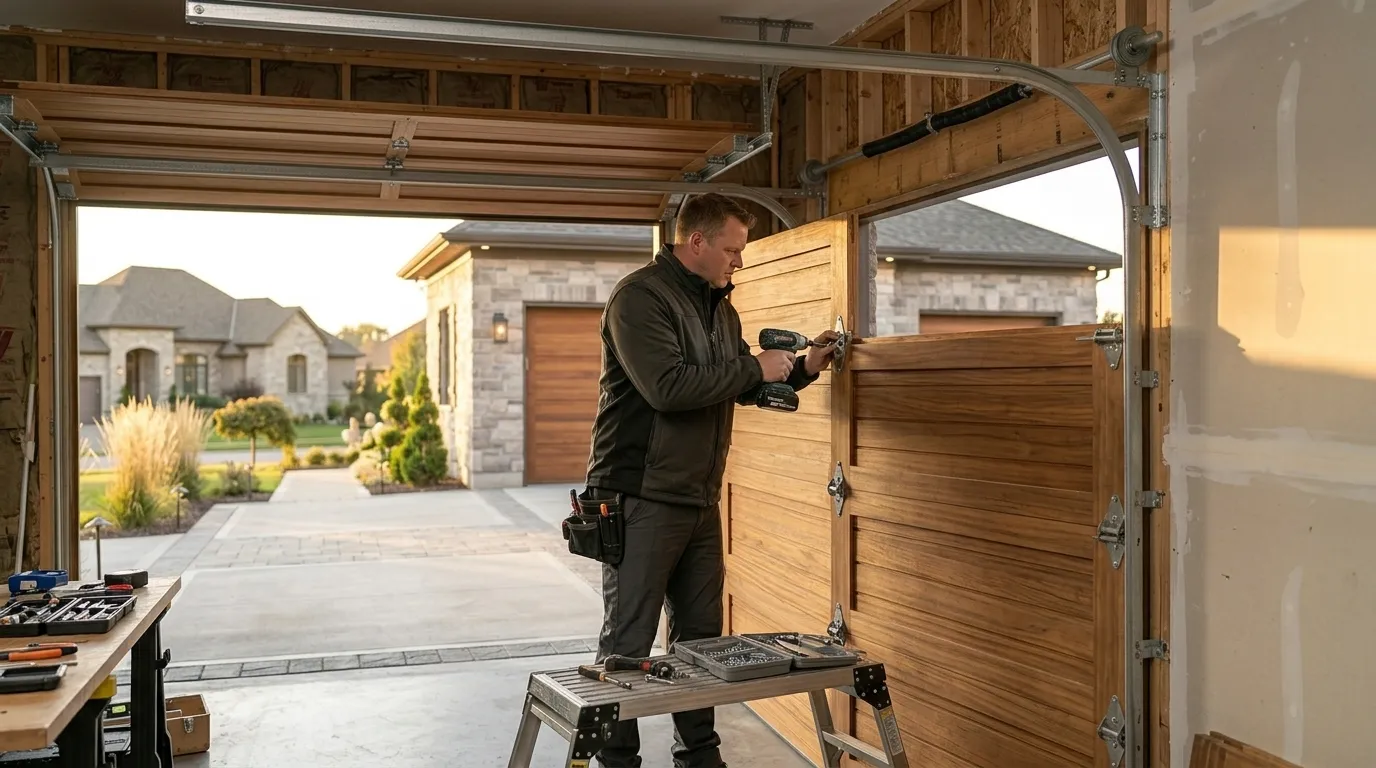
During the swap, the door itself can usually still be opened by hand - most torsion and extension spring setups let you lift the door manually once the opener arm is disconnected, so you're not locked out of the garage while the new unit goes in. What you don't have for a stretch is automatic operation: no remote, no wall button, no keypad, until the new opener is mounted, wired, and the safety sensors are aligned and tested.
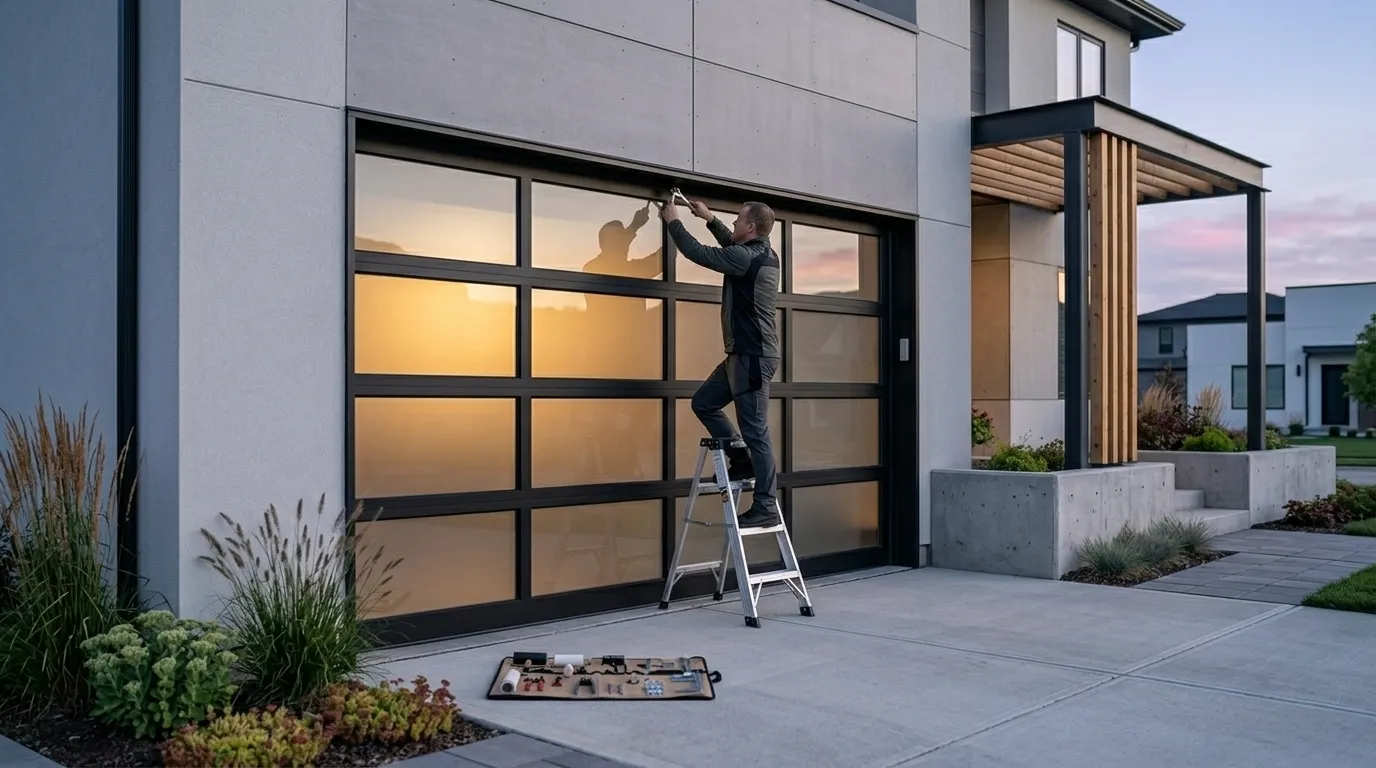
For a straightforward swap on a single door, that's typically a same-visit job from start to working remote. It runs longer if the header bracket needs rebuilding, if the wiring has to be rerouted because the old run doesn't meet current code, or if the door and track need adjustment before the new opener will lift it correctly - not uncommon on a door that's been running on an unmatched opener for years.
We won't tell you a number we can't back up region-wide, since travel and job scope both vary. What we can tell you is that a functioning garage door - hand-operated - is the fallback the whole time, not an empty bay.
Booking a Visit
We work Lockhart from Orlando, about 19 miles out, so a visit here gets scheduled the same way any other stop on the route does - we're not running a local branch or a same-hour drop-in promise, and we won't claim one. What we can do is look at the door and opener setup over the phone first: age of the house, whether the opener has a manual release arm, whether there's a working light or dead outlet at the unit, and go from there.
If you're not sure whether your opener needs replacing or just a part, that's a fair question to ask before we come out - sometimes a $20 sensor eye fixes what looks like a dead opener. For the full rundown of what we install and what it costs to run one of these units day to day, our garage door opener installation page covers that for the whole service area. For everything else we do on doors specifically in this part of town, see our Lockhart page.
How It Shows Up
It rarely announces itself as "the opener is dead." It's the remote working from the driveway but not from the street. It's the door reversing halfway up for no reason you can see. It's a grinding noise that starts a half-second before the door actually moves, or a light that used to come on and now doesn't.
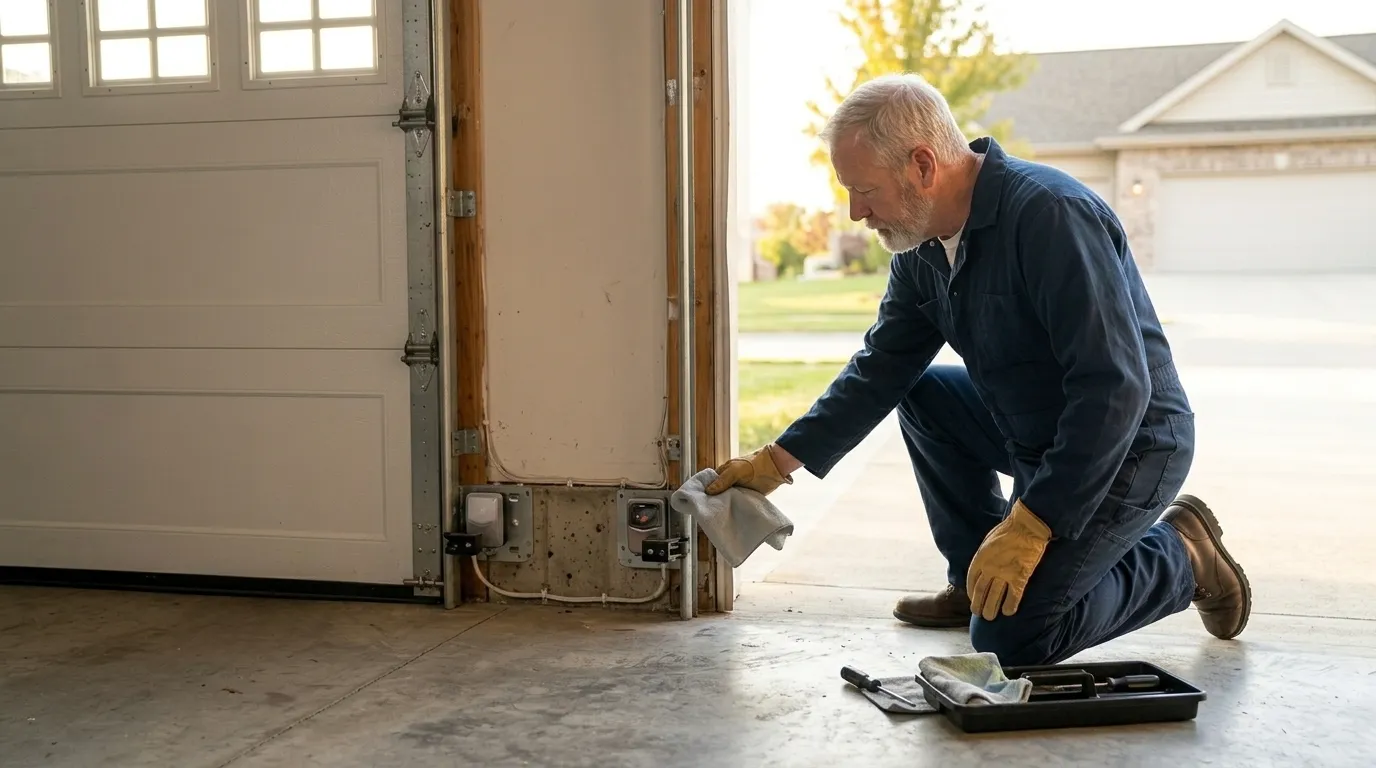
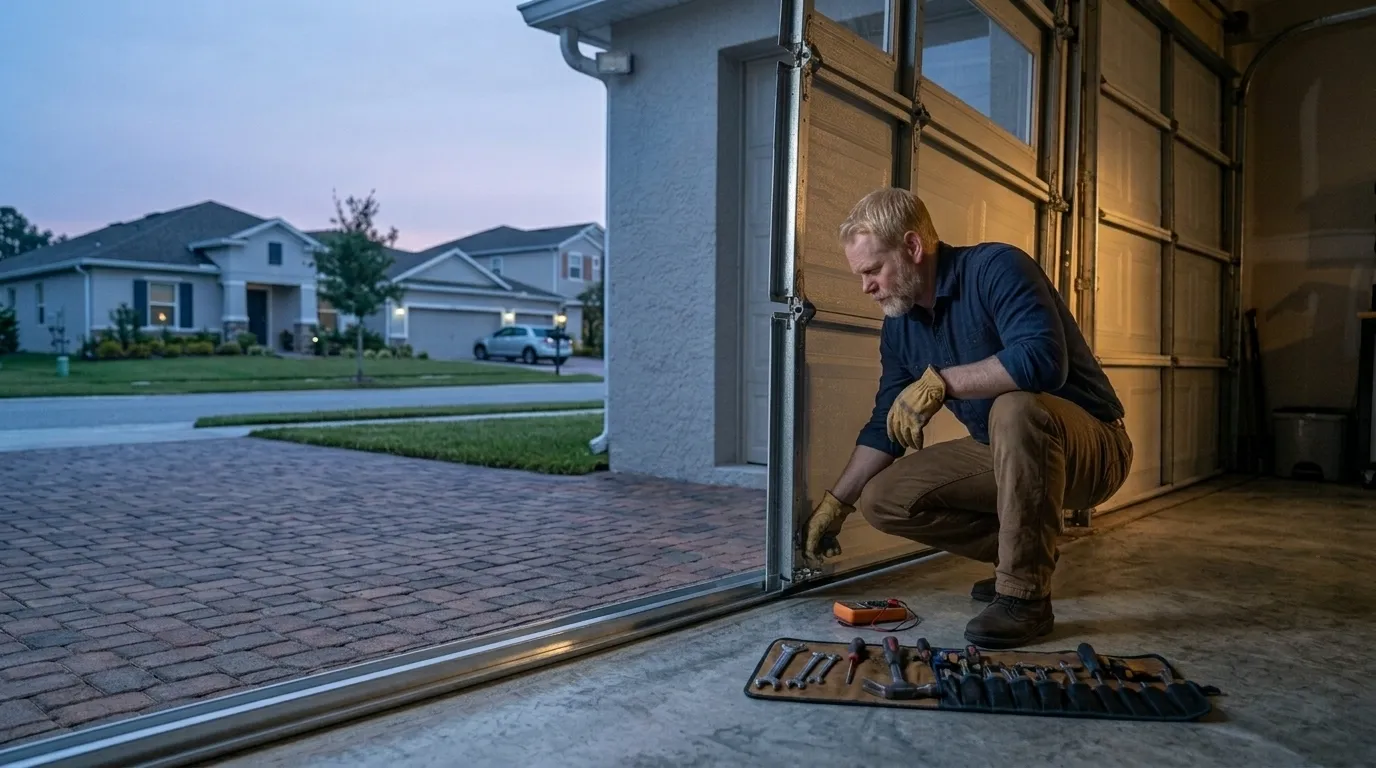
On the older Lockhart housing stock, one sign we hear about often is homeowners not realizing there's no safety sensor at all - no small boxes at the bottom of the tracks, no beam. They find out either because they read about the requirement somewhere or because the door closed on something it should have stopped for. That's worth checking today, not after it happens: crouch down and look for two small units, one on each side of the track, a few inches off the floor. If they're not there, the opener predates that rule.
A unit that's simply slow to respond to the remote, with no other symptoms, is often just a battery or a signal issue - not every odd behavior means a full opener is failing.
Doing It Yourself
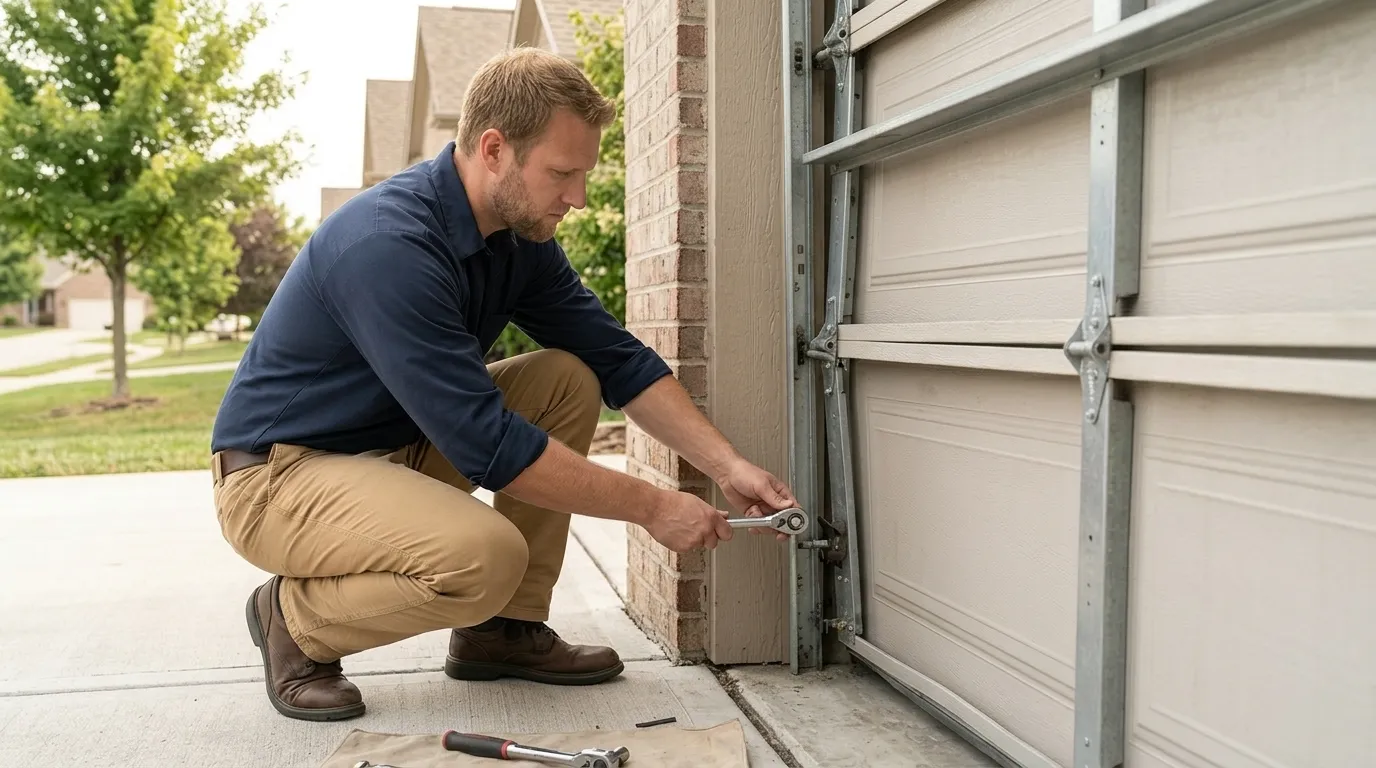
Some of this is fine to check yourself. Testing the safety sensors - waving a broom handle through the beam while the door closes to confirm it reverses - takes thirty seconds and tells you a lot. Replacing remote batteries, cleaning dust off the sensor lenses, tightening a loose wall bracket: all reasonable homeowner jobs.
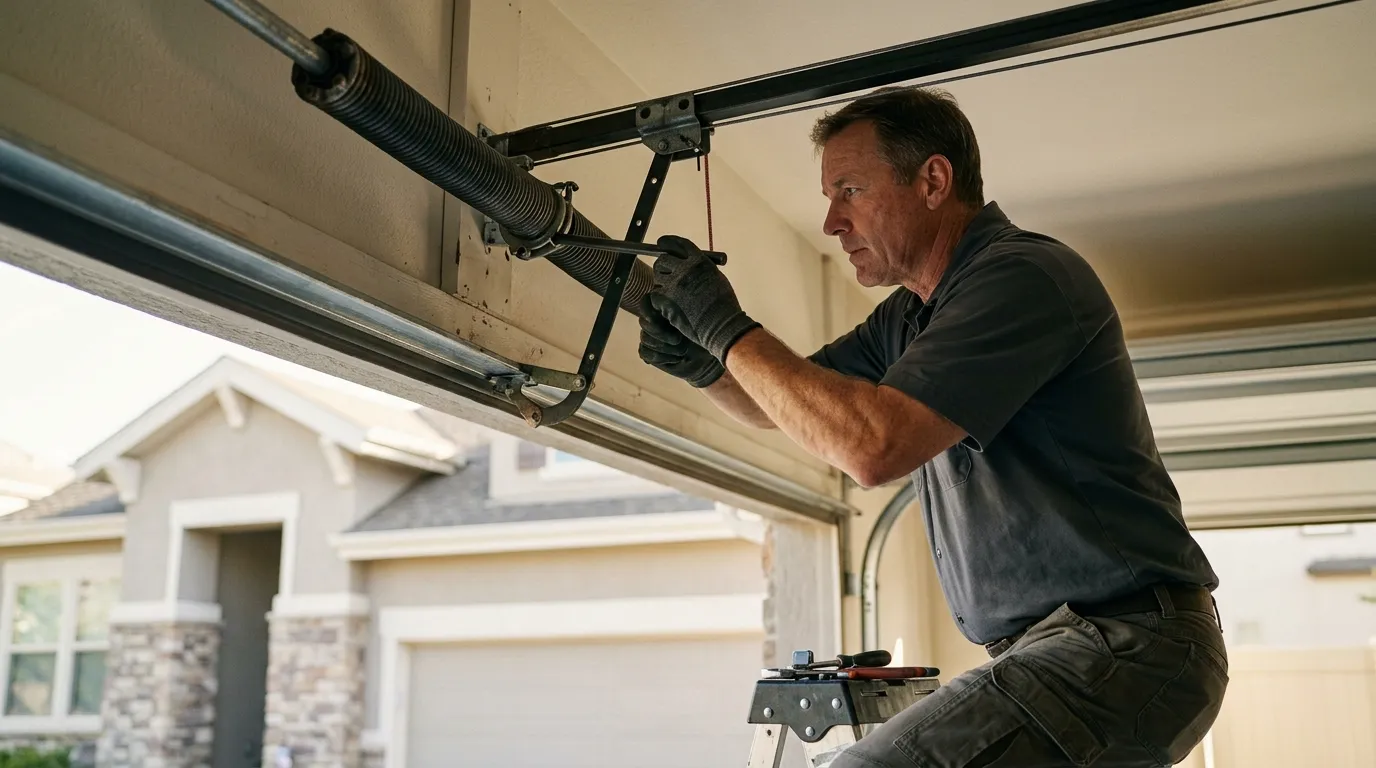
What we don't recommend doing yourself is the actual opener swap. You're working with a unit mounted overhead, wired into your home's electrical, connected to a door under spring tension that can move unexpectedly if the opener arm is disconnected wrong. On a house with original 1983 wiring, there's also a real chance the run to the opener doesn't meet current code, and that's not a fix you want to discover halfway through a Saturday project with the ceiling opened up.
Our honest limit here: we install and replace, but we're not an electrician for whole-house rewiring - if the issue traces back past the opener circuit to the panel itself, that's a separate call to make. For the opener and everything feeding it up to that point, that's ours to handle.