How Long You Are Without the Door
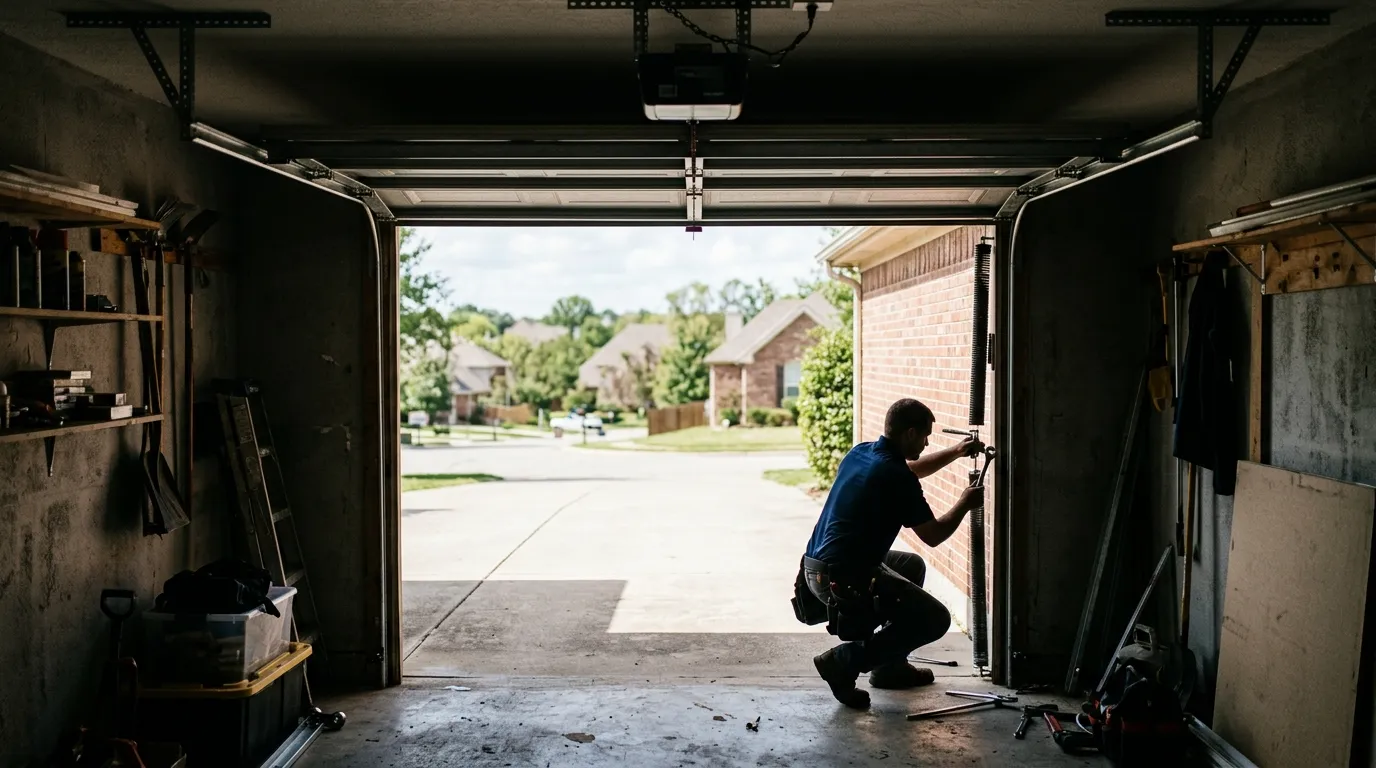
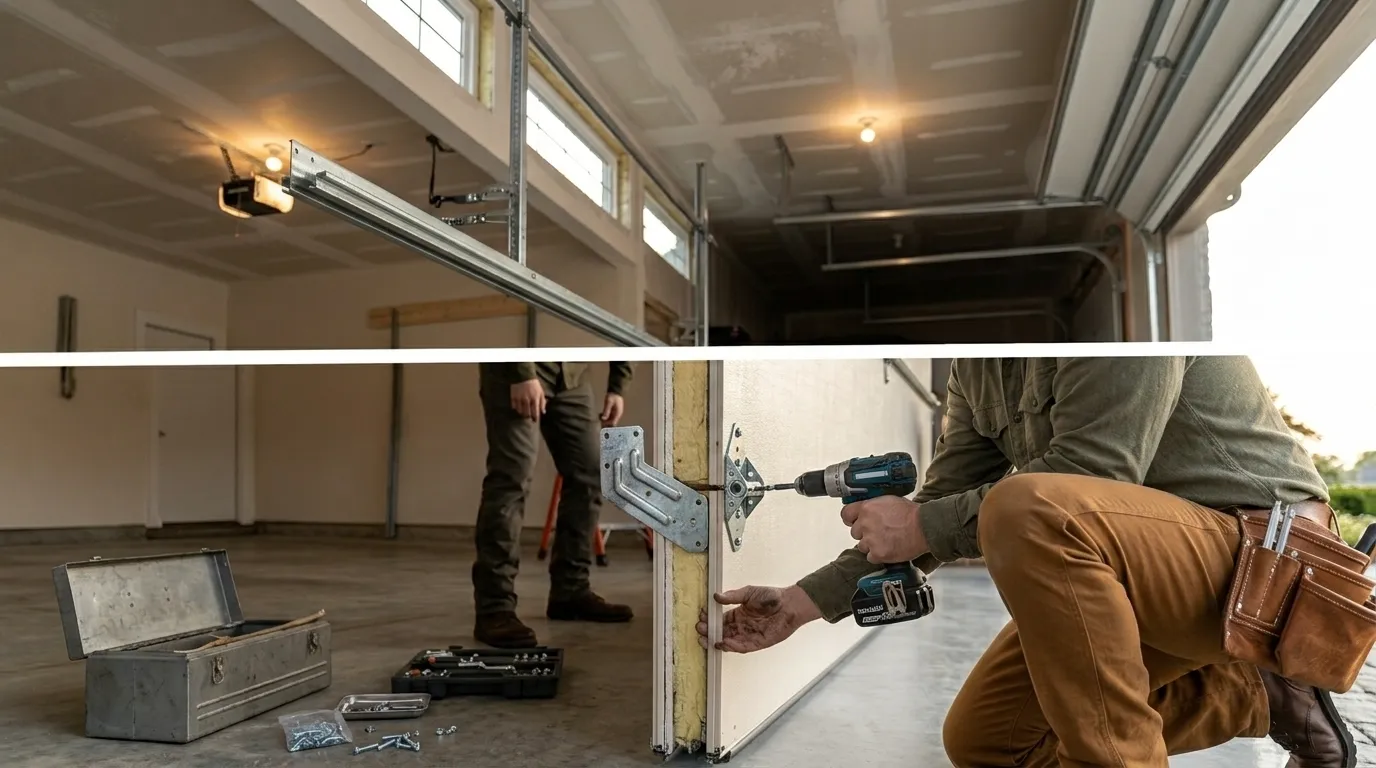
Once we're on site, a spring replacement on a single door usually runs under two hours; a double door with two torsion springs and a hardware check takes longer. The bigger variable for a Lockhart address isn't the repair itself, it's the drive - 19 miles each way means the window we give you accounts for travel time from Orlando, not just the wrench time at your house. We'd rather tell you the visit is scheduled for a two-hour arrival window and be right than promise a tight slot we can't hit because of traffic on the way out.
Mild temperate weather here means we're not racing a storm system to get your door closed before rain gets in, which takes some pressure off scheduling compared to climates where a broken spring during a freeze is an emergency. That said, a door stuck open on a broken spring is still a security gap and, if there's a car trapped inside, an inconvenience we try not to push to the next day if we can help it.
Booking a Visit
Because every call to Lockhart is a trip from Orlando, we ask a few things up front when you book: whether the door is a single or double, roughly how old the house is, and whether the door goes up at all or is stuck solid. That last one tells us if a cable snapped along with the spring, which changes the parts list. With about 5,384 households in this immediate area and a median household income of $70,051 - somewhat below the wider service area's $82,107 - we see a fair number of owners who want the repair done once, done right, and not turned into an upsell for a new opener or a full door replacement they didn't ask for.
We'll quote the spring job on its own. If something else turns up once the door's open - a cracked bottom bracket, a drum that's chewed through - we'll tell you before we touch it, not after.
How It Shows Up
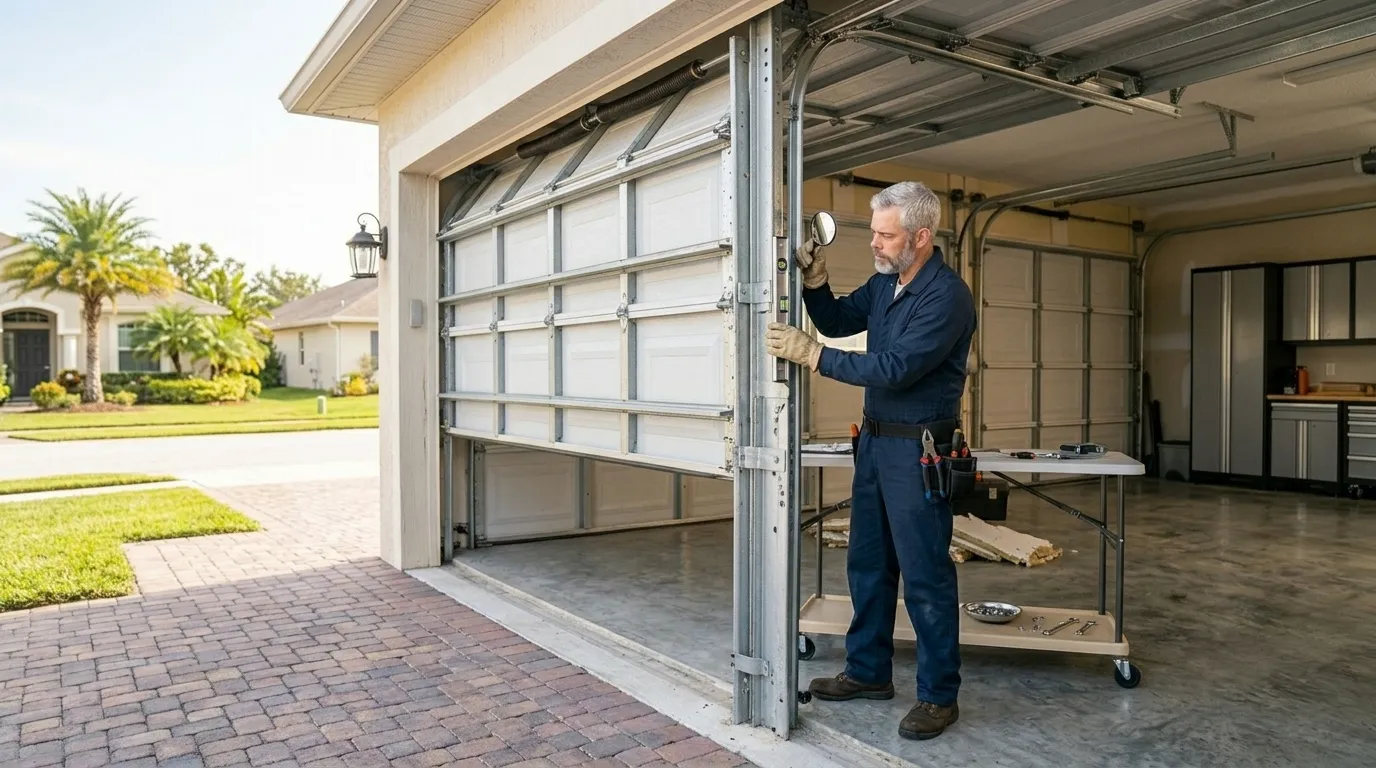
The door won't budge, or it comes down fast and hard when you hit the button, or you hear a bang from the garage and then the door won't open by hand or by opener. Sometimes it's quieter than that: the opener strains and reverses partway up, straining against a spring that's lost most of its tension but hasn't broken outright. On a double door, one side sagging lower than the other while the door's open is a sign one spring has already gone and the other is carrying the whole load - that's the point to call before the second one goes too.
A door that closes on its own weight with no resistance from the springs at all is one you should not run through its cycle again until it's fixed. We'd rather you leave the car outside for a day than have someone under a door with no spring tension holding it up.
Doing It Yourself
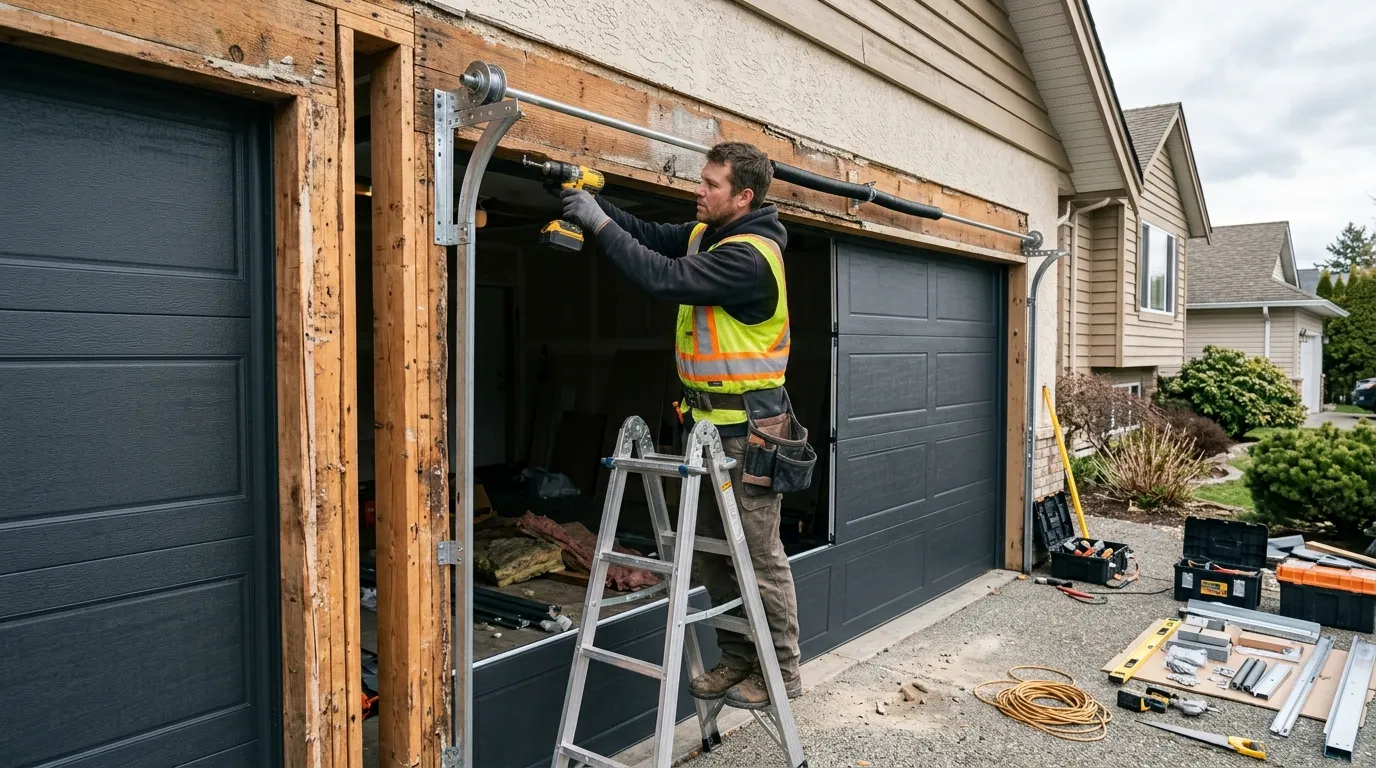
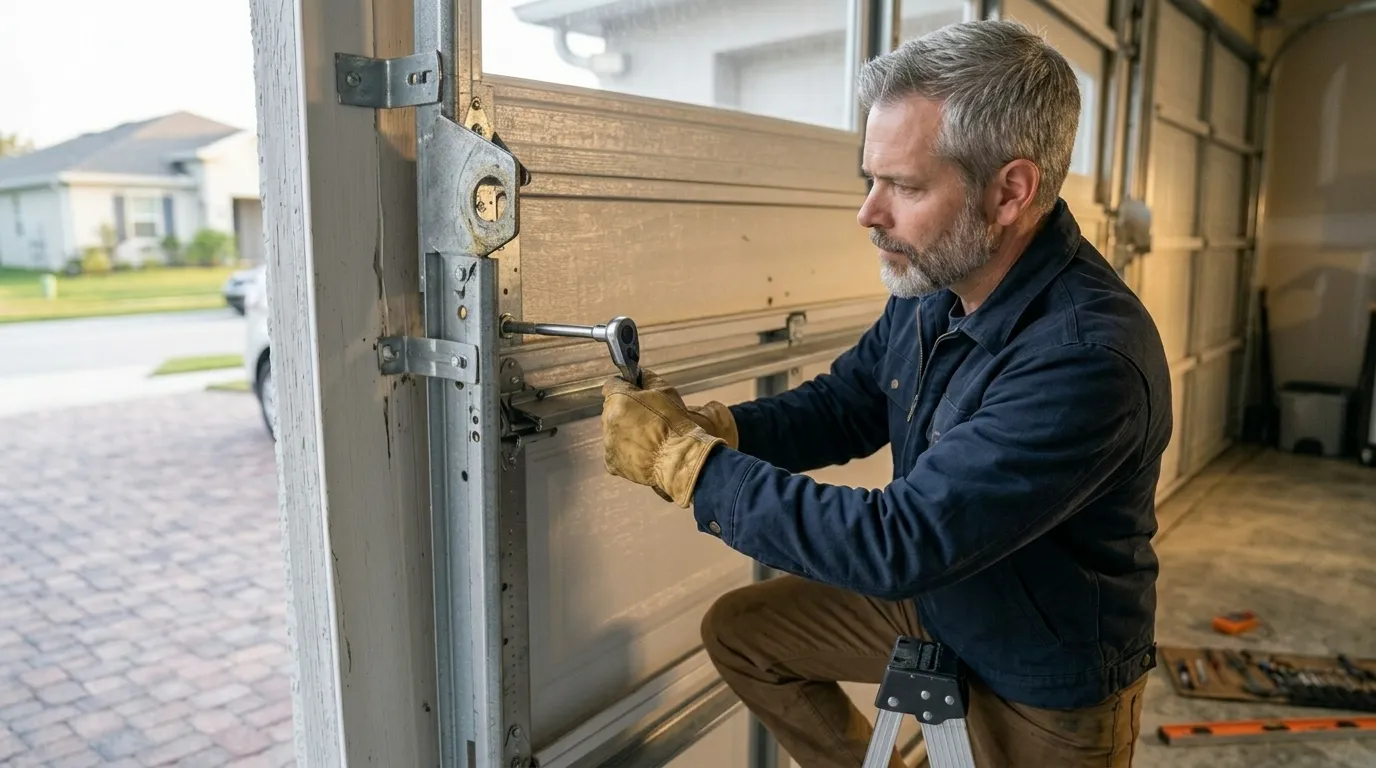
We'll say this plainly: torsion spring replacement is not a homeowner repair. The spring is wound under enough tension to break bones if the winding bar slips, and on a 1983-built door the hardware holding it - center bracket, end bearings - is old enough that even removing the old spring safely takes the right tools and knowing how much it's actually wound. Extension springs over the tracks are a little more forgiving but still carry real tension.
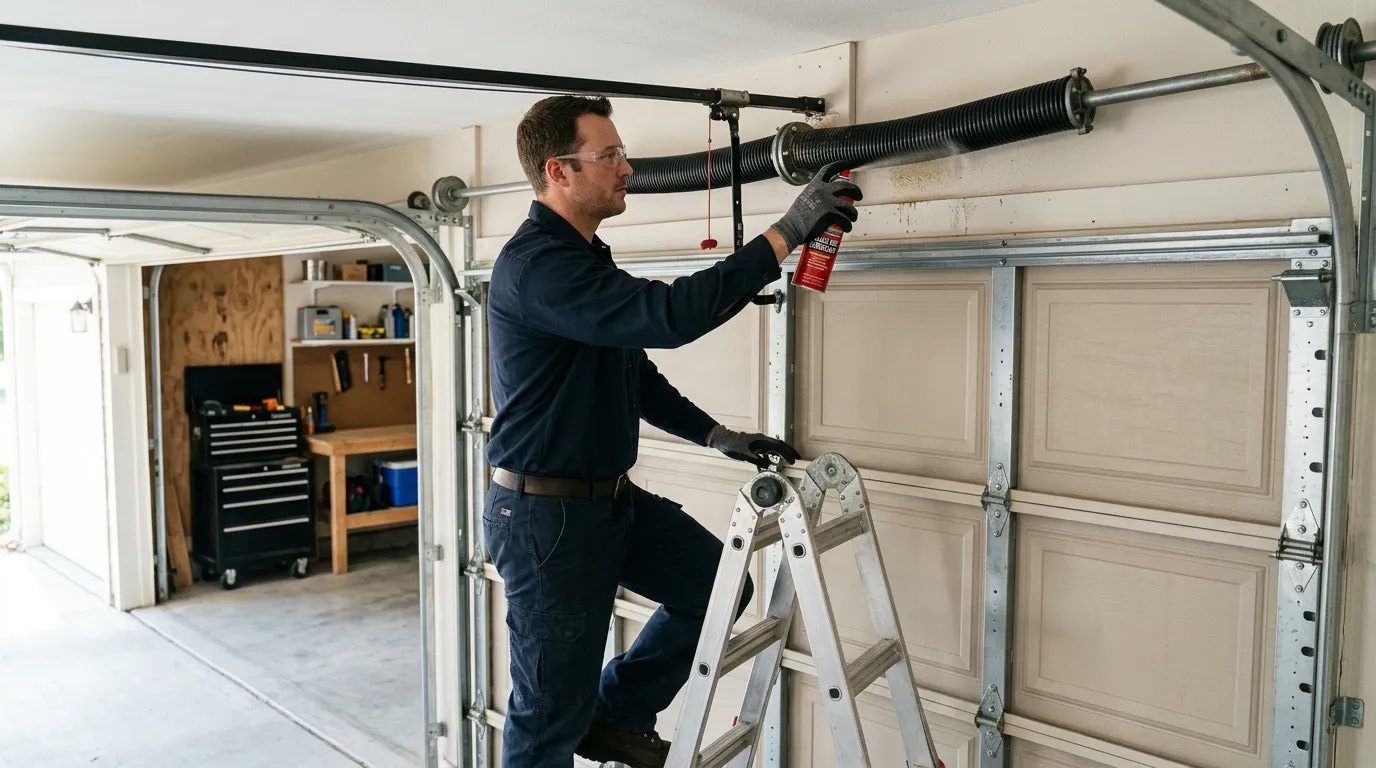
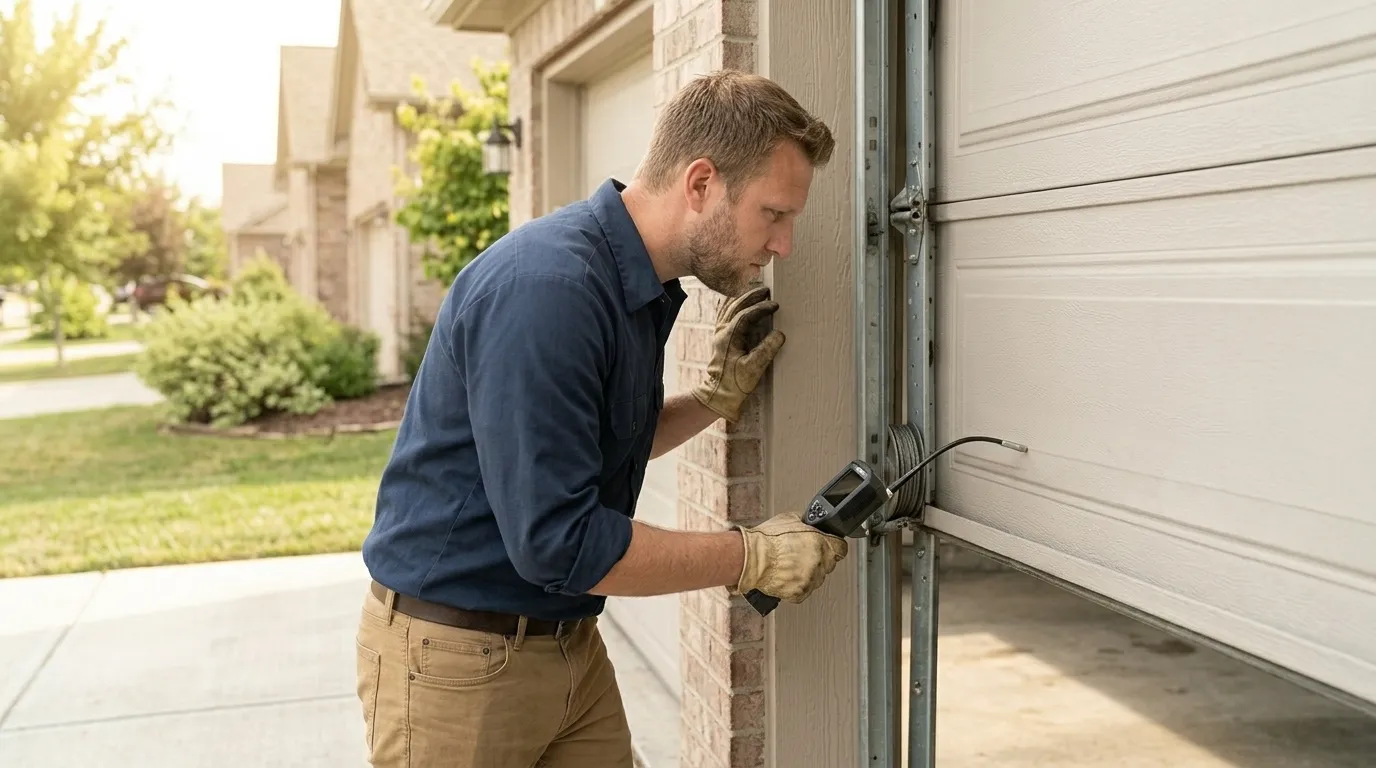
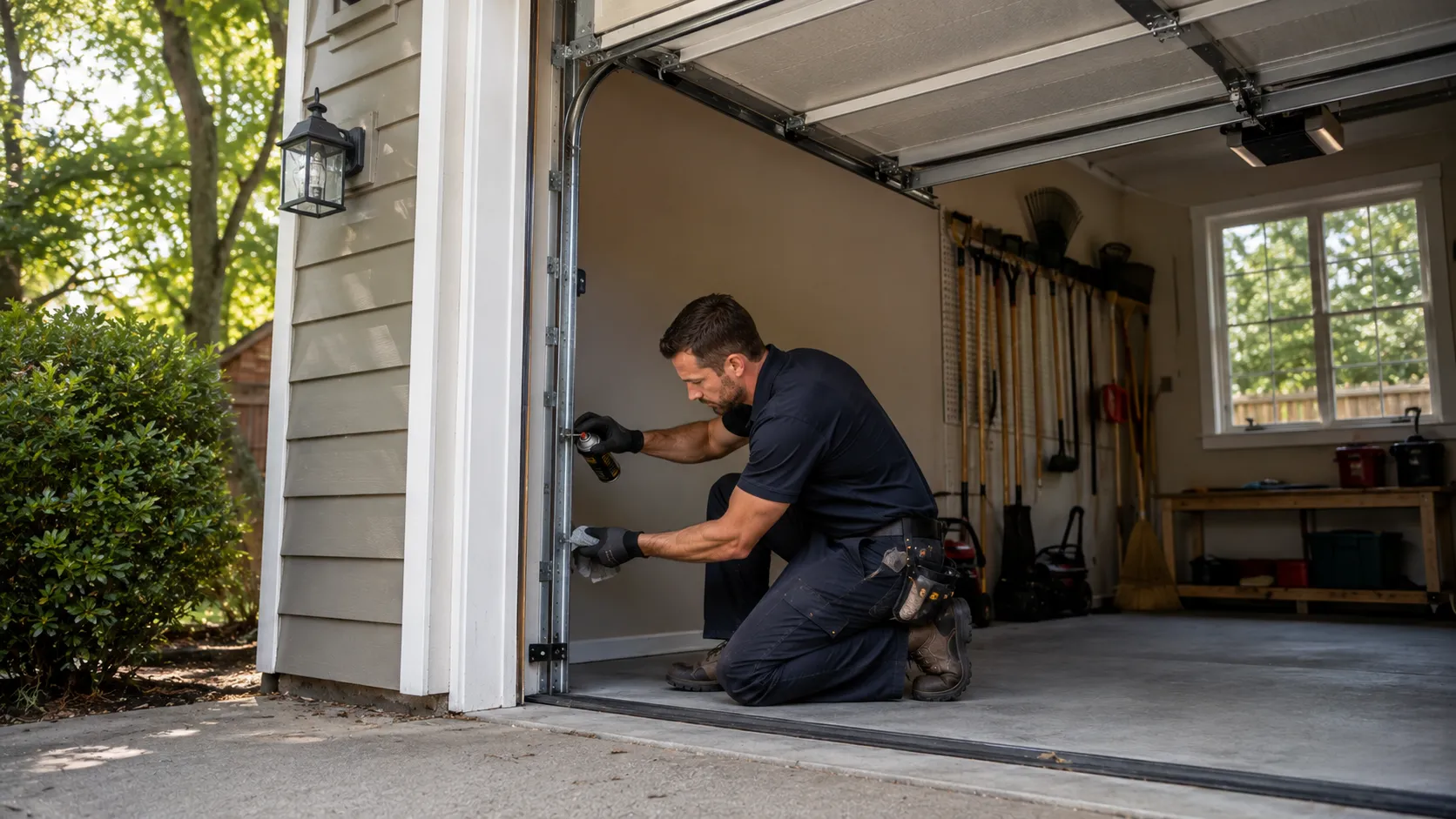
What you can safely check yourself: whether the door is binding on a track (bent rail, obstruction), whether the opener's force settings have drifted, and whether the rollers are visibly worn. None of that fixes a broken spring, but it can rule out other causes before you call, and it saves time once we're there - useful given the drive from Orlando.