
Doing It Yourself
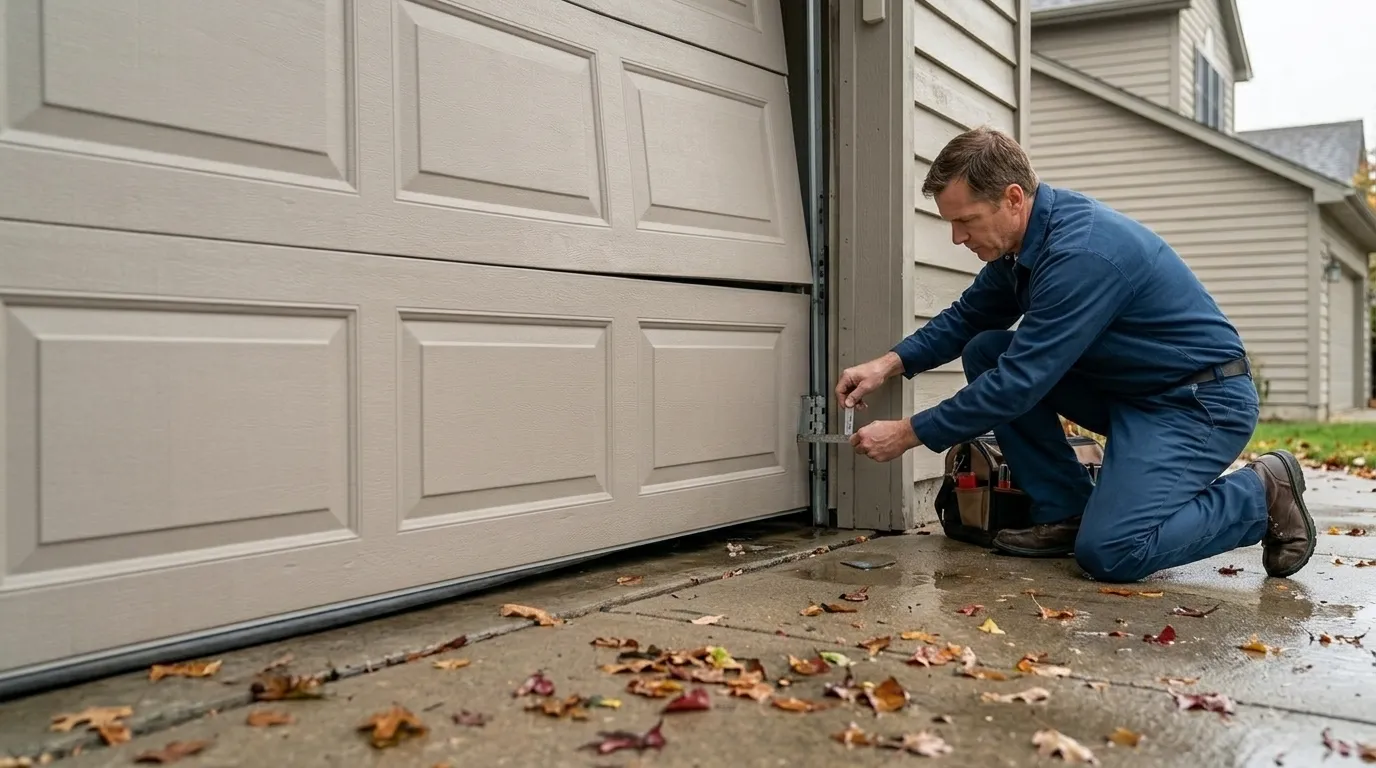
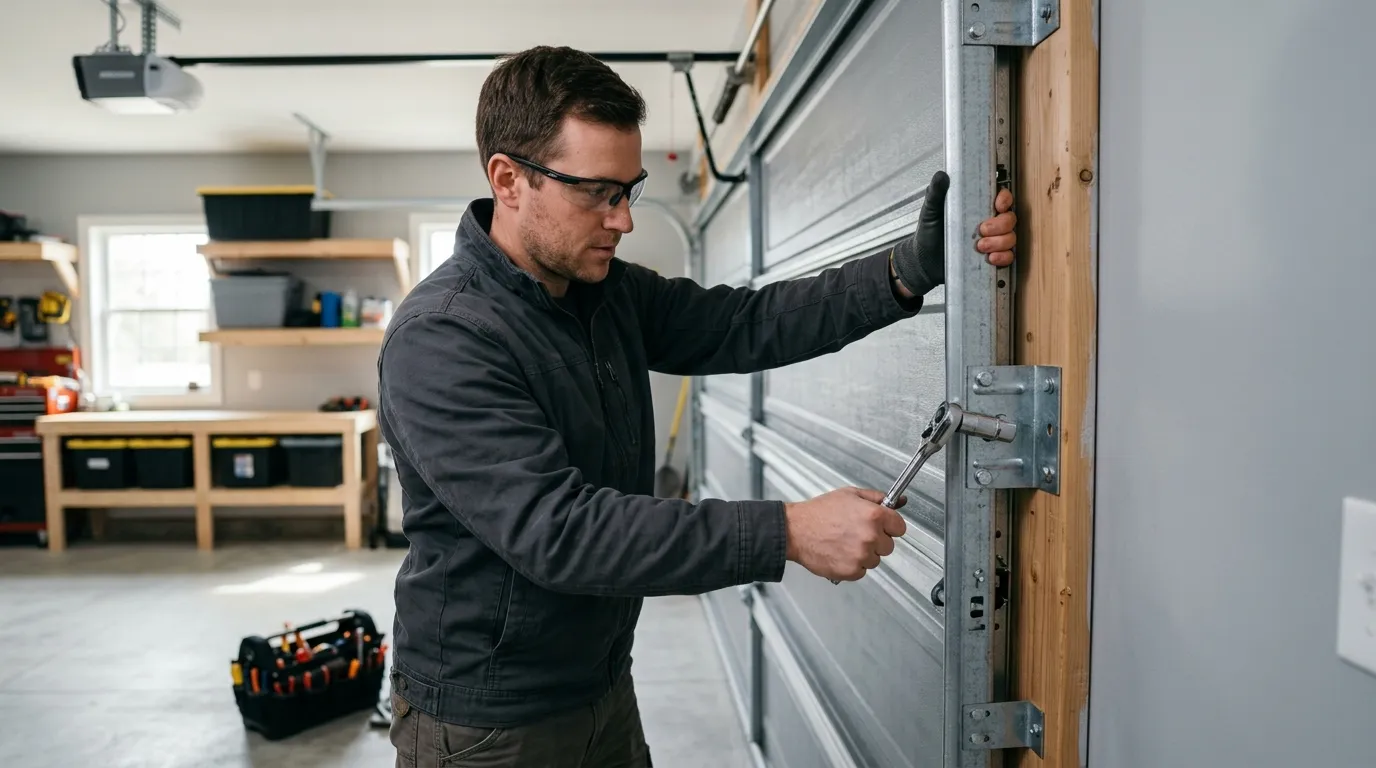
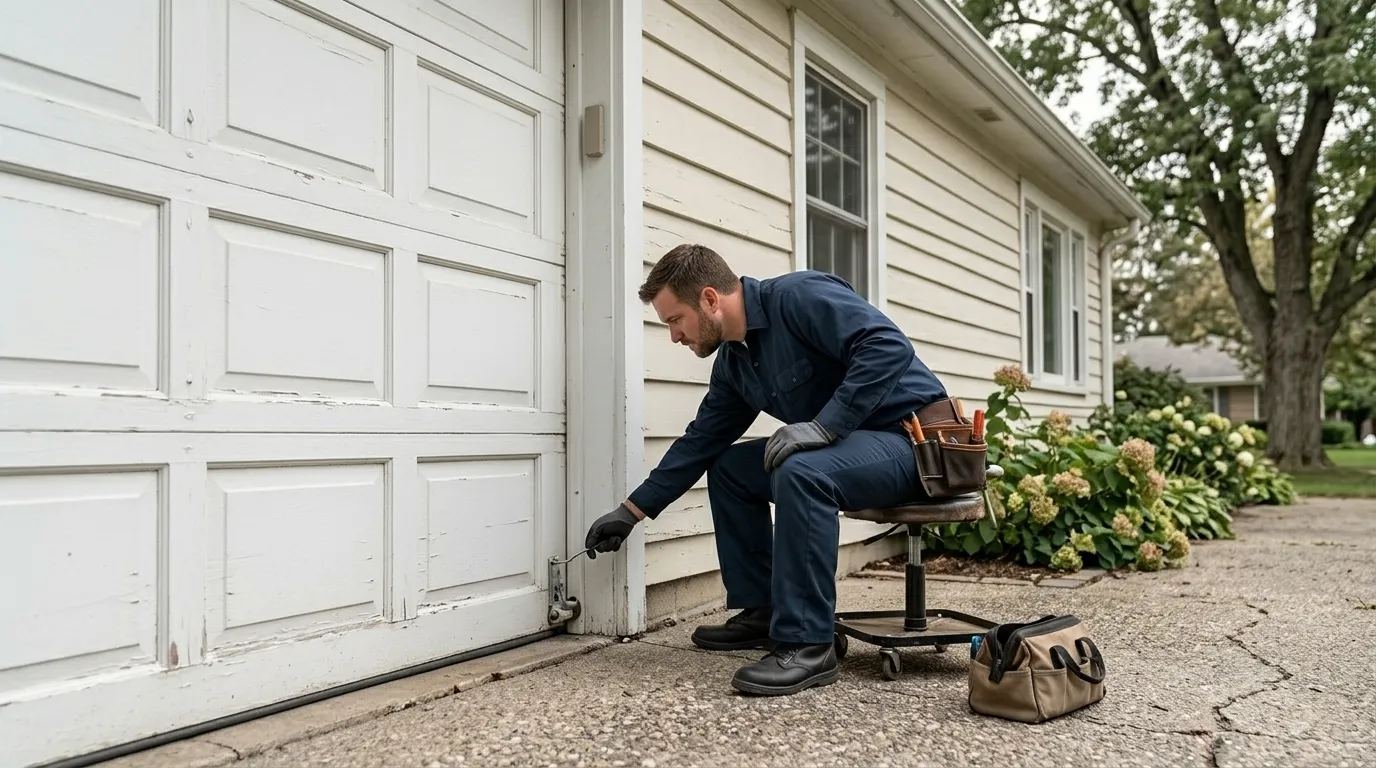
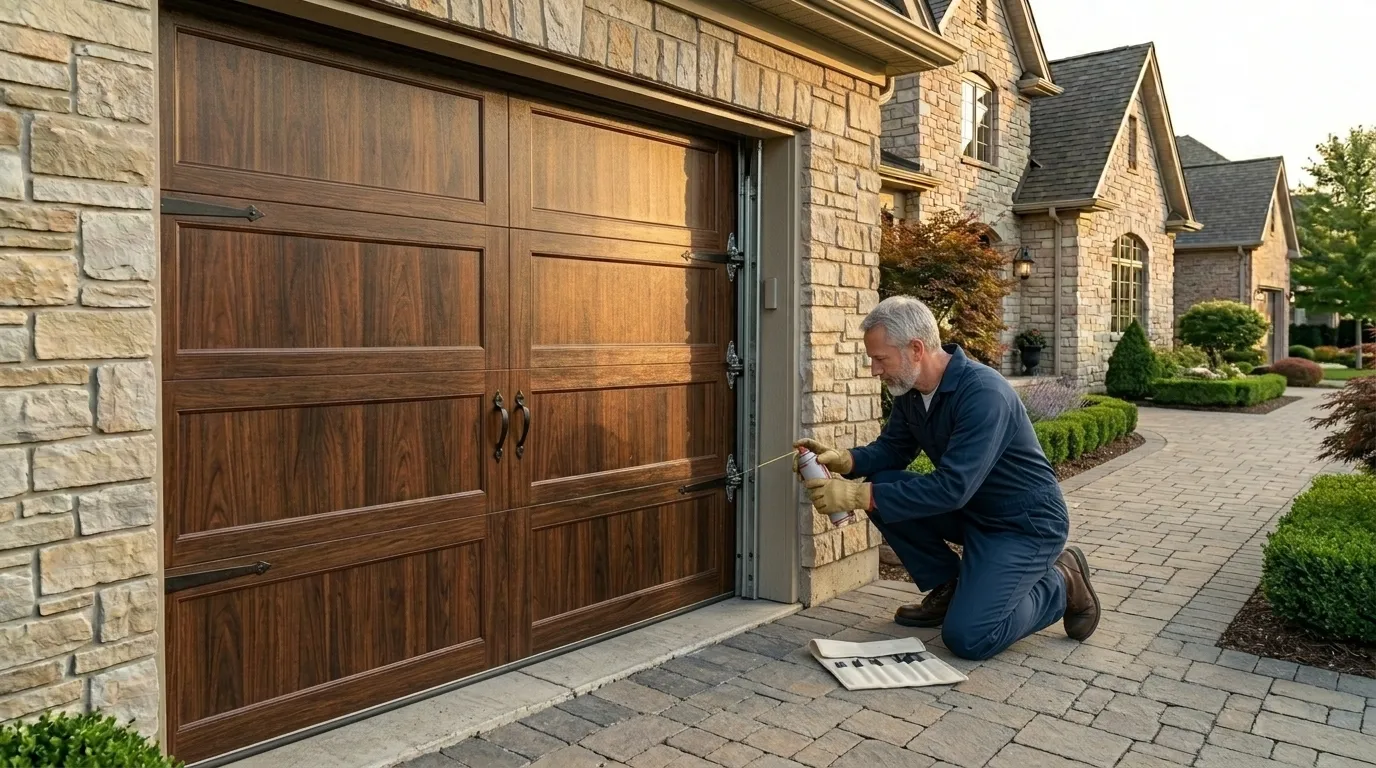
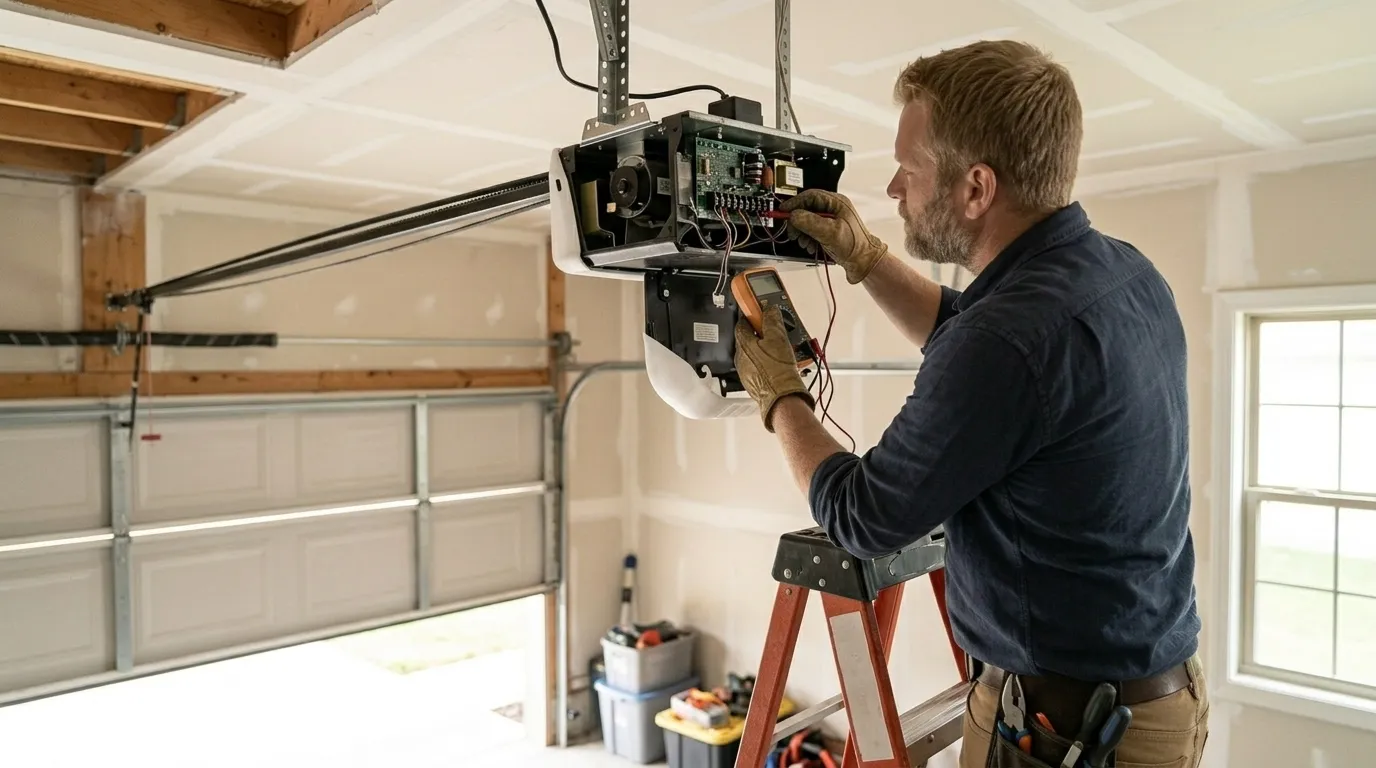
Lubricating hinges, tightening loose hardware, and clearing the track of debris are fine jobs to do yourself, on any door regardless of age. What we don't recommend, especially on a Conway-era door built around 1975, is touching the spring system. Original torsion or extension springs installed decades ago were sized for the door and counterweights of that period, and swapping one wrong part on a wound spring is how people get hurt. If your door is original to a 1975 build and it's sagging or slow to close, that's a hardware-age problem, not a lubrication problem, and it's not a fair fight for a Saturday afternoon. We'll say plainly: some of these jobs aren't worth attempting solo, and we'd rather tell you that upfront than sell you a service call for something a can of lithium grease would fix.
What Is on the Truck
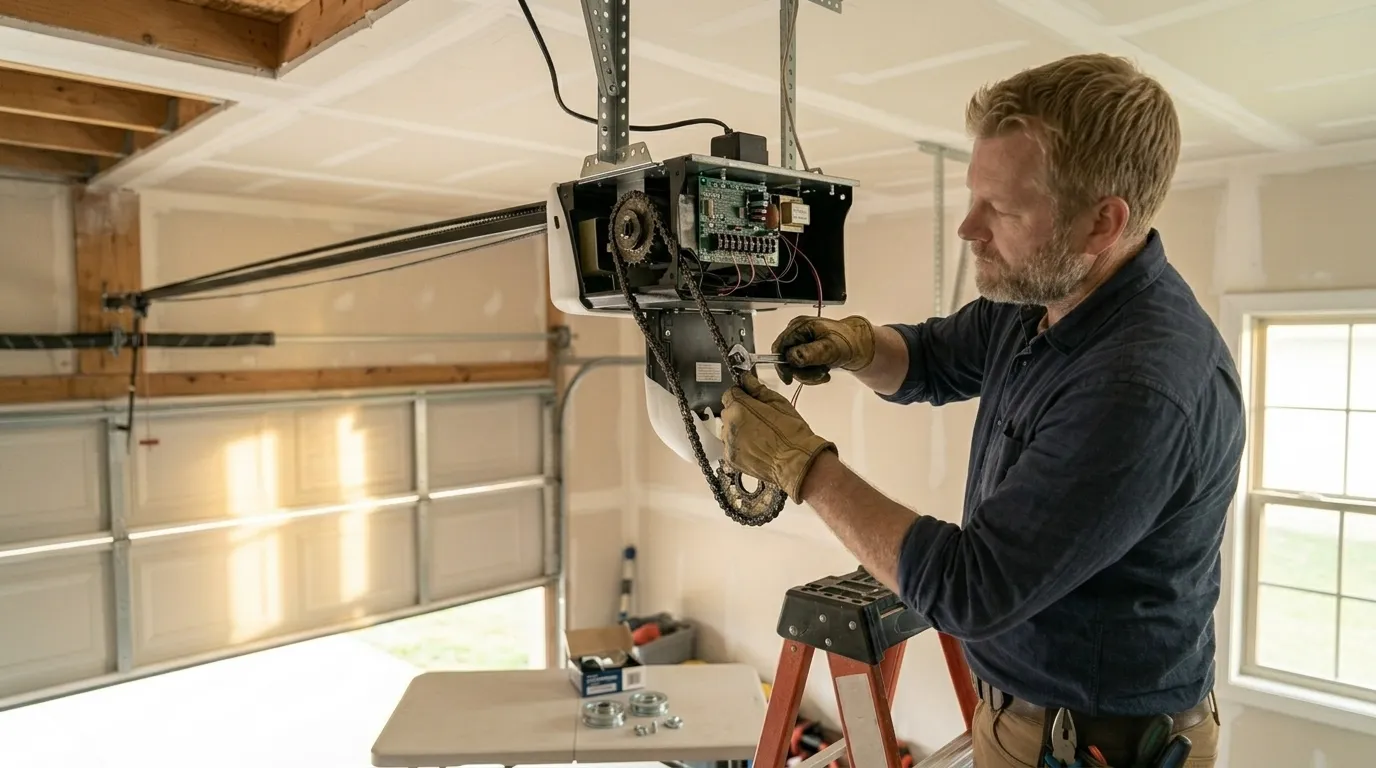
Because Conway sits on the older end of the area's housing timeline, with a median build year of 1975 compared to the 1987 median across the wider service area, we carry parts sized for older track and spring configurations, not just current-stock hardware. That means older-gauge torsion springs, extension spring kits still common on doors from that era, and adapter hardware for openers that were never designed to pair with a smart-home bridge. Mild temperate weather here means we're not stocking heavy cold-weather seal kits or insulated panel replacements the way a truck up north would - the region's climate doesn't put that kind of stress on weatherstripping or bottom seals. What we do carry more of is roller and hinge hardware, since decades of daily cycling wear those parts out long before the door itself needs replacing.
Why This Fails Locally
Conway's median household income of $96,250 runs meaningfully above the wider service area's $82,107, and that matters for how these jobs get handled: homeowners here are more likely to choose a full hardware upgrade over a patch repair once a door original to 1975 starts failing piece by piece. The fault pattern is specific to the housing age, not to any weather event - the area's mild temperate climate doesn't stress hardware the way freeze-thaw cycles do elsewhere. What actually fails is metal fatigue and decades of cycling on a smaller household base; Conway has roughly 5,328 households, a fraction of the 218,978 across the full service area, so the volume of original-era doors still in service here is smaller and harder to source exact replacement parts for than it would be in a newer subdivision.
The Cost of This Job
We don't have a fixed price to quote here, because the range on any door depends on what's actually failed, and pretending otherwise would be a guess dressed up as a number. What we can say is that Conway's higher-than-average household income tends to push decisions toward full replacement rather than a spring-only fix once a 1975-era door has multiple worn systems, since a full opener and hardware swap ends up being the last repair a homeowner has to pay for on that door. A spring-only job costs less up front but doesn't touch worn rollers, a tired opener motor, or a track that's slightly out of plumb from decades of settling. We'll tell you honestly which category your door falls into before we start, not after.