Doing It Yourself
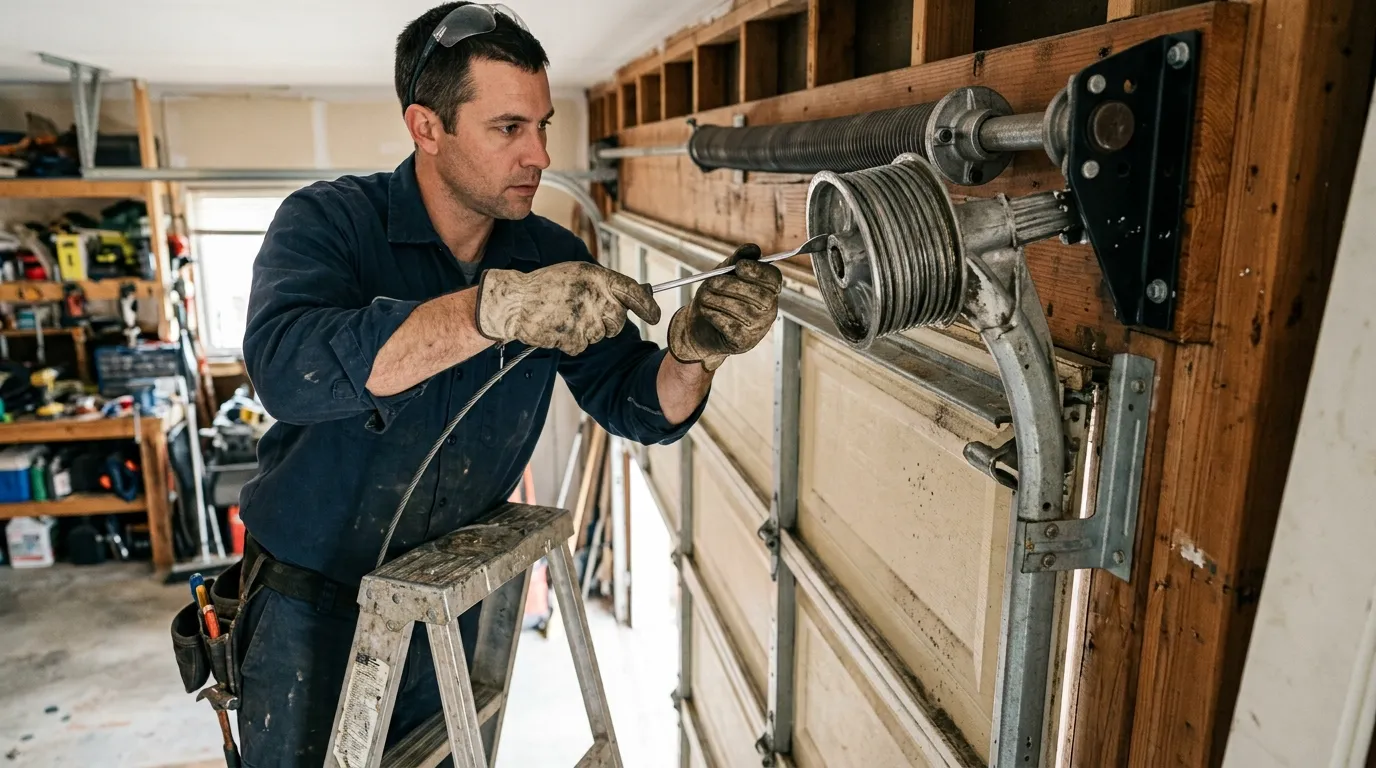
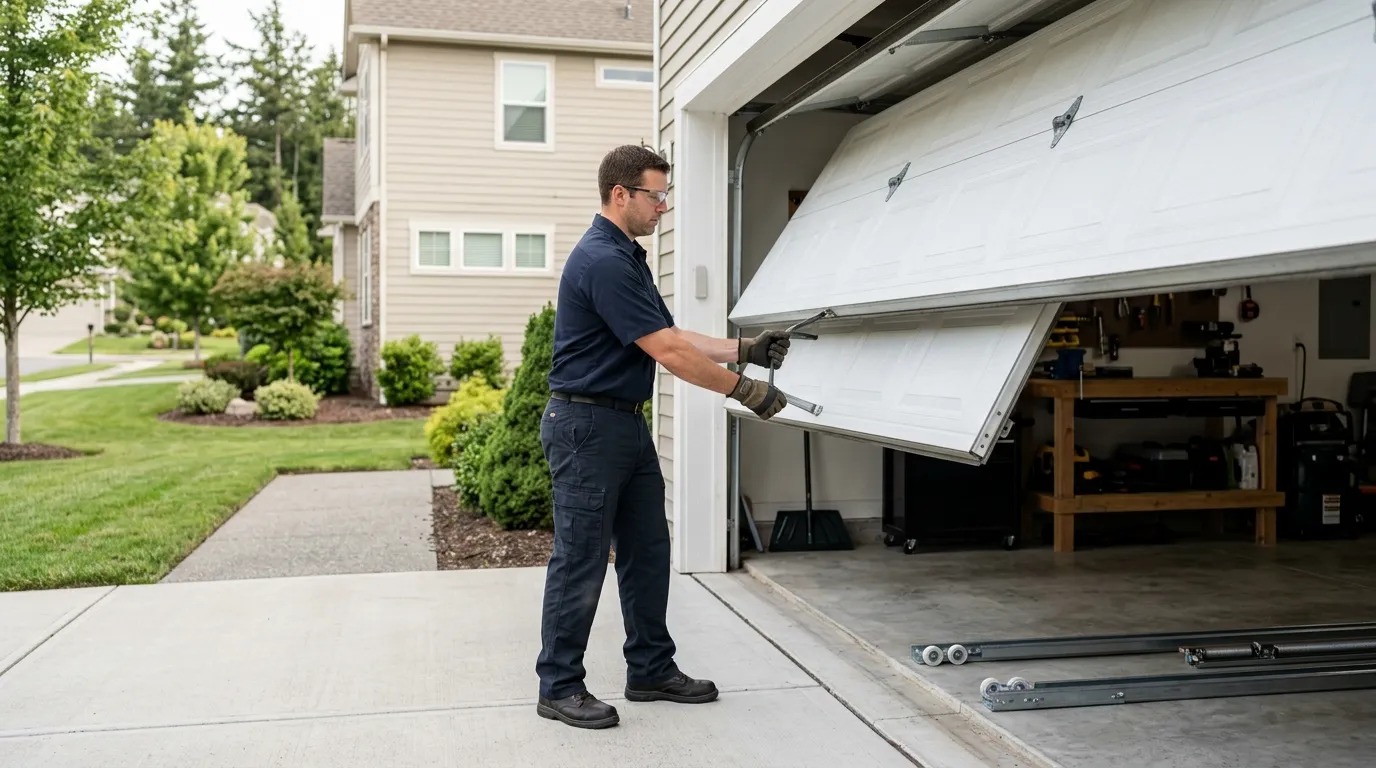
A torsion spring under load can put you in the ER faster than almost anything else in a garage, and a 1975-era door often runs two springs on a shared shaft, not one. Winding cones on hardware that old can be seized or mismatched from a prior part-swap, and there's no way to know which until the bar is already under tension. We won't sell you a spring kit over the phone and we won't talk you through a home wind - that's the one thing on this list we flatly won't do, because the failure mode is a broken jaw or worse, not a broken door. What you can safely check yourself: does the door look crooked on one side, is there a visible gap in a coil, does the opener strain and reverse partway up. Any of those, write it down and tell us when you call. It saves a diagnostic trip and gets the right spring on the truck the first time.
What Is on the Truck
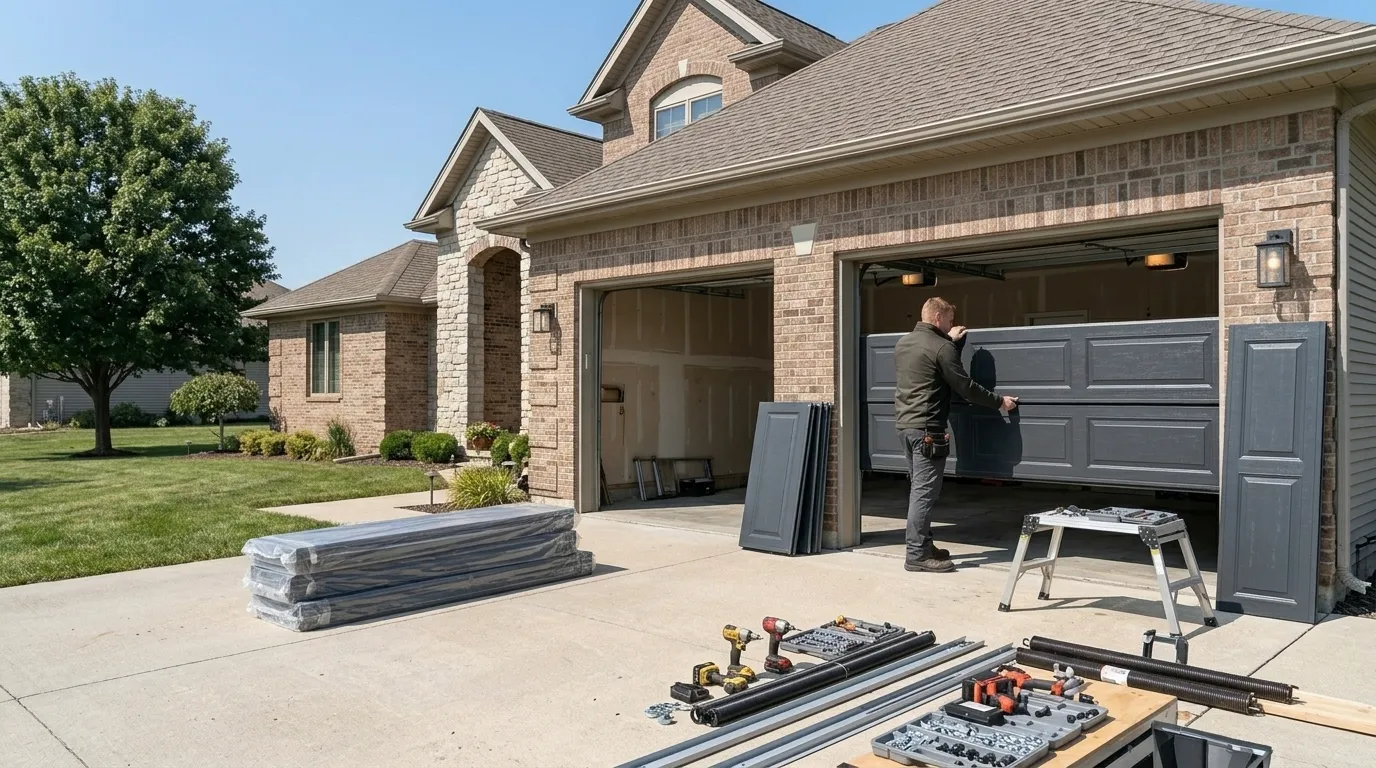
Houses here cluster around a median build year of 1975, older than the 1980s-90s stock common across the rest of the service area, so the truck carries torsion springs sized for older shaft diameters and drum styles, not just the current standard. We stock the common wind lengths and wire gauges that cover most doors built through the 1980s, plus the cables, drums, and center bearings that tend to go along with a spring failure on a door this age. What we don't carry as a standard stock item is a spring built to an odd or discontinued shaft size - if the door has been modified over the years with mismatched hardware, that part may need an order, and we'll tell you that on-site rather than guess. Bring us the door's width and whether it's one door or a shared double garage; that's usually enough to load the right spring before the truck leaves Orlando.
Why This Fails Locally
Across Conway's roughly 5,328 households, that older stock means more original double-torsion setups than the single-spring conversions common in newer subdivisions. The wider service area's houses run newer on average, with a median build year of 1987 and typical 1980s-90s construction across its 39 mapped neighborhoods, so a lot of the spring parts common there simply don't match what's on a Conway door. Springs from this era were built to a different set of assumptions about coil life, and forty-plus years of daily cycles wears galvanized coating thin even without a rough climate to push it along. The region sits in a mild temperate band, which helps - spring wire here doesn't see the freeze-thaw cycling that shortens coil life further north - but heat and humidity still eat at that same coating over decades, just slower. That's why a spring here tends to fail from fatigue rather than from a sudden weather event: thousands of quiet lift cycles on hardware built before some current wire gauges existed.
The Cost of This Job
The money question comes first for most Conway callers, and it should. At $96,250, median household income here is well above the wider service area's $82,107, and that gap shows up directly in the repair-or-replace decision: a torsion spring job on a door that's otherwise sound is almost always the cheaper and faster call, and at this income level it's rarely a stretch to make. Replacement only makes sense when the springs are the least of the door's problems - cracked panels, a track that's been bent and rebent, an opener original to a 1975 build that's long past parts availability. We'll tell you flat out on-site if the door in front of us is a repair or a replacement job; we don't pad a repair invoice to avoid saying replace, and we don't sell a full door when a spring and a set of cables will do. For the wider picture on cost across the rest of the service area, see garage door spring repair pricing for Orlando.