Serving Orlando, FL & nearby
(321) 325-5496
Orlando, FL

Opener Installation for Conway Homes Built Since the Mid-1970s

Conway's houses started going up in 1975, well before the area's 1987 median. That older hardware changes what an opener install actually involves here.

Opener Installation for Conway Homes Built Since the Mid-1970s
Orlando, FL
8 services
7 service areas
Diagnosis first, then the fix

Booking a Visit

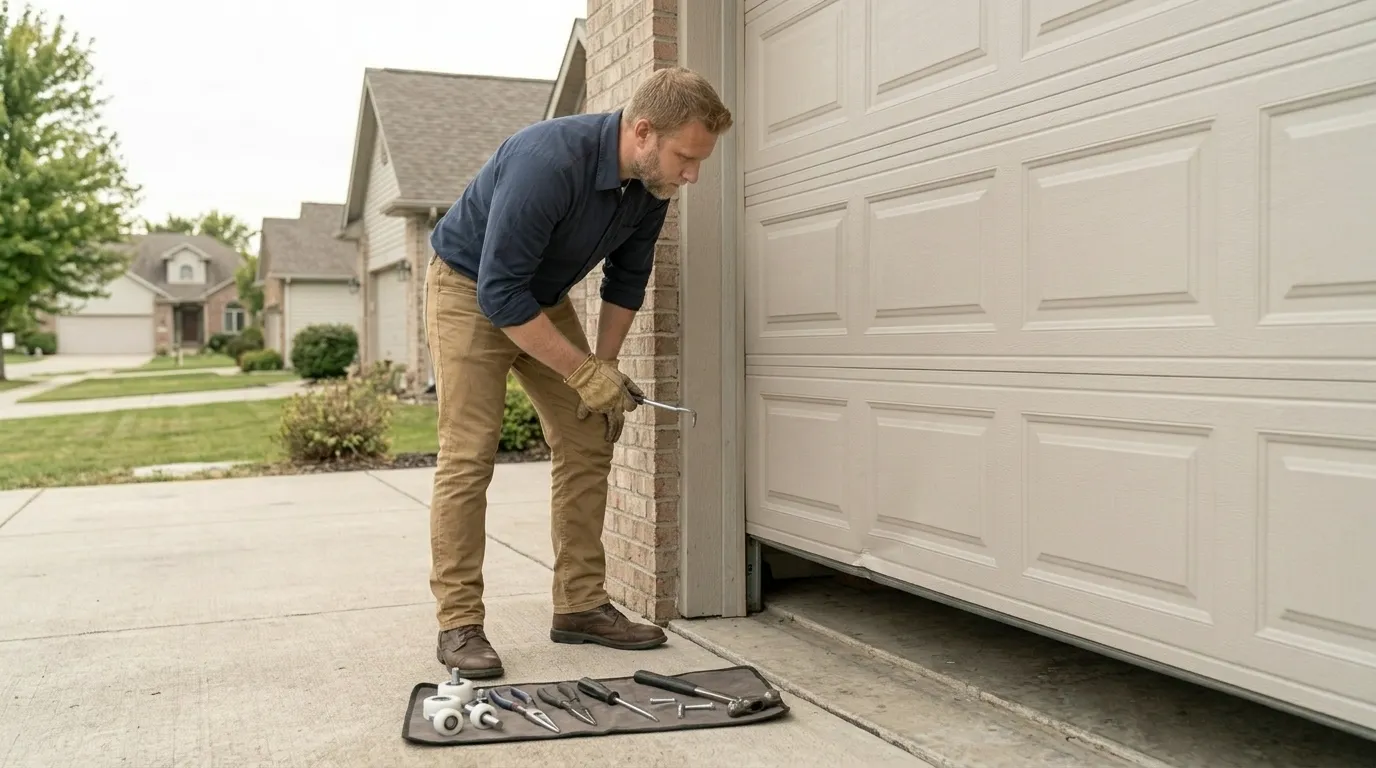
We run this job out of Orlando, and Conway sits about 8 miles out, which keeps the drive short even on a job that starts with a phone call rather than a storefront. There's no Conway branch - we say that upfront so nobody's expecting a truck parked around the corner. When you call, tell us the age of the house if you know it. A 1975-era door and a 2005 door take different opener hardware, different mounting, and sometimes a different visit length, so that one detail helps us bring the right parts the first time instead of a second trip. If you're comparing what a full opener swap looks like across the wider service area, that's covered on our main opener page; this one is about what actually shows up at a Conway address. [garage-door-opener-installation-orlando-fl]

Doing It Yourself

An opener box looks like a weekend project until you're standing on a ladder with a torsion spring loaded a foot above your head. That part doesn't change by zip code. What does change in Conway is the bracket work: houses from the mid-1970s often have a header board that's aged past what a new opener's mounting hardware expects, and matching an old chain-drive rail to a new belt unit isn't a bolt-for-bolt swap. If you're comfortable with electrical work and have a helper to hold the rail steady, the wiring and safety sensor alignment are within reach for a careful homeowner. Where we'd tell you to stop is anything involving the spring or the header bracket itself - get that wrong and the door drops, not the opener. Our honest answer: on a house this age, hire the bracket part out even if you do the rest yourself.

What Is on the Truck

For Conway calls we carry both chain-drive and belt-drive openers, because the choice isn't just preference - it depends on what the existing rail and door can take. Belt-drive units run quieter, and given the income level in this part of the service area, that's what most people ask for once they hear the difference. We also carry bracket adapter kits sized for older header boards, since original 1970s mounting hardware rarely matches a current opener's bolt pattern. Safety sensor kits, a range of remote and keypad options, and the wiring needed to tie into an existing switch are standard stock, not special-order items. What we don't carry is a truck full of one opener model - a house built in 1975 and a house built in 2005 down the same street can call for entirely different hardware, so the truck stays mixed rather than stocked deep on any single unit.

How It Shows Up

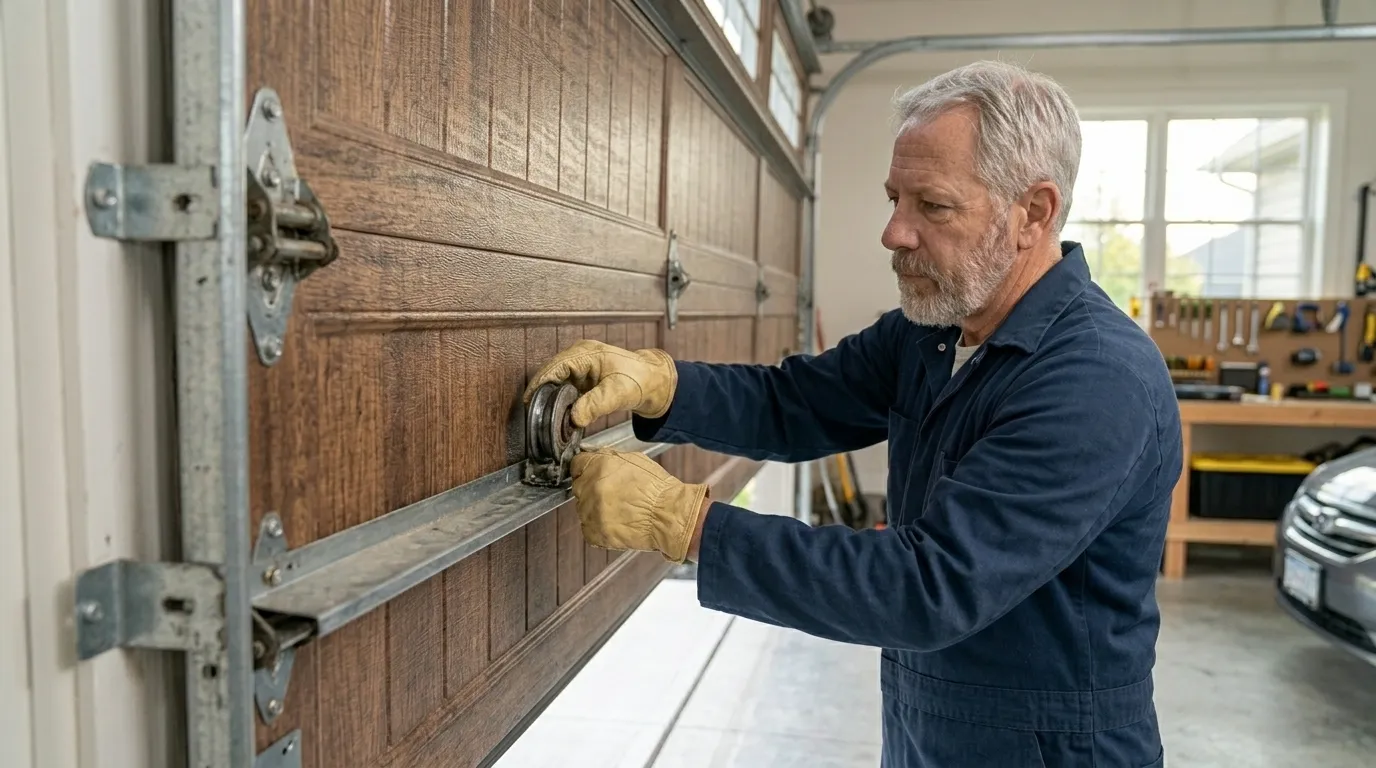
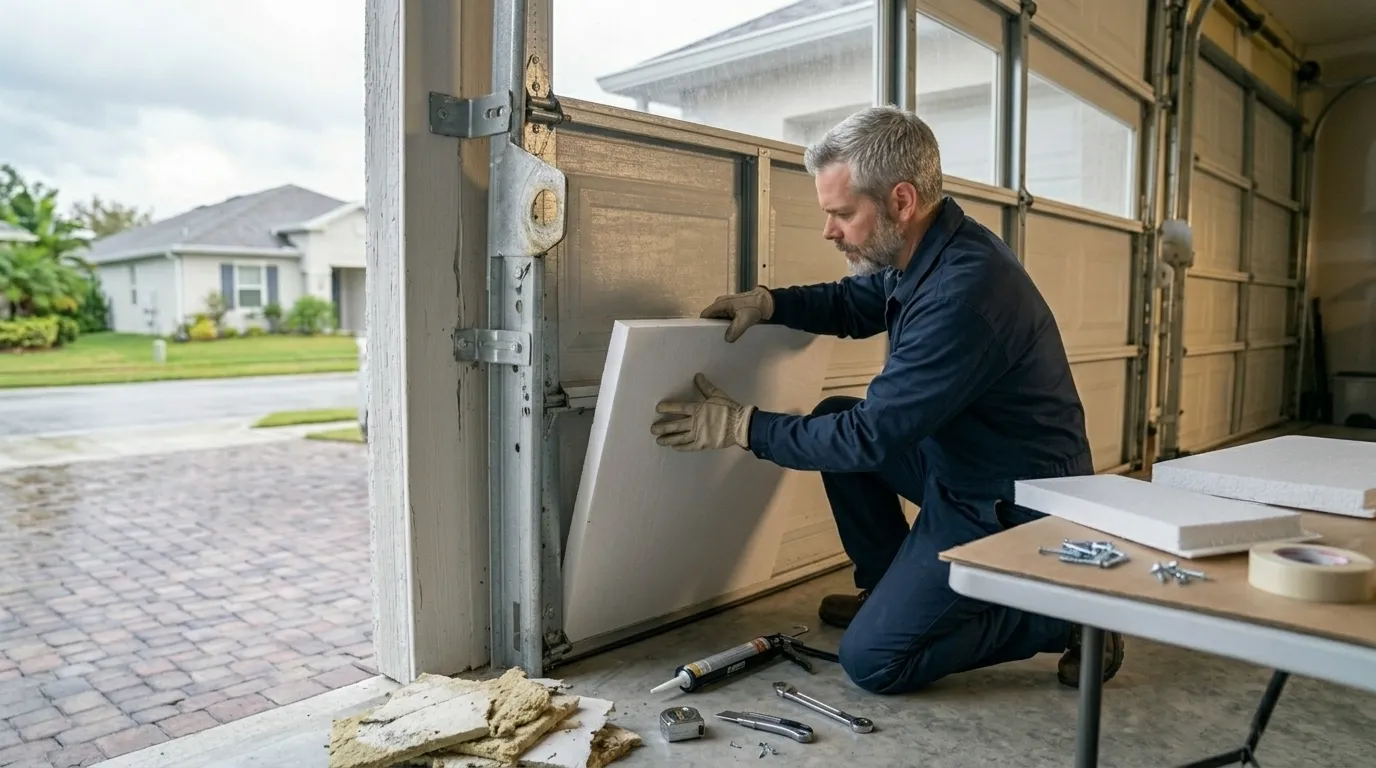
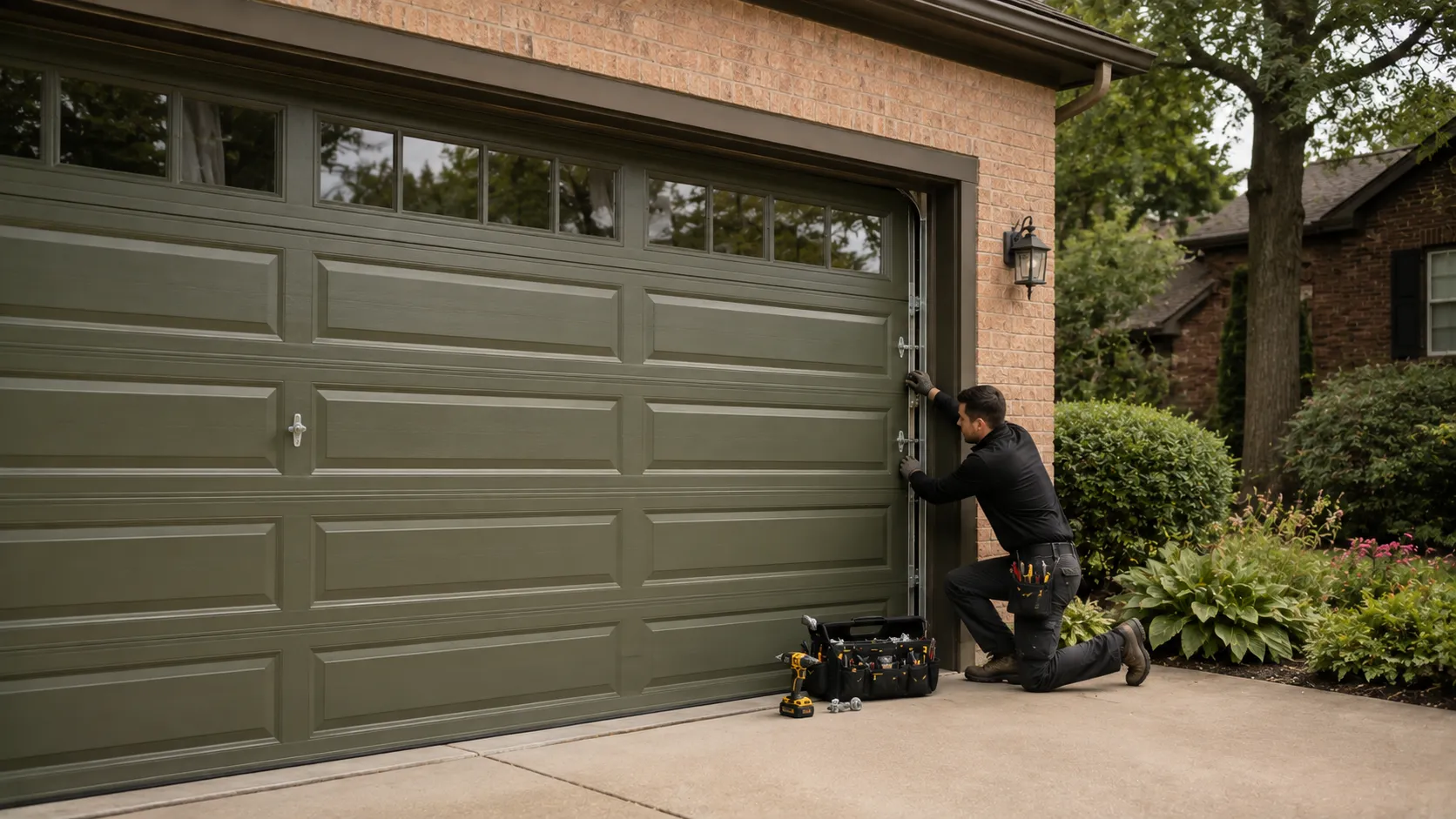
The visit starts with a look at the header bracket, not the opener box. On a Conway house from this era, that bracket has usually taken 45-plus years of garage heat and humidity, even in a mild climate that doesn't put it through hard freeze-thaw cycles. We check whether it's still sound wood or whether it needs sistering before anything gets hung from it. Next is the rail and trolley - if the door was running on an old chain-drive system, we look at whether the track angle and header clearance suit a belt conversion or whether staying with chain is the more honest call for that particular door. Only after that do we get to the opener itself: mounting, wiring, sensor alignment, and a run-through of remote and keypad programming. A straightforward swap on solid hardware moves quickly; a bracket rebuild adds real time to the visit, and we'll tell you which one you're looking at before we start.

Why This Fails Locally

Most opener failures we see on newer builds are simple - a worn gear, a dead capacitor, a sensor knocked out of alignment. In Conway, the more common failure starts upstream of the opener. A door and header framed in 1975 for a light chain-drive unit often wasn't built with a modern 3/4-horsepower belt-drive opener's mounting load in mind. Homeowners replace the opener, skip the bracket inspection to save money, and six months later the header is sagging or the rail is pulling loose from the ceiling joist. It's not a bad opener - it's a mismatch between 1975 framing and 2024 hardware. That's the specific failure this town sees more of than the newer subdivisions we also cover, and it's why we check the bracket before we quote the opener.

The Cost of This Job

We don't have a fixed number to post for opener installation here, and giving you one before seeing the header condition would be a guess dressed up as a quote. What drives the cost on a Conway job specifically is whether the original 1975 bracket and rail can be reused or need replacing - that's usually the biggest swing item, bigger than the choice between chain and belt drive. Household income in this pocket of the service area runs meaningfully above the broader area's median, and it shows in the mix of jobs we get called for: more belt-drive and smart-opener requests, fewer bare-bones chain replacements. Either way, we look at the header and rail on-site and give you a number before any work starts, not after.
How it works

From “it’s stuck” to “it’s fixed”

Tell us what’s wrong - Orlando garage door service
1

Tell us what’s wrong

Describe the symptom - won’t open, loud bang, opener runs but the door won’t move.

On-site diagnosis - Orlando garage door service
2

On-site diagnosis

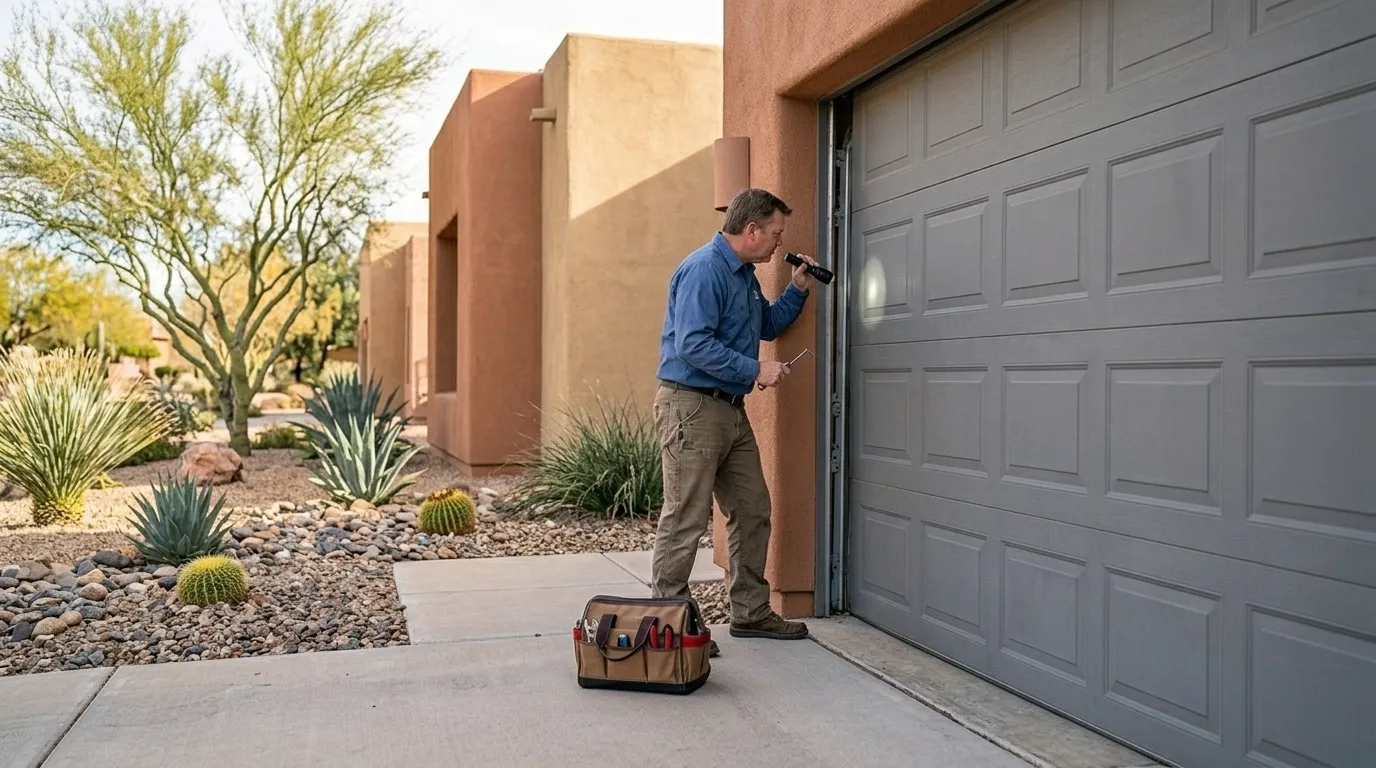
A technician tests the door under power and by hand and finds what actually failed.

Clear, up-front plan - Orlando garage door service
3

Clear, up-front plan

You get the fix that’s needed and what drives the cost - before any work starts.

Repaired & tested - Orlando garage door service
4

Repaired & tested

The repair is done, the door is set true and tested, and the work area left clean.

Serving Orlando, FL - tell us what your door’s doing and we’ll take it from there.

How we work

What to expect

Diagnosis firstEvery visit starts by finding what actually failed - not a pre-written parts list.
The right part for the doorSprings and openers matched to the door’s weight and age, so the fix holds up.
Straight answersWhen a repair makes more sense than a replacement - or the reverse - you hear it plainly.
Clean, careful workTension released safely, hardware set true, the door tested under power before we leave.
334,854Residents in Orlando
8Garage door services
7Neighborhoods & suburbs
FLServing Orlando, FL
Questions

Frequently asked

Straight answers about garage door repair in Orlando. Still unsure? Ask us directly.

Will a new opener fit my existing garage door track from the 1970s?

Sometimes, but not always as-is. A lot of Conway houses from that era have chain-drive rail and header brackets that don't match a new belt-drive unit's mounting hardware without an adapter kit, which is why we check the bracket before quoting the opener itself.

Do I need to replace the whole door to get a new opener?

No - in most cases the opener and the door are separate jobs. The exception is if the header bracket that holds the opener rail has weakened with age, which we see more often on older Conway homes than on newer construction nearby.

Why do you ask how old my house is before quoting?

Because a house built around 1975 usually has different mounting hardware and rail hardware than one built after 1990. Knowing the rough build year lets us bring the right bracket kit and opener type instead of guessing on-site.

Is a belt-drive opener worth it over chain-drive?

It runs quieter, which matters more if the garage sits under or next to living space. It costs more upfront and needs a rail that can support it. We'll tell you honestly if your existing setup suits belt-drive or if chain-drive is the more sensible call.

Ready to get your garage door sorted?

Request a QuoteCall