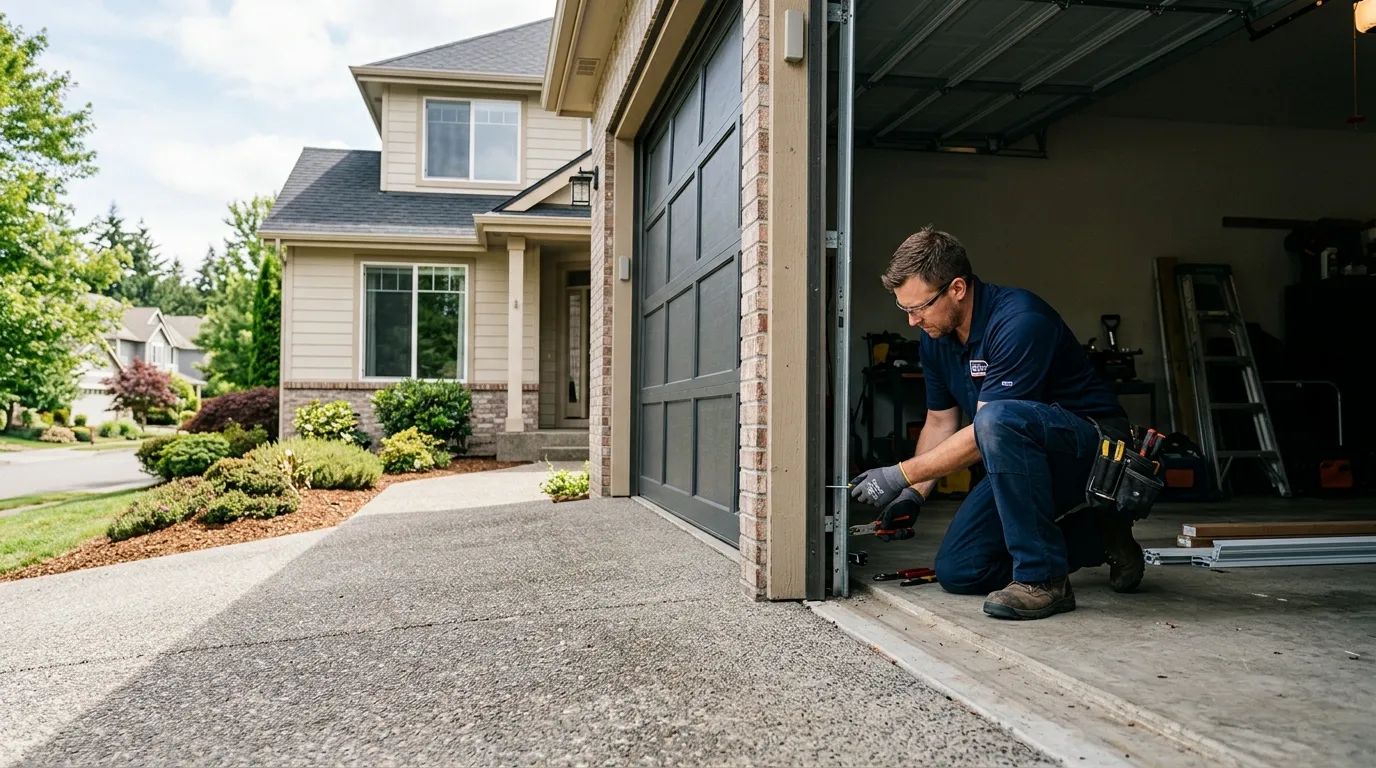
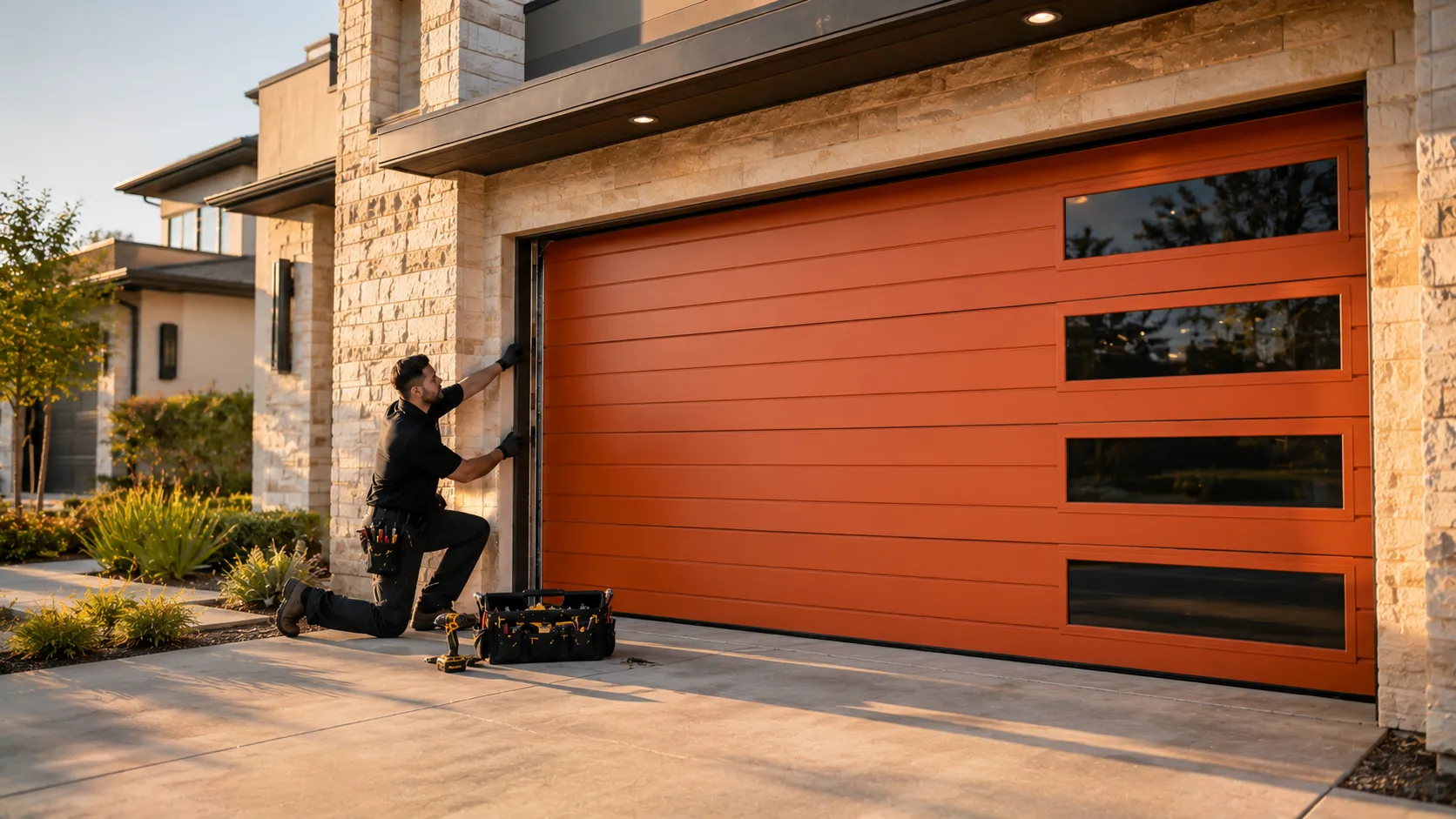
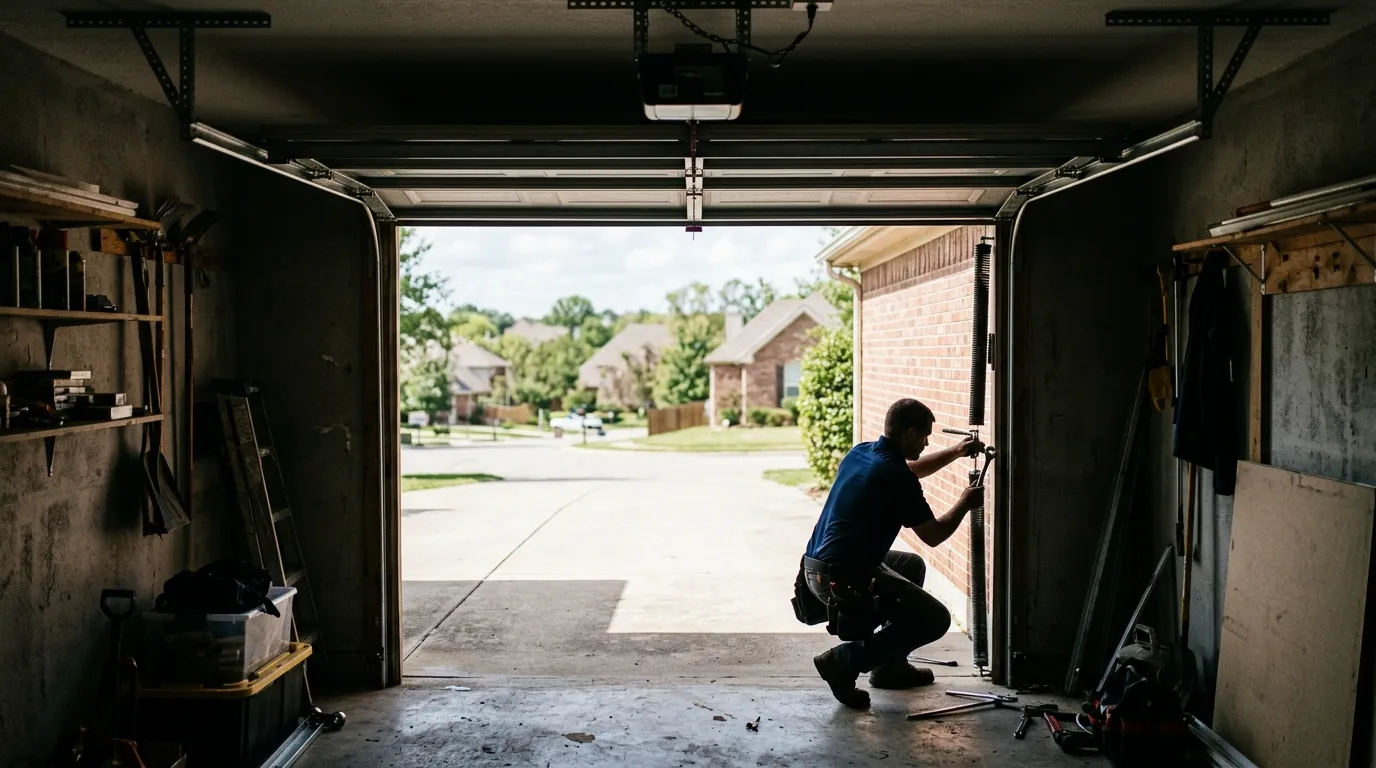
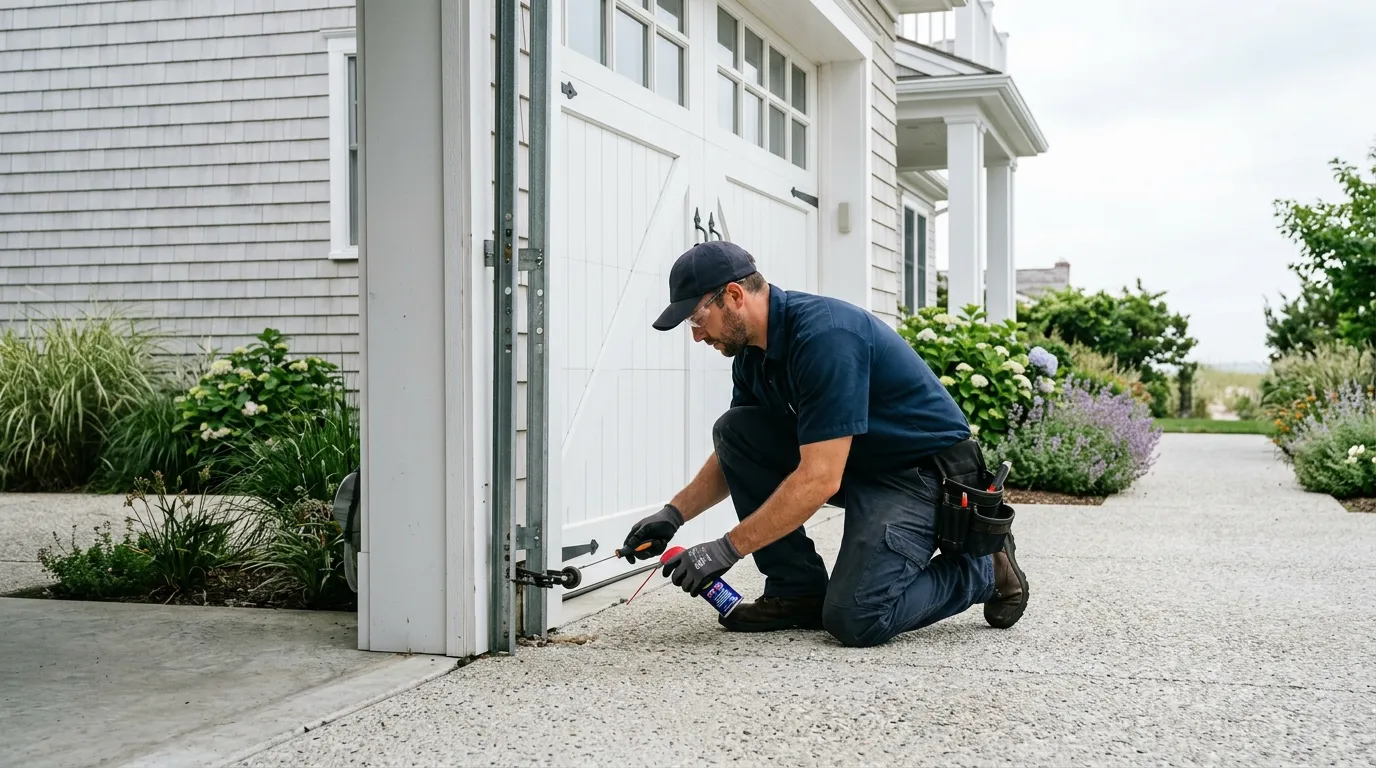
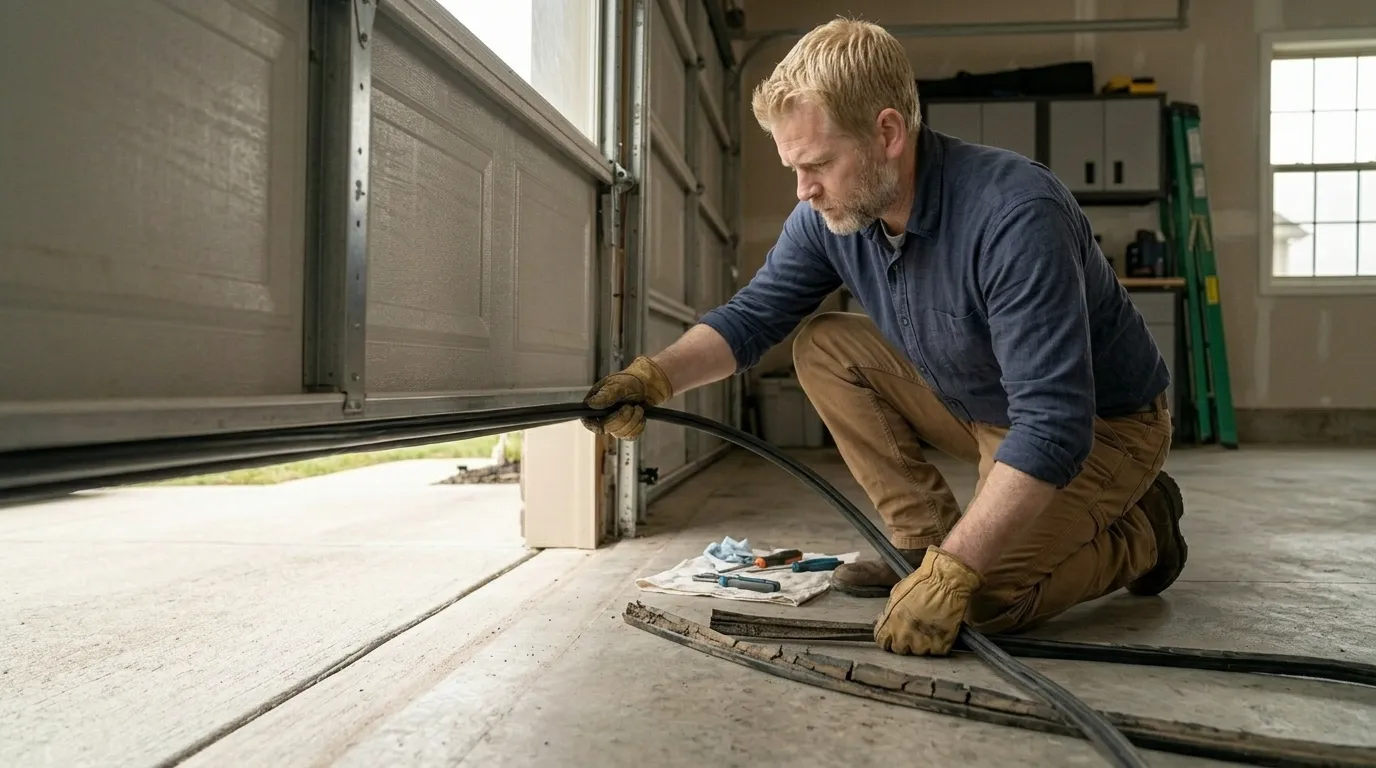
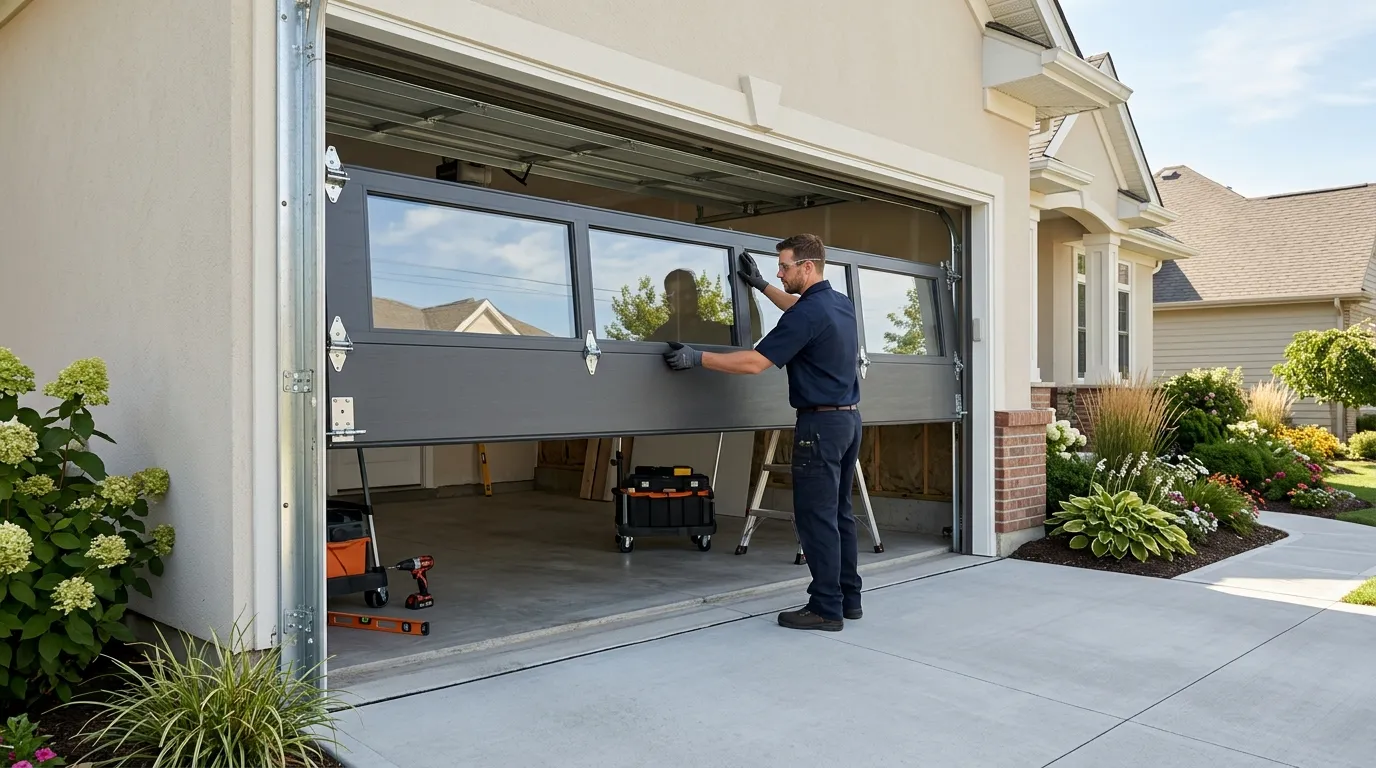
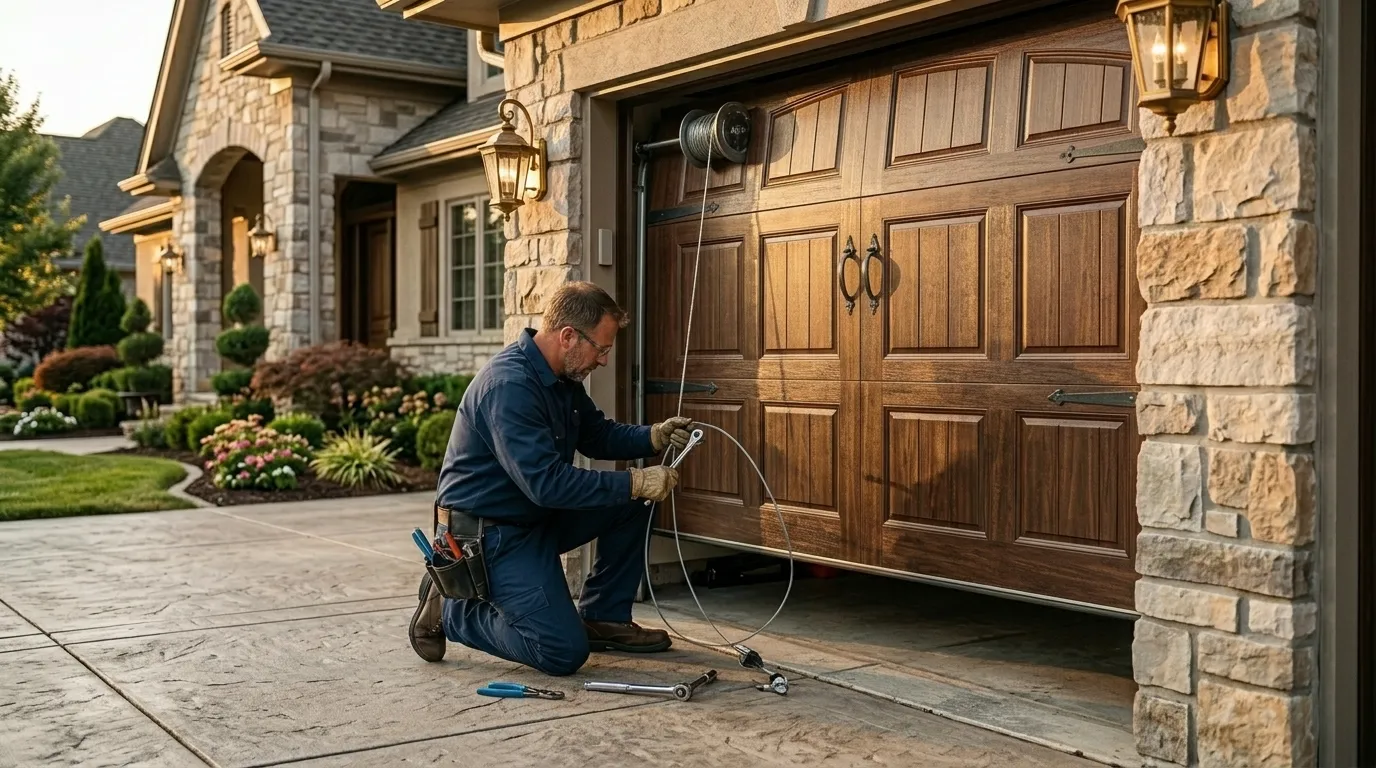
What you pay depends more on your door's age than on the weather that broke it. A lot of the houses across the 39 areas we cover - Lake Nona, Meadow Woods, Conway, Southchase, and out toward Union Park and Hunters Creek - went up between the mid-1960s and today, with the thickest cluster from the 1980s and 90s. That means two different jobs walk in the same door: a torsion spring swap on original hardware from that era, where the drum and shaft are still sound and it's a straightforward like-for-like replacement, versus a door where the spring failure is really the first sign that the whole system - cables, bearing plates, maybe the opener - is at the end of its life together. We won't quote a number here without seeing the door, because guessing on a job like this is how you end up back out at the house a second time. What we can say: with a median household income around $82,107 in the service area, most owners we talk to treat a broken spring as a this-week repair, not a put-it-off-for-months one, and that's usually the right call given how a stuck door affects everything else in the garage.
What the Weather Here Does to It
Orlando sits in a mild temperate band, which is exactly why this catches people off guard. In a place with real winters, springs get exercised by cold every year and homeowners learn what a stiff, slow-closing door in January feels like. Here, a spring can go a decade without ever seeing a hard temperature drop. Steel doesn't like sudden cold any better in Florida than anywhere else - it contracts, it gets a little less forgiving, and a spring that's already near the end of its cycle count is more likely to let go on the one night the mercury actually falls than on any of the mild ones before it. The spring isn't failing because it's cold. It's failing because years of quiet wear finally meet one night that's different from the other 360. That's the pattern we see: not a cold-weather problem exactly, but a cold night acting as the trigger on a spring that was already close.
The Situation
Here's what actually happens. The spring snaps, usually with a bang loud enough that people think something fell in the garage. The door either won't budge or comes down heavy and fast when someone pulls the release cord without knowing better. If it's a two-spring torsion setup and only one let go, the door may still look like it's working - until the second spring, carrying double the load it was built for, goes too. This is common enough in the 1980s and 90s stock that makes up a lot of Orlando's housing that we treat a single spring failure as a two-spring conversation, not a one-spring quote, especially once a door's original hardware has been sitting on the header that long. We don't push a matching second spring on every job - if the other one still has clean coils and no rust pitting, we'll say so. But we'll always tell you the age and let you make the call instead of assuming.
Doing Nothing For Now
A broken spring doesn't mean the door is dangerous sitting still, but it does mean you shouldn't run it. The opener wasn't built to lift a door's full weight without spring assistance, and forcing it that way is how you burn out a motor that was otherwise fine. If you can, leave the door down, unplug or disengage the opener, and don't use the emergency release unless you're prepared for an unassisted door to drop. Waiting a few days for scheduling isn't the issue - plenty of owners in Belle Isle or Pine Castle live with a down door for a short stretch without any harm. The real cost of waiting shows up if you keep cycling the door anyway: extra strain on cables, on the opener, sometimes on the track itself. One thing we're upfront about: if your door and springs are original to a house built in the 1960s or 70s, replacement parts for that specific hardware aren't always on the truck, and that can add a day or two to the job. Better to know that going in than to be told it after we've already started.
How it works
From “it’s stuck” to “it’s fixed”
1
Tell us what’s wrong
Describe the symptom - won’t open, loud bang, opener runs but the door won’t move.
2
On-site diagnosis
A technician tests the door under power and by hand and finds what actually failed.
3
Clear, up-front plan
You get the fix that’s needed and what drives the cost - before any work starts.
4
Repaired & tested
The repair is done, the door is set true and tested, and the work area left clean.
Serving Orlando, FL - tell us what your door’s doing and we’ll take it from there.
Why did my spring break on a cold night when Orlando barely gets cold?
It's usually not the cold causing the failure by itself - it's a spring that was already near the end of its rated cycle count, and the one real temperature drop of the season is what finally pushes it over. Steel gets a little less forgiving when it contracts, and a fatigued spring has less margin left to absorb that.
Do I need to replace both springs if only one broke?
Not always, but it's worth checking. On a two-spring torsion system, once one lets go, the other is suddenly carrying the full load alone. If your door's hardware dates back to the 1980s or 90s, which a lot of Orlando's housing stock does, the second spring is often close behind and we'll tell you honestly if it looks that way.
Is it safe to keep opening the garage door with a broken spring?
You can, briefly, but you shouldn't make a habit of it. The opener isn't designed to lift the full weight of the door without spring assistance, so running it that way puts extra strain on the motor and drive system. If you need the car out, it's better to release it manually once and leave it, rather than cycling the opener.