What the Weather Here Does to It
Orlando sits in a mild temperate band, so we don't get the freeze-thaw cycles that crack concrete and warp wood tracks up north. That's the good news. The other side of it is humidity that doesn't let up for most of the year, and steel track hardware doesn't love sitting in that. Fasteners and brackets corrode slowly at the head, not enough to snap outright but enough to loosen their grip over a couple of decades. Add daily heat swings on a track mounted against a sun-facing wall, and the metal expands and contracts just enough, day after day, to walk a lag screw out of a jamb a fraction of a turn at a time. It's not dramatic. There's no single storm that does it. It's a slow drift that shows up one day as a roller popping out of the track when the door's halfway up. That's the mild-climate version of wear - no cracked track from ice, but plenty of loosened brackets from decades of humid heat working on original 80s and 90s hardware.
The Situation
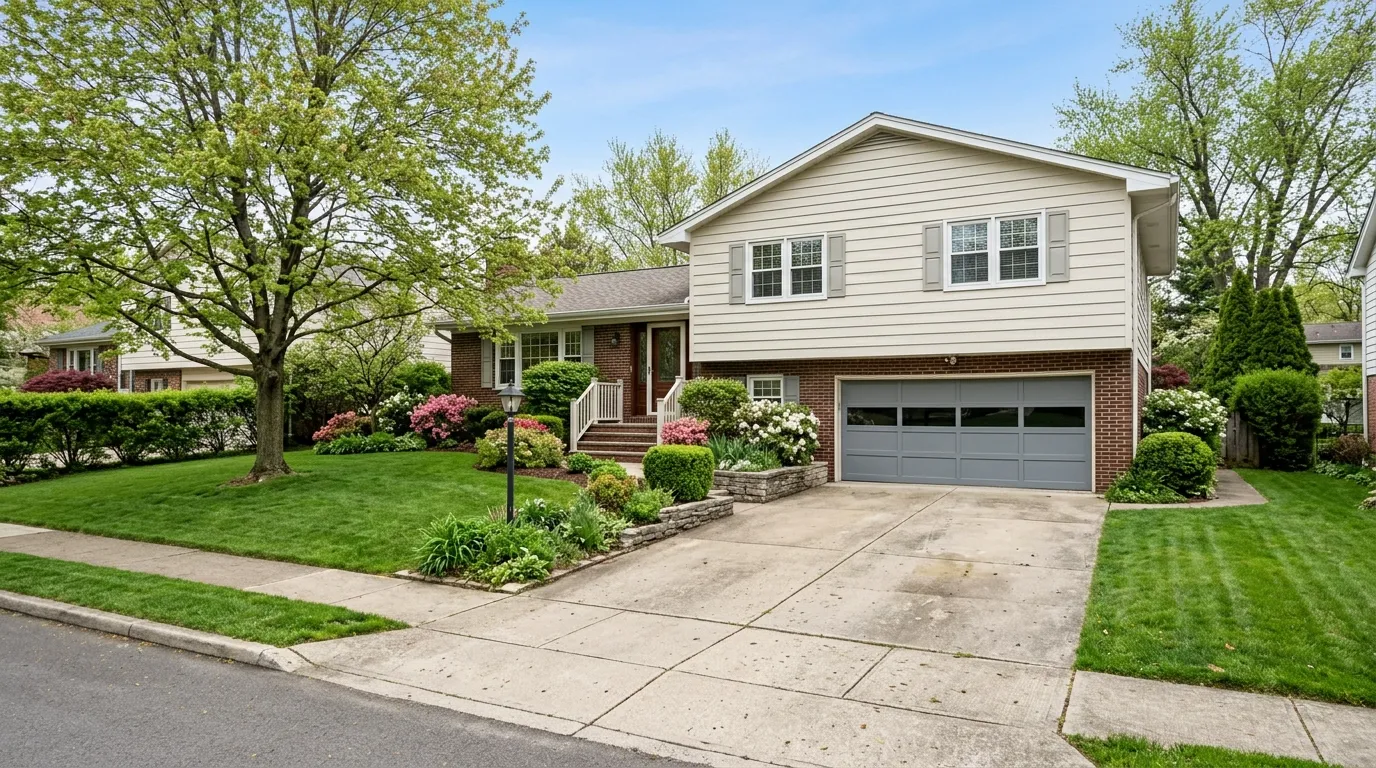
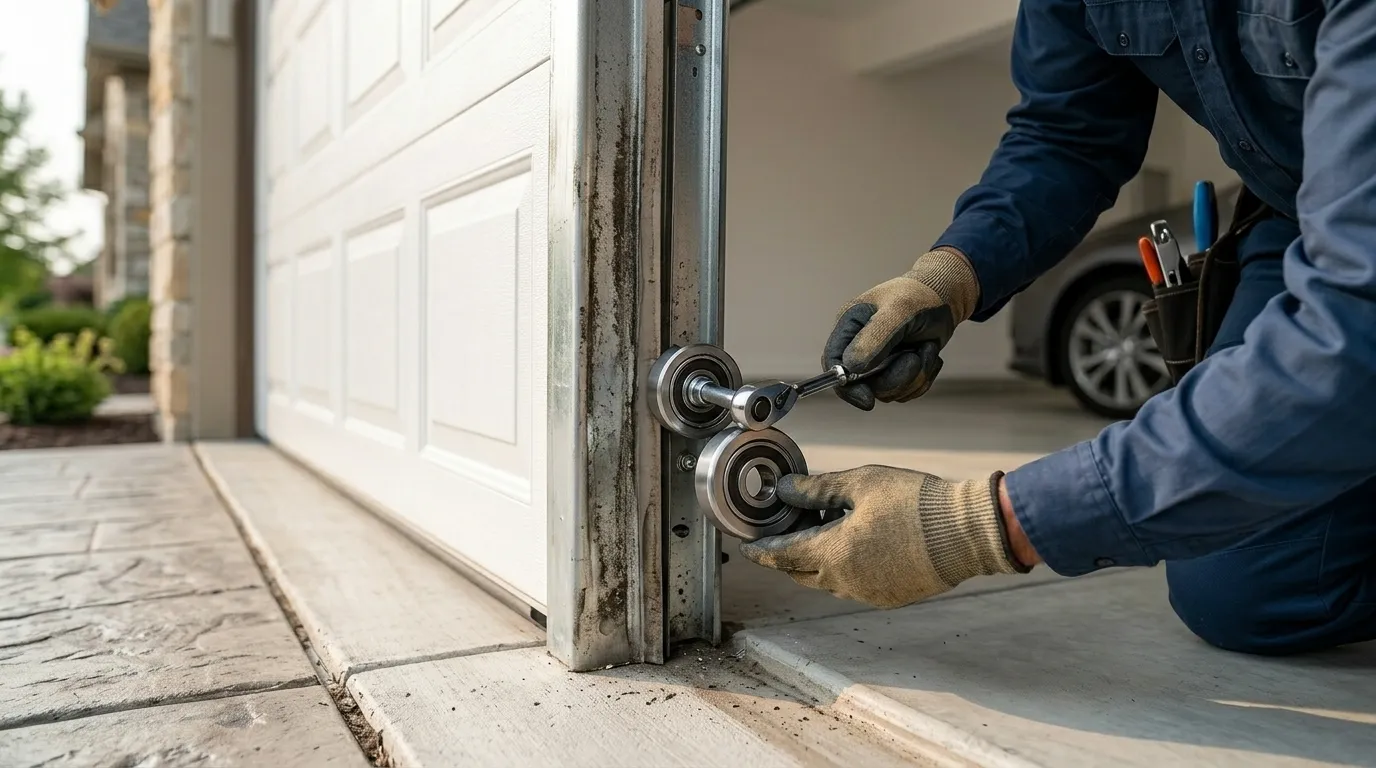
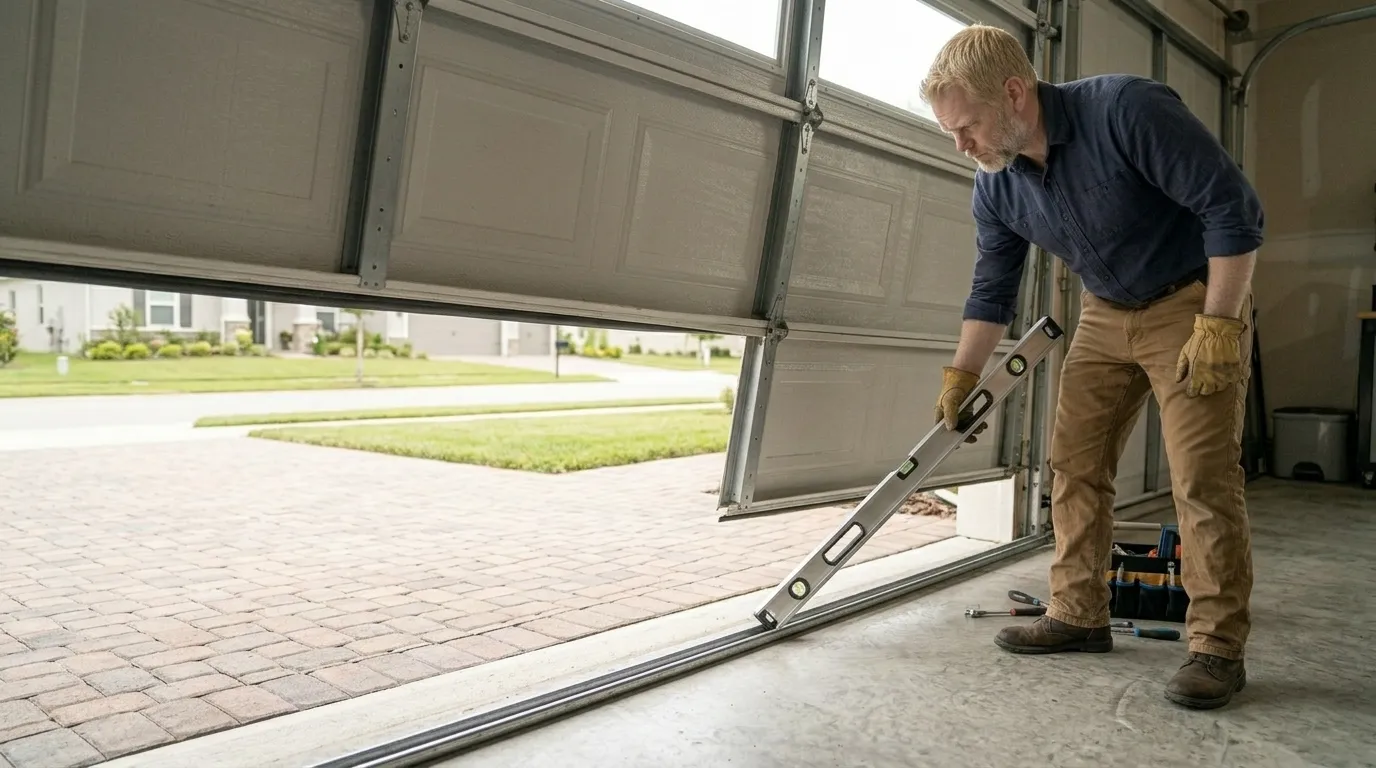
Housing in this service area was built anywhere from 1964 to 2021, but the median is 1987, and most of what's out there - across the roughly three dozen named areas we cover, from Lake Nona Estates and Storey Park close in, out to Hunters Creek, Doctor Phillips, and St. Cloud - is 1980s and 90s stock. That means original track brackets, original hinges, and in a lot of cases an opener that's been swapped once but a track that never has. A door goes off track almost always at one of two points: the bracket where the vertical track meets the horizontal, or the roller stem itself wearing down until it no longer sits square in the channel. On a house from this era, we're usually looking at both at once, because they wear on the same clock. Newer builds closer to Lake Nona Central and Vista Park see less of this simply because the hardware hasn't had thirty years to work loose yet.