What Was Built Here
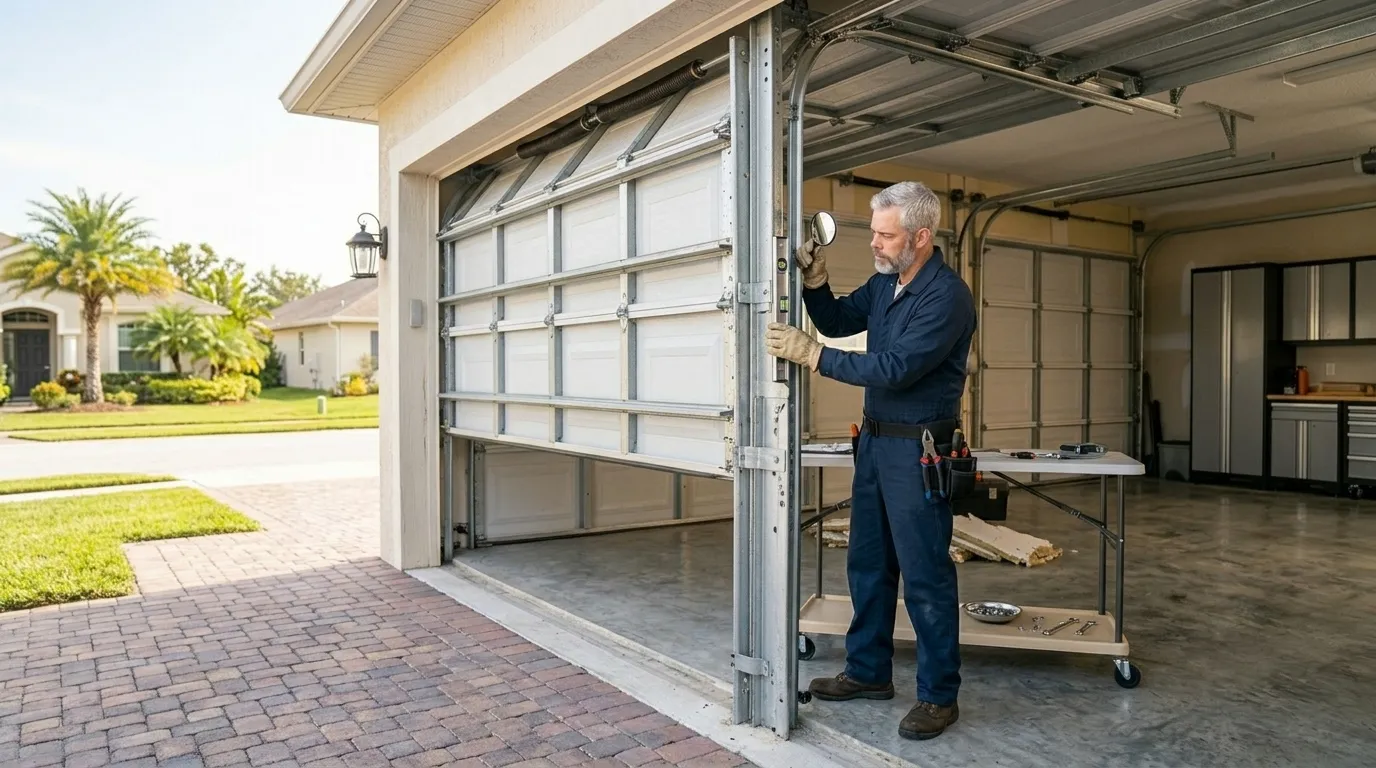
A median build year of 1978 puts a lot of Belle Isle's garage doors two owners and one or two openers deep already. Houses from that era usually shipped with steel doors on extension springs rather than the torsion setups that became standard through the 1980s and 90s across most of the broader area (median 1987, per F1/F2). Extension spring systems sit along the horizontal tracks instead of overhead on a shaft, and they age differently - the safety cables that keep a broken spring from whipping loose are the part most often missing or never retrofitted on original installs.
Belle Isle sits inside a mild temperate climate band with the rest of the region, so this isn't a story about doors failing from freeze-thaw cycling or heavy snow load. It's simpler than that: rubber and steel just get old. A 1978 door, even one that's had an opener swapped once or twice, is running on original track alignment and often original hinges. At $111,875 median household income for the area, most owners here are in a position to replace rather than patch when a door is genuinely past its service life - the calls we get tend to be about deciding whether that's the case, not whether the household can afford it.
What the Housing Means for Your Door
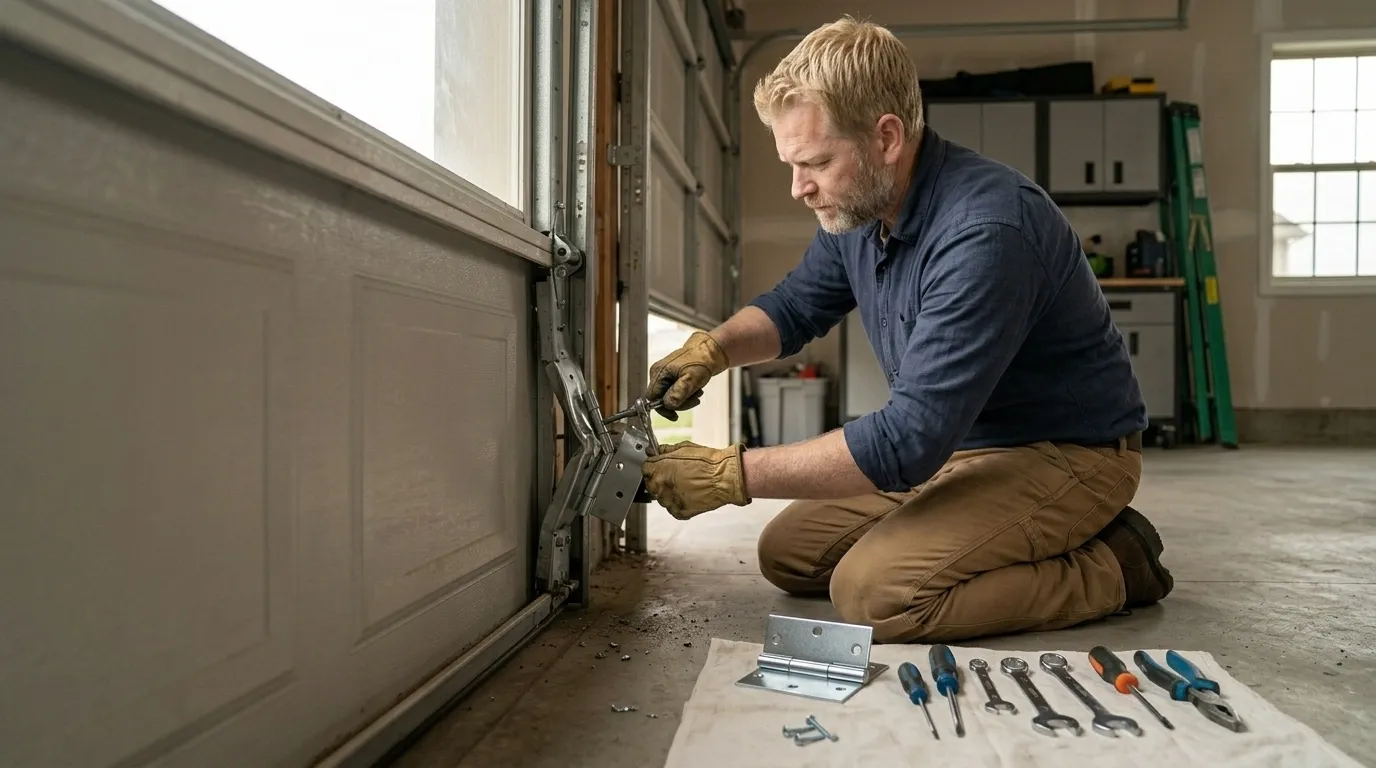
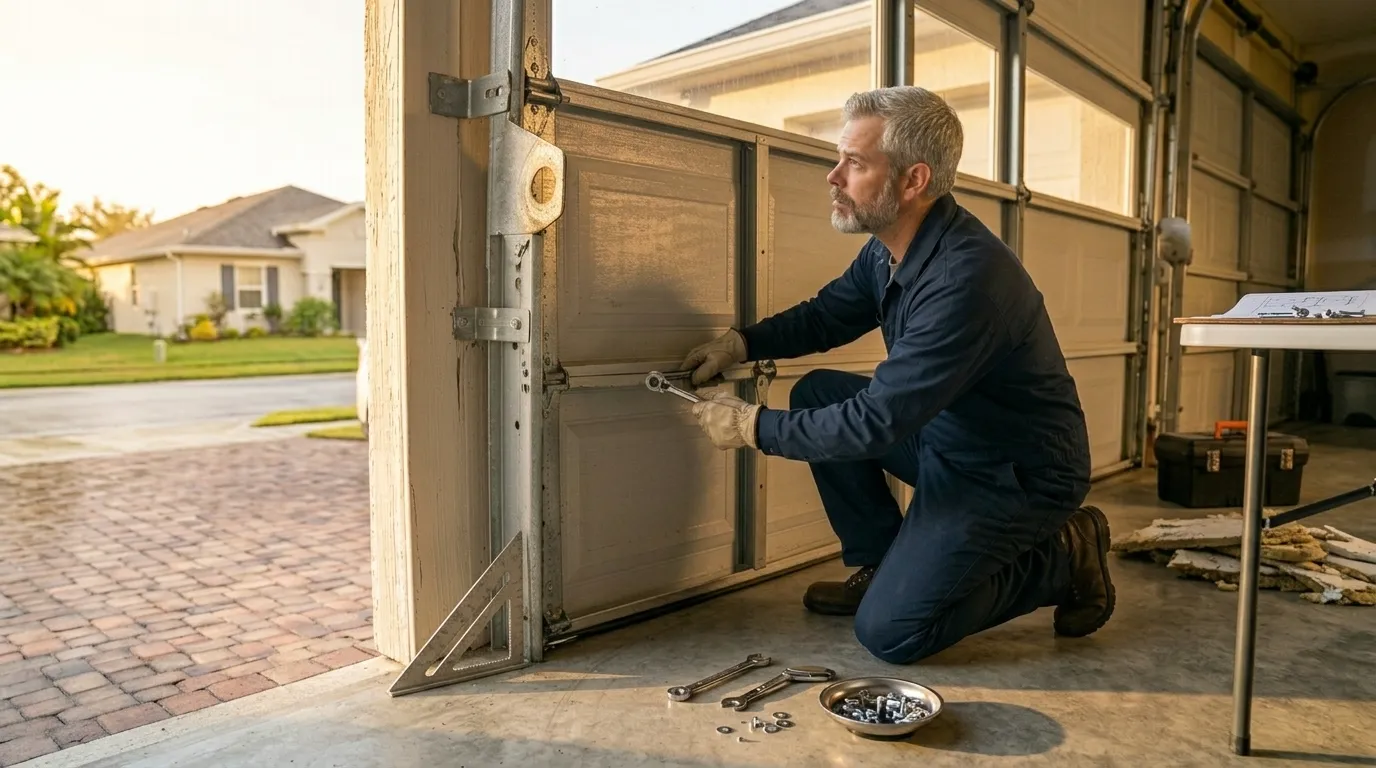
Because the median here predates the region's main building wave by close to a decade, the failure pattern skews toward extension-spring wear and original hardware fatigue rather than the torsion-spring issues that dominate calls in the newer pockets of the service area. Practically, that changes what we bring on the truck and what we look for first: cable fraying at the drum, bottom brackets that have loosened over forty-plus years of cycling, and tracks that were leveled once in 1978 and never touched since.
It also means panel matching gets harder. A door from this era that needs one section replaced often can't be matched exactly anymore, since the original manufacturer runs are long discontinued. In those cases we're usually talking about a full door rather than a patch - not because we're upselling, but because the part doesn't exist to match it. That's a direct result of the build year, not a general sales pitch, and it's worth knowing before you call around.