What Was Built Here
The median home in Christmas went up around 1991, a few years newer than the median across the wider Orlando service area, which sits closer to 1987. It's a small gap, but it matters for garage doors because the early 1990s is when steel sectional doors on torsion springs became the standard replacement for the older single-panel doors that were common through the 70s and early 80s.
That means a lot of houses out here still have their original or first-replacement door and opener setup from roughly that build era - chain-drive openers, steel torsion springs rated for a specific cycle count, and galvanized track that's now over thirty years old in a lot of cases. It's not ancient hardware, but it's old enough that springs are past their rated life and openers are on borrowed time, especially if nothing's been serviced since it went in.
What the Housing Means for Your Door
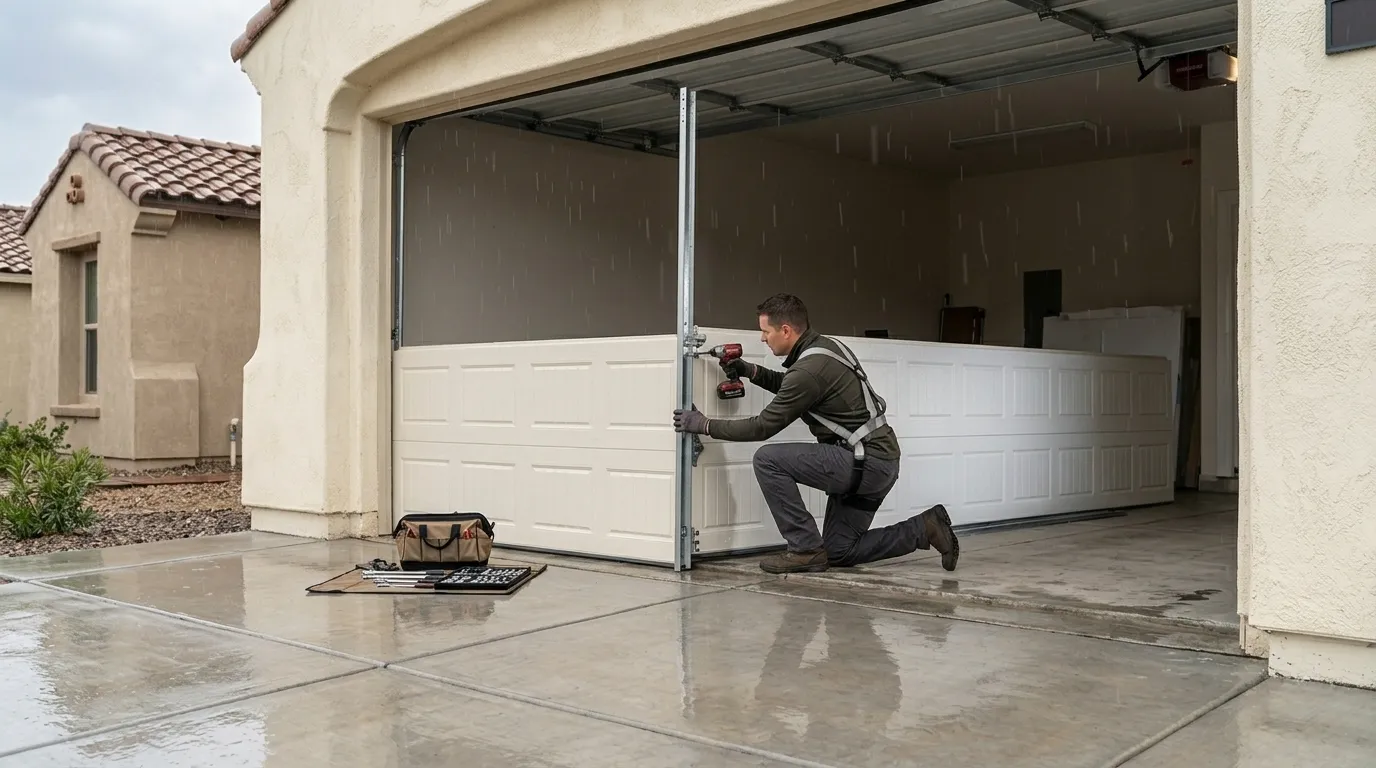
A torsion spring installed when a house was built in 1991 was never meant to last forever - most are rated for a set number of open-close cycles, and by year thirty-plus, a lot of them are close to or past that number. If your door has gotten heavy to lift by hand, or the opener strains and reverses partway up, that's usually the spring, not the motor.
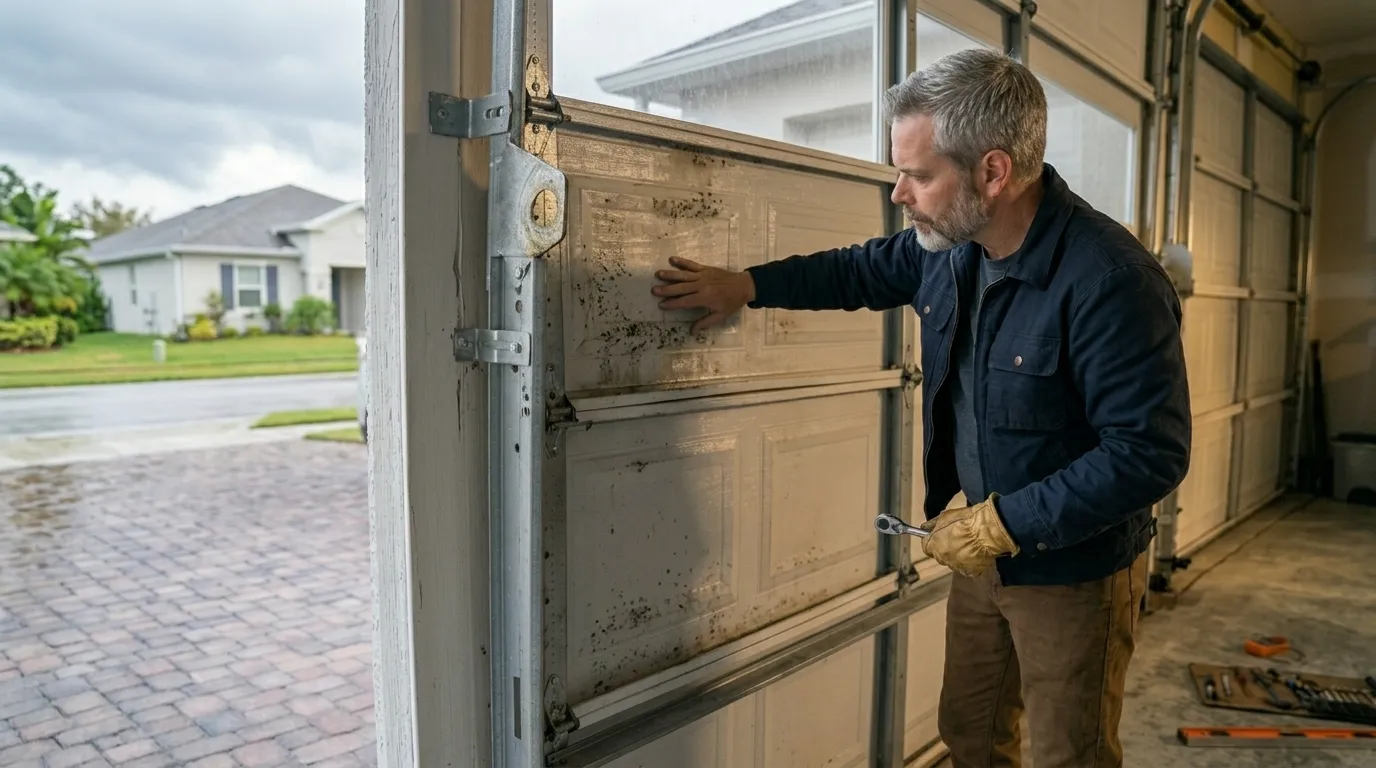
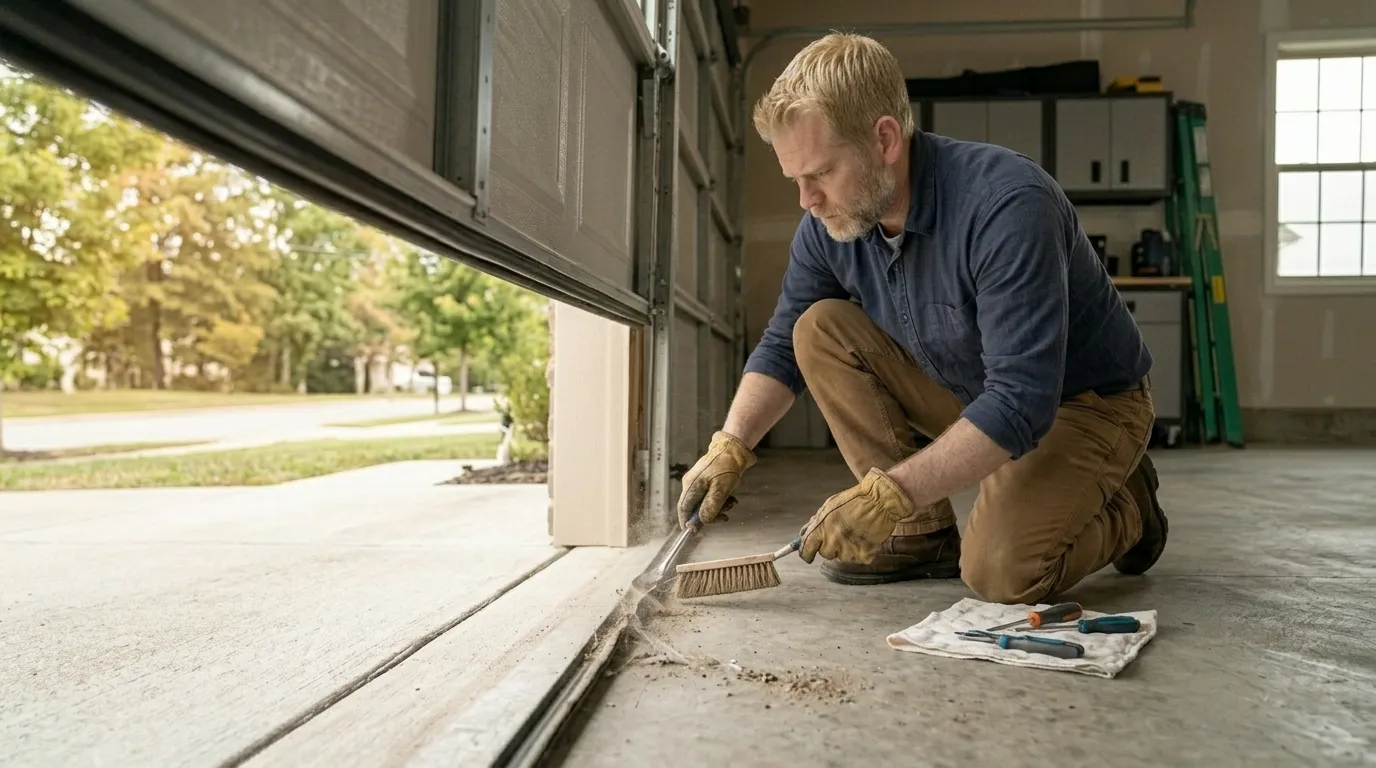
The MILD temperate climate here doesn't stress hardware the way freeze-thaw cycles do further north, so we're not chasing cold-weather cracking or ice-jammed tracks. What we do see in this vintage of door is worn rollers, cables starting to fray at the drum, and the original opener logic board finally giving out after decades of humidity exposure. None of that is dramatic, but it's predictable, and it's the kind of thing worth catching before a spring lets go under load.