What Was Built Here
Across the broader service area the median home dates to 1987, spread over decades running from 1964 up through 2021. Maitland doesn't sit on that line - its median build year is 1996, close to a decade newer. That shift matters more than it sounds like it should for a garage door.
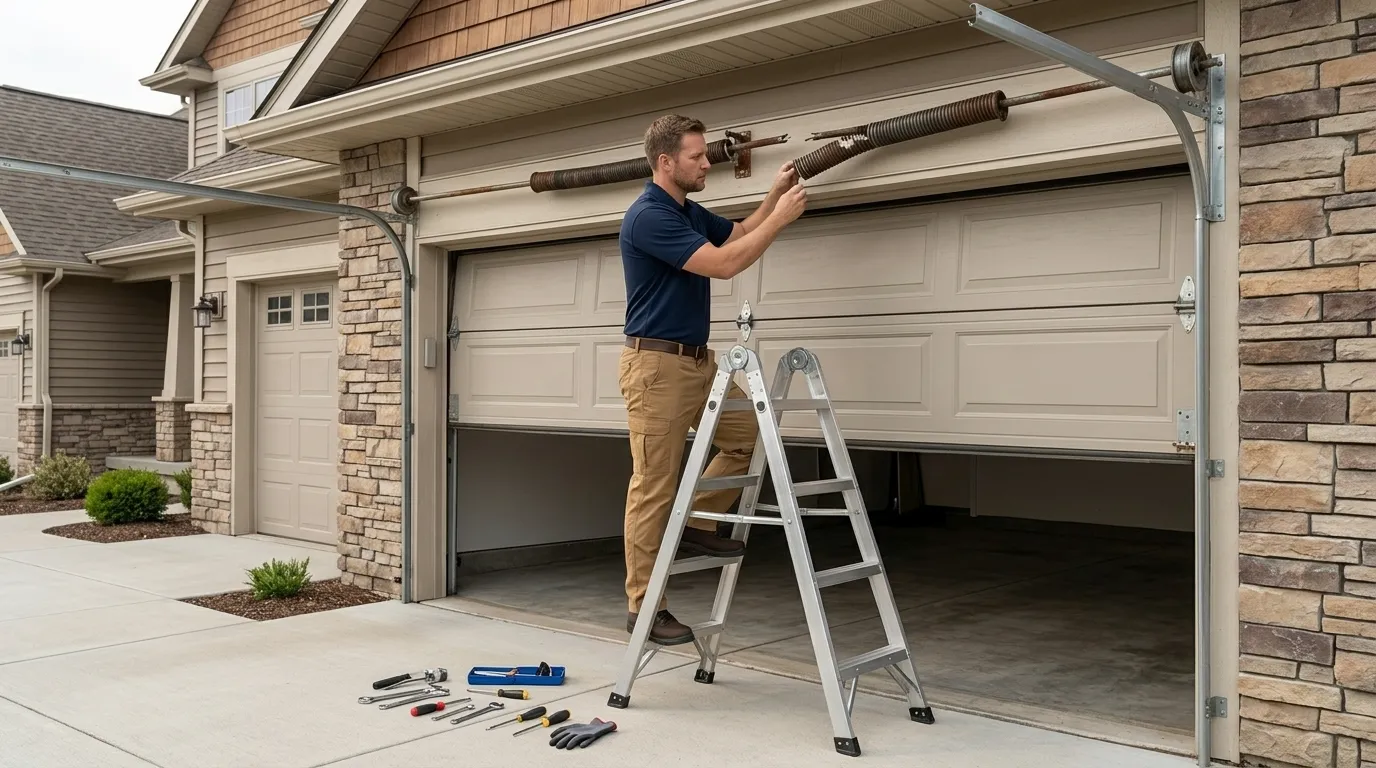
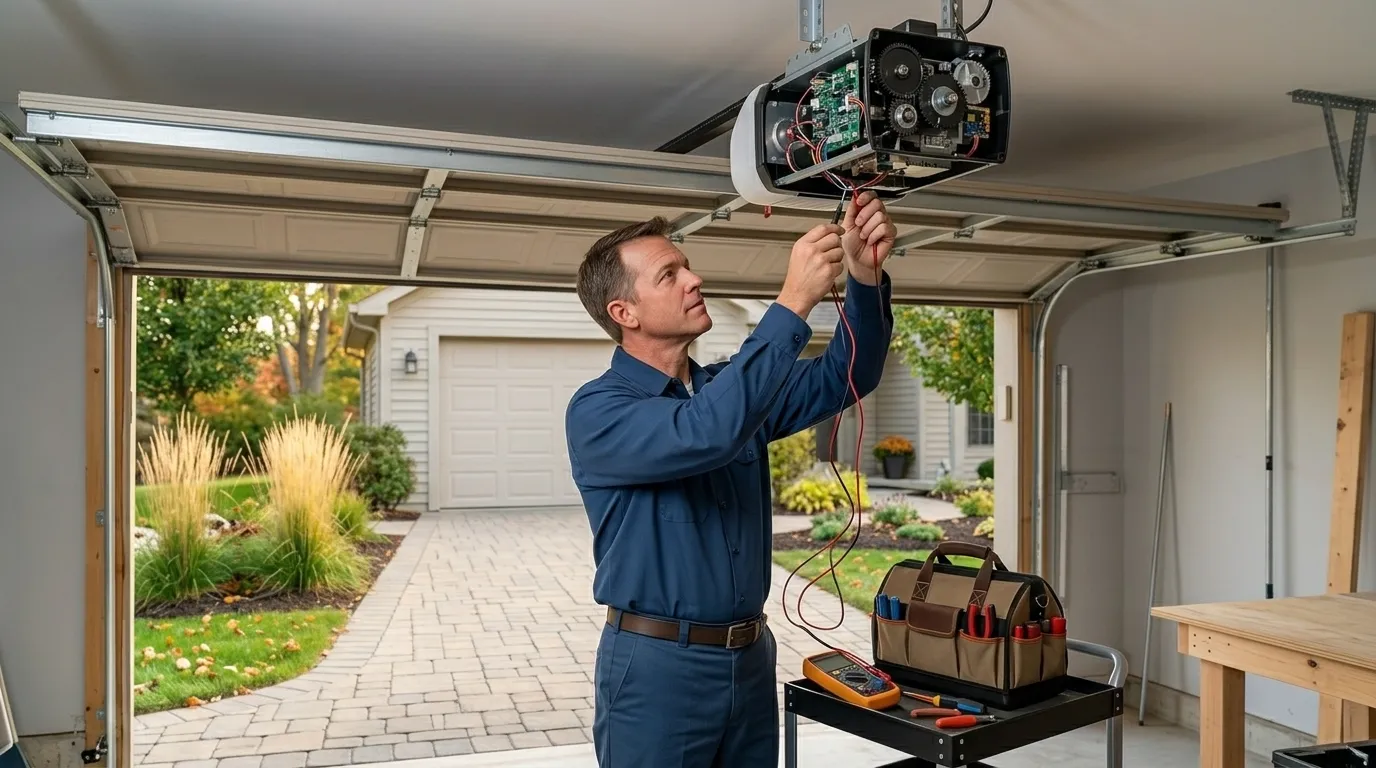
A neighborhood built around 1996 was framed under a different set of door and opener standards than one built in the 1970s or early 80s. You're less likely to find the old heavy one-piece slab doors with side-mounted torsion springs that show up in the region's oldest pockets, and more likely to find sectional doors on standard center-mounted torsion bars with chain or belt-drive openers from that era - openers that are now old enough to be on their second or third circuit board, if they've been touched at all.
Household income in Maitland runs about $93,318, noticeably above the wider area's $82,107 median. That doesn't change the physics of a spring or a track, but it does tend to mean more of the original hardware here got a mid-life opener swap or a spring upgrade rather than running twenty-plus years on the factory setup untouched. We see that pattern more here than in older, lower-turnover pockets closer to Pine Hills or Orlovista.
What the Housing Means for Your Door
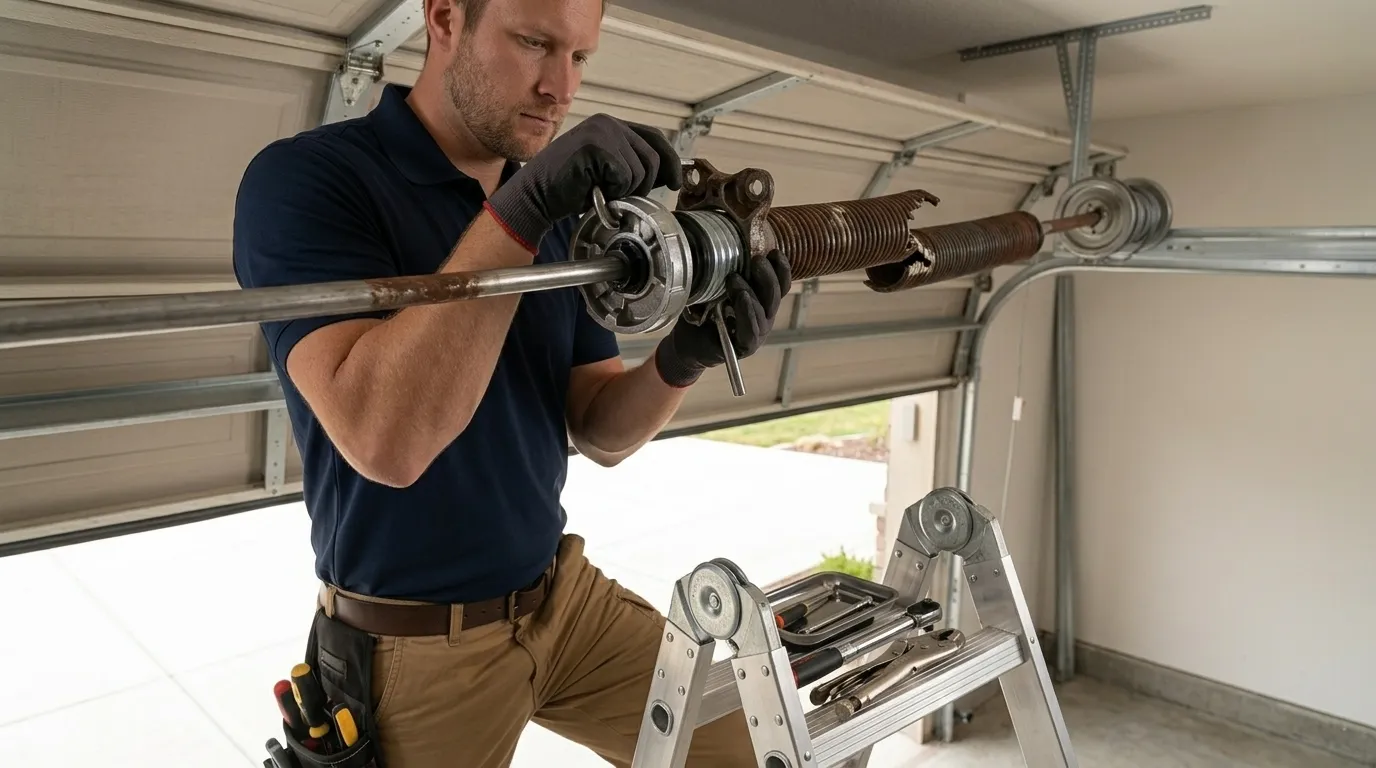
Because the 1996 median puts most Maitland garages a full building-code generation past the region's older stock, the common failure here isn't the seized side-bearing torsion tube you'd find on a 1970s door. It's usually a worn opener drive gear, a stretched or slipping belt, or a torsion spring that's simply hit its cycle count after two-plus decades of daily use - springs don't last forever regardless of build year, and a door built in 1996 is now well past the point where the original spring is a safe bet.
The climate here is mild temperate, not the freeze-thaw or heavy-humidity extremes that chew through seals and hardware fast, so wear in Maitland tends to be mechanical fatigue rather than weather damage. That's a small mercy - it means when a part fails, it's usually because it's simply worn out, not because moisture got into a bearing or a track rusted through.
One thing we won't guess at: whether your specific opener model still has parts available. Newer doesn't always mean easier to source. Some mid-90s opener boards are harder to find than the mechanical parts on an older door, and we'll tell you that on-site rather than promise a same-day fix we can't back up.